
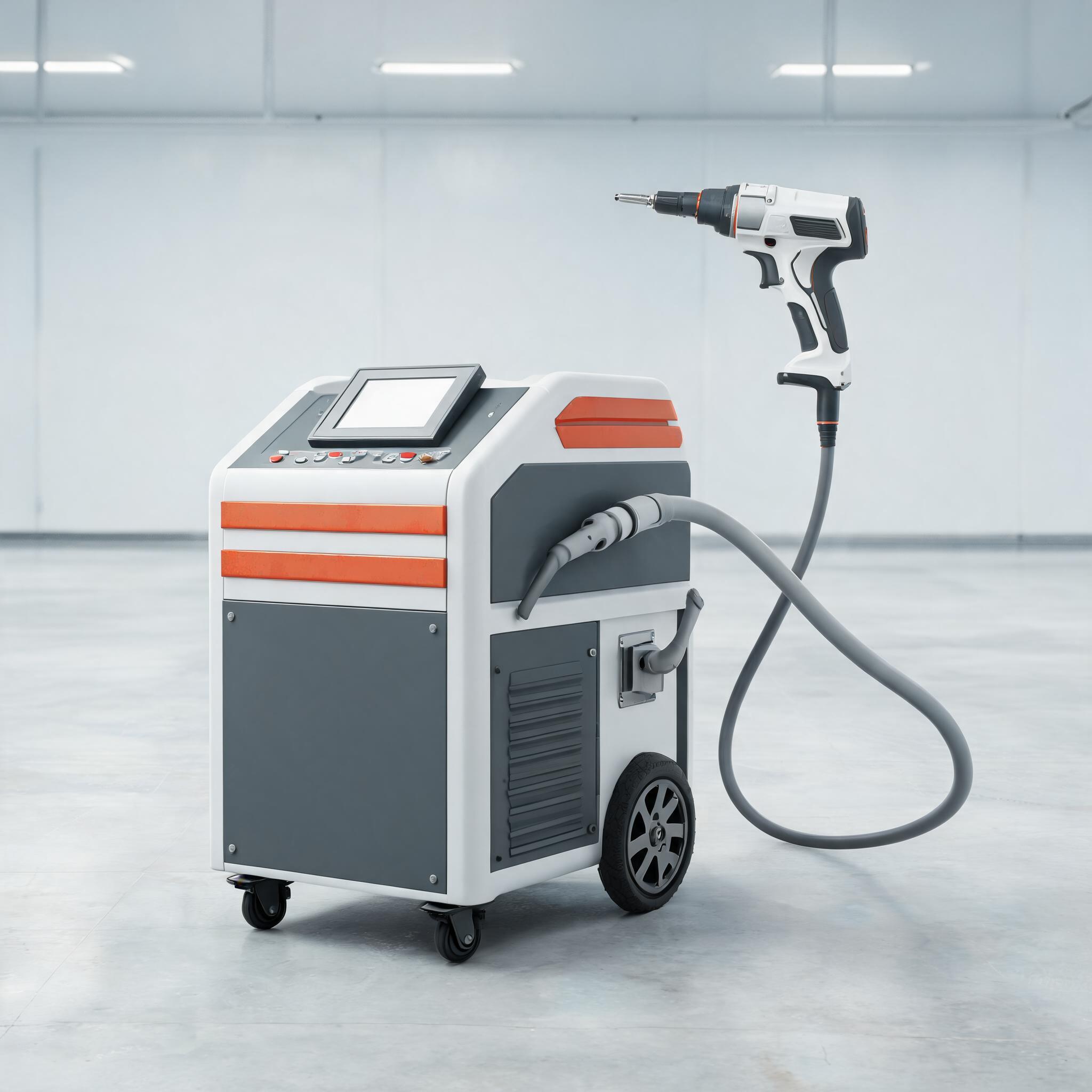
دليل مشترٍ عملي لاختيار آلة اللحام بالليزر المناسبة، يغطي التكوينات اليدوية مقابل الثابتة، واختيار القدرة (1500 واط/2000 واط/3000 واط)، وتوافق المواد، وعوامل السعر، ومعايير تقييم ما بعد البيع.
دليل الشراء
إذا كنت تبحث عن ماكينة لحام ليزر للبيع، فمن المحتمل أنك تجاوزت مرحلة البحث وتقارن الآن بين آلات محددة ومستويات طاقة وموردين. يرشدك هذا الدليل عبر القرارات العملية التي تحدد ما إذا كانت ماكينة اللحام التي تشتريها ستخدم ورشتك فعلاً — من الاختيار بين التكوينات المحمولة والثابتة، إلى مطابقة طاقة الليزر مع سمك المواد النموذجي لديك، إلى تقييم دعم ما بعد البيع.
ماكينات اللحام بالليزر المحمولة مقابل الثابتة: أي تكوين يناسب ورشتك؟
القرار الأول عند تقييم ماكينات اللحام بالليزر للبيع هو التكوين المادي. كل نوع يخدم بيئة إنتاج مختلفة جوهريًا.
ماكينات اللحام بالليزر المحمولة تمنح المشغل مسدس لحام محمولاً متصلاً بمصدر الليزر عبر كابل ألياف مرن. يحرك المشغل المسدس على طول خط اللحام يدويًا، على غرار اللحام التقليدي TIG أو MIG ولكن بدون مادة حشو في كثير من الحالات. هذا التكوين مثالي لـ:
- قطع العمل الكبيرة أو غير المنتظمة التي لا يمكن وضعها تحت بوابة ثابتة
- أعمال اللحام والإصلاح في الموقع
- الورش التي تتعامل مع أحجام مهام متنوعة ولا يمكنها التوحيد على تركيبات ثابتة
- الإنتاج منخفض إلى متوسط الحجم حيث يجب أن يظل وقت الإعداد لكل جزء ضئيلاً
المقايضة هي أن جودة اللحام تعتمد جزئيًا على مهارة المشغل — استقامة خط اللحام وثبات سرعة الحركة يتطلبان تدريبًا وممارسة.
ماكينات اللحام بالليزر الثابتة (البوابة أو الروبوتية) تثبت رأس اللحام على نظام تحديد المواقع القابل للبرمجة. يتم تثبيت قطعة العمل في مكانها، وتنفذ الماكينة مسار اللحام تلقائيًا. هذا التكوين مناسب لـ:
- لحام متكرر عالي الحجم لأجزاء متطابقة
- تطبيقات تتطلب تكرارًا موضعيًا على مستوى الميكرون
- التكامل في خطوط الإنتاج الآلية
توفر الأنظمة الثابتة هندسة لحام متسقة دفعة بعد دفعة، لكنها تتطلب استثمارًا في التركيبات وأقل مرونة عندما تتغير تصميمات الأجزاء بشكل متكرر.
اختيار طاقة الليزر: مطابقة الواط لموادك
تحدد طاقة الليزر مباشرة أقصى سمك مادة يمكنك لحامه في مسار واحد. إليك مرجع عملي لماكينات اللحام بالليزر الليفي عند مستويات الطاقة الشائعة:
| قدرة الليزر | أقصى اختراق نموذجي | أفضل التطبيقات المناسبة |
|---|---|---|
| 1500 واط | حتى 3 مم | ربط الصفائح المعدنية، خزائن الفولاذ المقاوم للصدأ، أغلفة الألمنيوم، مكونات سبائك التيتانيوم |
| 2000 واط | حتى 4-5 مم | وصلات هيكلية متوسطة السماكة، أقواس السيارات، تصنيع الفولاذ المقاوم للصدأ الأكثر سمكًا |
| 3000 واط | حتى 6-8 مم | لحام الألواح الثقيلة، الأنابيب ذات الجدران السميكة، التجميعات الهيكلية الصناعية |
على سبيل المثال، ماكينة اللحام بالليزر الليفي المحمولة بقدرة 1500 واط من Xinhong CNC تحقق أقصى اختراق 3 مم في الفولاذ المقاوم للصدأ والألمنيوم، مع ثبات خط اللحام في حدود ±0.1 مم. يغطي هذا المستوى من الطاقة معظم متطلبات تصنيع الصفائح المعدنية — معدات المطابخ، الأغلفة الكهربائية، زخارف السيارات، والأعمال المعدنية الزخرفية كلها ضمن هذا النطاق.
نصيحة عملية: لا تبالغ في تحديد الطاقة "فقط في حالة." الآلات ذات القوة الأعلى تكلف أكثر مقدمًا، وتستهلك طاقة أكبر، وتتطلب بنية تحتية تبريد أثقل. طابق الطاقة مع أسمك مادة تلحمها بانتظام، وليس أسمك مادة قد تصادفها نظريًا.
توافق المواد: الفولاذ المقاوم للصدأ والألمنيوم وما بعده
من المزايا الرئيسية للحام بالليزر الليفي التوافق الواسع مع المواد. يمكن لآلة واحدة غالبًا التعامل مع سبائك متعددة دون تغييرات في الأجهزة. ماكينة اللحام المحمولة بقدرة 1500 واط من Xinhong CNC مصممة لـ:
- الفولاذ المقاوم للصدأ (سلسلة 300 و400) — مظهر لحام ممتاز، تغير لون ضئيل
- سبائك الألمنيوم — وصلات نظيفة مع إعدادات معلمات مناسبة؛ يتجنب اللحام بالليزر مشاكل المسامية الشائعة في اللحام بالقوس الكهربائي
- سبائك التيتانيوم — يمكن تحقيقه مع غاز التدريع المناسب وضبط المعلمات
عند تقييم ماكينة لحام ليزر للبيع، تأكد من أن الماكينة تدعم تخزين المعلمات لمواد مختلفة. القدرة على حفظ واستدعاء ملفات اللحام تلغي الإعداد التجريبي والخطأ عند التبديل بين المواد. تخزن ماكينة اللحام بقدرة 1500 واط من Xinhong أكثر من 50 مجموعة معلمات لحام، بحيث يمكن للمشغلين التبديل من مهمة فولاذ مقاوم للصدأ بسمك 1 مم إلى مهمة ألمنيوم بسمك 2 مم عن طريق تحديد ملف محفوظ بدلاً من إعادة التكوين من الصفر.
ما الذي يؤثر على سعر ماكينة اللحام بالليزر؟
تختلف أسعار ماكينات اللحام بالليزر بشكل كبير بناءً على عدة عوامل. فهم هذه المحركات للتكلفة يساعدك على مقارنة العروض على أساس عادل:
- العلامة التجارية وقوة مصدر الليزر: الآلات التي تستخدم مصادر ليزر IPG أو RAYCUS أو GW لها نقاط سعر مختلفة. القوة الأعلى تكلف دائمًا أكثر — آلة 3000 واط ستكون أعلى بكثير من وحدة 1500 واط.
- التكوين: الأنظمة المحمولة عمومًا أقل تكلفة من الأنظمة الثابتة ذات البوابة أو الروبوتية، والتي تتطلب أجهزة تحكم في الحركة وبرمجة.
- نظام التبريد: تبريد دوران الماء (كما هو مستخدم في الطراز المحمول بقدرة 1500 واط) يدعم التشغيل الممتد لأكثر من 8 ساعات ولكنه يضيف تكلفة مقارنة بالبدائل المبردة بالهواء.
- ميزات السلامة والامتثال: علامة CE والامتثال لـ RoHS — القياسية في ماكينات اللحام من Xinhong CNC — ضرورية للأسواق الأوروبية وتضيف إلى تكلفة التصنيع.
- جودة نظام التحكم: المكونات الكهربائية الصناعية (مثل قطع شنايدر إلكتريك المستخدمة في آلات Xinhong) تحسن الموثوقية ولكنها ليست الخيار الأرخص.
- حزمة ما بعد البيع: طول الضمان، وتضمين قطع الغيار، ودعم التشغيل في الموقع كلها عوامل في التكلفة الإجمالية للملكية.
للحصول على عرض سعر دقيق مصمم حسب متطلباتك المحددة، فإن الطريقة الأكثر موثوقية هي الاتصال بالشركة المصنعة مباشرة مع ذكر أنواع المواد ونطاق السماكة والإنتاج اليومي المتوقع.
دعم ما بعد البيع: العامل الذي يقلل معظم المشترين من شأنه
آلة اللحام بالليزر هي استثمار رأسمالي طويل الأجل. سعر الشراء هو فقط البداية — ماذا يحدث عندما تحتاج إلى قطعة غيار، أو استكشاف أخطاء فنية، أو تدريب المشغلين؟
عند مقارنة آلات اللحام بالليزر للبيع، اسأل الموردين هذه الأسئلة المحددة:
- ما هي فترة الضمان، وماذا يغطي (مصدر الليزر، نظام التبريد، إلكترونيات التحكم)؟
- هل تتوفر قطع الغيار إقليمياً، أم يجب شحنها من المصنع؟ ما هي مهلة التسليم النموذجية؟
- هل يوفر المورد التركيب في الموقع والتدريب على التشغيل؟
- هل الدعم الفني عن بُعد متاح، وبأي لغة؟
- ما هو العمر الافتراضي المتوقع لمصدر الليزر؟ (توفر مصادر ليزر الألياف عادةً أكثر من 40,000 ساعة تشغيل.)
شركة Xinhong CNC، على سبيل المثال، توفر استشارة فنية قبل البيع، وتركيباً في الموقع، ودعماً طويل الأجل لما بعد البيع كجزء من باقاتها القياسية — مما يضعها كشريك تصنيع بدلاً من مورد معدات لمرة واحدة.
الخلاصات الرئيسية لمشتري آلات اللحام بالليزر
- اختر التكوين حسب أسلوب الإنتاج: اليدوية للمرونة والأعمال المتنوعة؛ الثابتة للحام التكراري عالي الحجم.
- طابق القدرة مع سماكة المادة: 1500 واط تغطي حتى 3 مم — كافية لمعظم أعمال الصفائح المعدنية. انتقل إلى 2000 واط أو 3000 واط فقط إذا كنت تلحم بانتظام مواد أكثر سماكة.
- أعط الأولوية للقدرة على التعامل مع مواد متعددة: تأكد من أن الجهاز يمكنه تخزين واستدعاء ملفات اللحام لسبائك مختلفة.
- تحقق من الشهادات: علامة CE والامتثال لـ RoHS غير قابلين للتفاوض للأسواق الأوروبية.
- قيّم التكلفة الإجمالية للملكية: ضع في الاعتبار التبريد، واستهلاك الطاقة، وقطع الغيار، والدعم — وليس فقط سعر الملصق.
- قيّم علاقة المورد: المُصنِّع الذي يقدم التركيب والتدريب والدعم المستمر يقلل بشكل كبير من مخاطر التشغيل لديك.
إذا كنت مستعداً لمناقشة متطلبات طاقة محددة، أو مواصفات المواد، أو طلب عرض سعر مفصل، تواصل مع الفريق الفني لشركة Xinhong CNC للاستشارة المصممة حسب احتياجات ورشتك.