
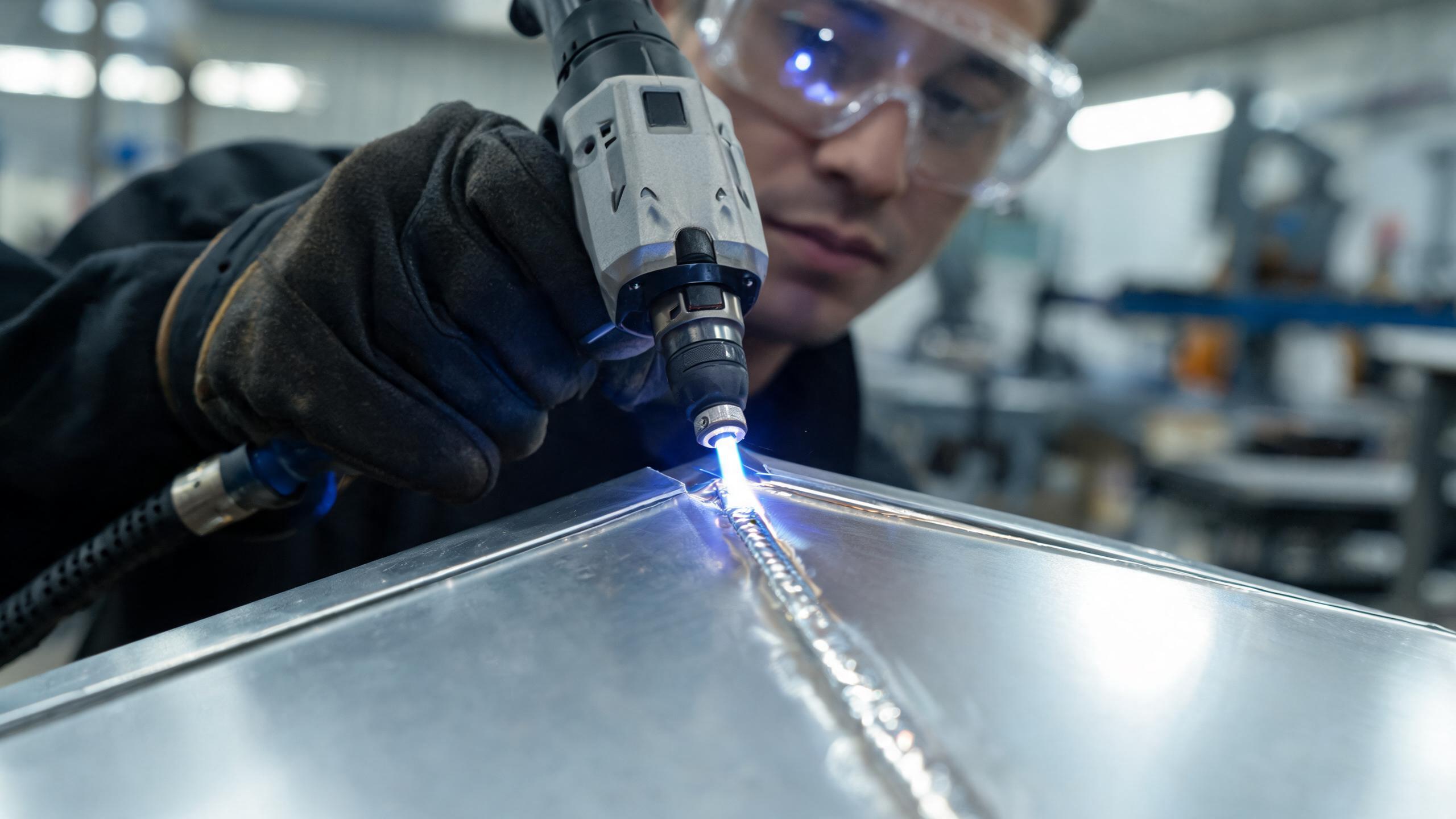
Praktisk guide til svejsning af tynd aluminiumsplade med en håndholdt lasersvejser, der dækker parametre, samlingstyper, varmestyring, deformationskontrol og kvalitetsverifikation.
Teknisk guide
Hvorfor svejsning af aluminiumsplader er anderledes
Svejsning af tynde aluminiumsplader – typisk 0,5 mm til 2,0 mm – giver en række udfordringer sammenlignet med tungere plader. Kombinationen af aluminiums høje termiske ledningsevne (ca. 237 W/m·K) og lave smeltepunkt (660 °C) betyder, at varme spredes hurtigt gennem pladen. Uden præcis kontrol fører dette til gennembrænding, vridning og deformation. En håndholdt laser til aluminiumsplader kræver nøje afstemte parametre og specifikke teknikker, der adskiller sig fra tyksektionssvejsning.
Fordelen ved en håndholdte lasersvejsemaskine til pladearbejde ligger i dens koncentrerede varmetilførsel. I modsætning til TIG-svejsning, som spreder varme over et stort område, fokuserer fiberlaseren energien i en plet så lille som 0,2–0,6 mm i diameter, hvilket minimerer den varmepåvirkede zone og reducerer deformation i tyndt materiale. For et bredere perspektiv på at bruge en bærbar lasersvejsemaskine til aluminium, se vores guide med tips og bedste praksis.
Anbefalede parametre til tynde aluminiumsplader
| Pladetykkelse | Effekt | Hastighed | Trådfremføring | Gas (Ar) |
|---|---|---|---|---|
| 0,5 mm | 400–600 W | 30–45 mm/s | 0,8–1,2 m/min | 12–15 L/min |
| 0,8 mm | 600–800 W | 25–35 mm/s | 1,0–1,5 m/min | 12–15 L/min |
| 1,0 mm | 700–900 W | 20–30 mm/s | 1,2–1,8 m/min | 15–18 L/min |
| 1,5 mm | 900–1200 W | 15–25 mm/s | 1,5–2,0 m/min | 15–18 L/min |
| 2,0 mm | 1100–1400 W | 12–20 mm/s | 1,8–2,5 m/min | 18–20 L/min |
1000 W-modellen håndterer plade op til ca. 1,5 mm uden problemer. Til 2,0 mm plade, der kræver fuld gennemtrængning, anbefales 1500 W-modellen – den opnår en maksimal gennemtrængning på 3 mm i aluminium, hvilket giver tilstrækkelig margin til ensartede svejsninger i fuld pladetykkelse.
Samlingstyper og forberedelse til aluminiumsplade
Stødsamlinger
For stødsamlinger mellem plader er kontrol af spalten kritisk. Svejsesømmens konsistens på ±0,1 mm, som vores håndholdte systemer kan opnå, betyder, at spalter skal holdes inden for 0,1–0,2 mm af den nominelle pladetykkelse. Spalter bredere end 10 % af pladetykkelsen kræver tilsatråd for at undgå utilstrækkelig udfyldning.
Overlapsamlinger
Overlapsamlinger er den mest tilgivende konfiguration for tynd plade. Laseren trænger gennem den øverste plade og smelter sammen med den nederste plade. Vigtige overvejelser:
- Sørg for, at begge plader er i flad kontakt – luftspalter forårsager manglende sammensmeltning.
- Brug lidt lavere effekt end til stødsamlinger ved samme tykkelse.
- Ret strålen mod kanten af den øverste plade, ikke midten, for optimal smelteflow.
Kantsvejsninger
T-samlinger og hjørnesamlinger på aluminiumsplade har gavn af en let trådfremføring for at opbygge kantsvejsningen. Hold en pistolvinkel på 35–45 grader i forhold til samlingslinjen for en ensartet perleform.
Teknikker til varmestyring
Grundprincip: Ved svejsning af tynd aluminiumsplade er målet ikke maksimal gennemtrængning, men kontrolleret varmetilførsel. Hver parameterjustering bør stille spørgsmålet: ”Tilfører jeg mere varme, end denne plade kan aflede?”
Pulstilstand til tynde plader
Pulstilstand er særligt effektiv til plade under 1,0 mm. Ved at skifte mellem peak-effekt (til gennemtrængning) og grundeffekt (til afkøling) størkner svejsebadet delvist mellem pulserne. Dette reducerer risikoen for gennembrænding og begrænser HAZ-bredden. Typiske pulsindstillinger:
- Peak-effekt: 1,2–1,5 gange CW-effekten for samme tykkelse
- Grundeffekt: 20–30 % af peak
- Pulsfrekvens: 50–200 Hz
- Arbejdscyklus: 40–60%
Svejsehastighed og varmetilførsel
Højere svejsehastighed reducerer den lineære varmetilførsel og foretrækkes generelt til tynd plade. Dog kan for høj hastighed med marginal effekt forårsage manglende sammensmeltning ved svejsestart, hvor aluminiumets høje indledende reflektivitet modstår stråleabsorption. Et kort ophold (0,1–0,3 sekunder) ved starten af hver svejsning sikrer, at nålehullet er etableret, før bevægelsen begynder.
Kontrol af deformation i aluminiumsplade
Deformation er det mest almindelige produktionsproblem ved svejsning af tynd aluminiumsplade. Praktiske modforanstaltninger:
- Hæftsvejsning: Placer hæftesvejsninger hver 50–100 mm, før hele sømmen svejses. Dette fastholder pladerne og forhindrer kumulativ deformation.
- Tilbageskridtsteknik: Svejs i modsat retning af den samlede fremgang. Hvert segments varmetilførsel modvirker delvist det foregående segments deformation.
- Varmeafledning: Spænd pladen fast til en kobber- eller aluminiumsbagplade. Kobber foretrækkes på grund af dets høje termiske ledningsevne (401 W/m·K).
- Symmetrisk svejsning: For samlinger med flere sømme skiftes side for at balancere termisk belastning.
Beskyttelsesgas til pladeapplikationer
Ren argon ved 12–18 L/min er standardvalget til aluminiumsplade. Gasdysen skal placeres 8–12 mm fra emneoverfladen. For plade tyndere end 0,8 mm reduceres flowhastigheden til 10–12 L/min – for højt gastryk kan forstyrre det tynde svejsebad og forårsage turbulens, der trækker atmosfærisk luft ind.
En efterfølgende gasskærm forlænger dækningen bag svejsebadet, hvilket er vigtigt, fordi aluminium forbliver smeltet flere millimeter bag lysbuen. Uden efterfølgende dækning oxiderer den bagerste del af svejseperlen og kan udvikle porøsitet.
Overfladeforberedelse til aluminiumsplade
Tynd plade er særligt følsom over for overfladeforurening, fordi der er lidt materialevolumen til at fortynde urenheder. Følg disse trin:
- Fjern oxidlaget med en dedikeret rustfri stålbørste umiddelbart før svejsning.
- Aftør med acetone for at fjerne olier og rester – brug ikke klorerede opløsningsmidler, da de kan producere giftige gasser under lasereksponering.
- Undgå at håndtere svejsezonen med bare hænder; hudolier bidrager til porøsitet.
- Svejs inden for 4 timer efter rengøring; oxidlaget genopbygges gradvist under omgivende forhold.
Hvad er den mindste tykkelse, en håndholdt lasersvejser kan håndtere på aluminium?
Med korrekte parameterindstillinger (lav effekt, pulstilstand, høj hastighed) kan 0,5 mm aluminiumsplade svejses med succes. Under 0,5 mm øges risikoen for gennembrænding markant, og specialiseret mikro-svejseudstyr kan være mere passende.
Har jeg brug for tilsatråd til svejsning af aluminiumsplade?
Til tætsiddende stødsamlinger på plade under 1,0 mm er autogen svejsning (uden tilsat) ofte tilstrækkelig. Til spalter, overlapsamlinger eller samlinger, der kræver kantsvejsningsforstærkning, anvendes 1,0 mm eller 1,2 mm 4043 (Al-Si) eller 5356 (Al-Mg) tilsatråd.
Hvordan forhindrer jeg, at pladen sætter sig fast på bagpladen?
Påfør et tyndt lag grafit- eller keramikbaseret anti-sprøjtforbindelse på bagpladens overflade. Alternativt kan du bruge en rillet kobberbagplade, der gør det muligt for svejseroden at dannes uden kontakt med pladen.
Kvalitetsverifikation
Efter svejsning skal følgende inspiceres på aluminiumspladesamlinger:
- Visuel inspektion: Svejseperlen skal være ensartet i bredde og højde, uden misfarvning ud over en smal HAZ.
- Gennemtrængningskontrol: For stødsamlinger verificeres fuld gennemtrængning ved at undersøge rodsiden. En ensartet bagperle indikerer korrekt sammensmeltning i fuld tykkelse.
- Deformationsmåling: Brug en retkant til at kontrollere planhed. Deformation ud over 0,5 mm pr. 100 mm længde indikerer behov for justering af parametre eller spænding.
- Sømkonsistens: Svejsesømmens konsistens på ±0,1 mm på vores håndholdte lasersvejsemaskine sikrer gentagelig perlegeometri, når parametrene holdes konstante.