
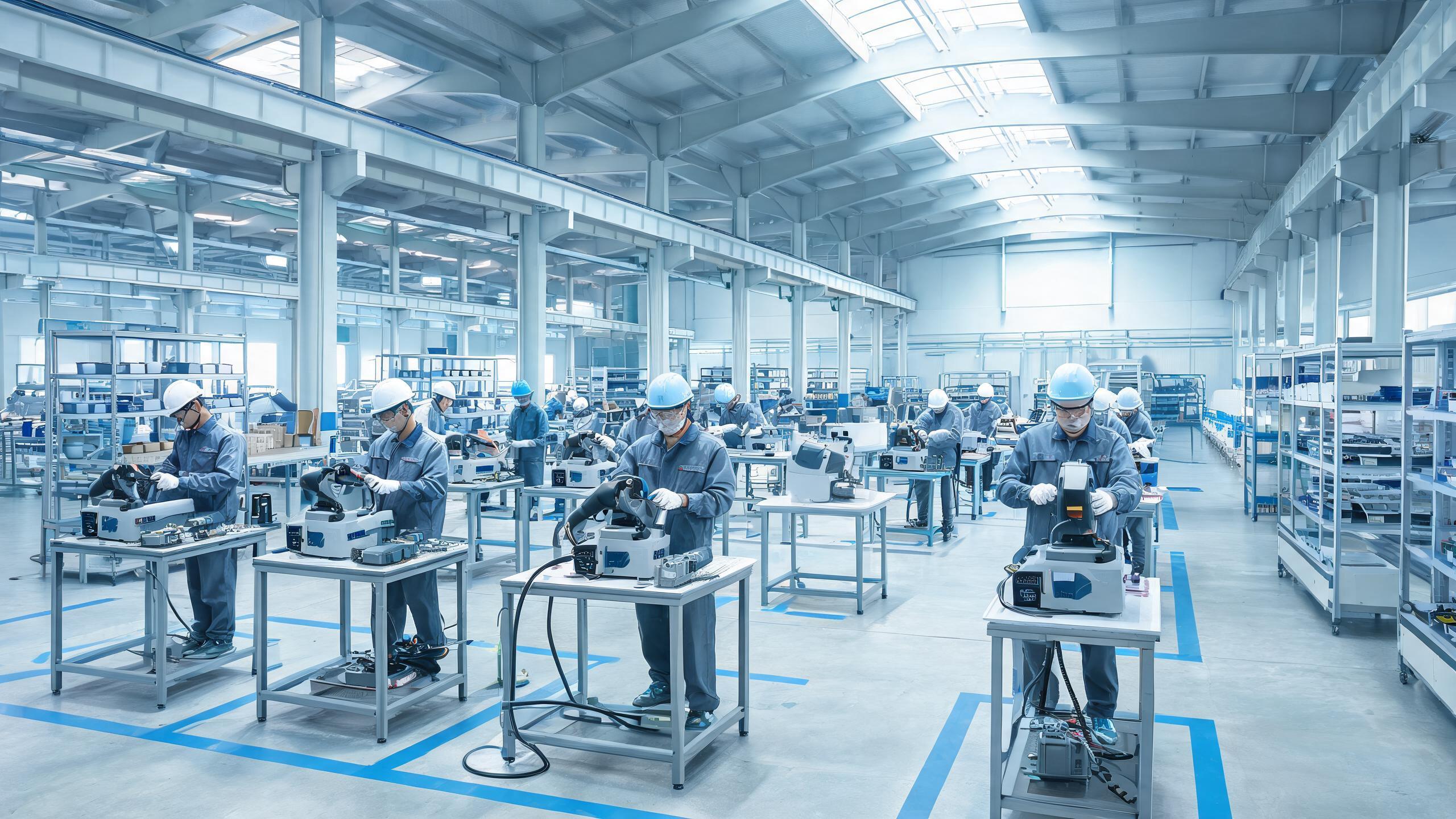
Eine ausgewogene Analyse des Kaufs eines handgeführten Laserschweißgeräts direkt vom Hersteller – Preisvorteile, technischer Zugang und Individualisierung gegenüber Logistik-, Zahlungs- und Supportrisiken mit Minderungsstrategien.
Beschaffungsstrategie
Kauf einer handgeführten Laserschweißmaschine direkt vom Hersteller
Die Entscheidung, eine Handlaserschweißmaschine direkt von einem Hersteller zu kaufen, anstatt über einen Händler oder ein Handelsunternehmen, wird von vielen Fertigungsbetrieben und Industriekäufern sorgfältig abgewogen. Der Reiz liegt auf der Hand: Der Direktkauf kann bessere Preise, eine tiefere technische Zusammenarbeit und größere Individualisierungsmöglichkeiten bieten. Aber er bringt auch Verantwortlichkeiten und Risiken mit sich, die Käufer verstehen sollten, bevor sie sich festlegen.
Dieser Artikel untersucht die Vorteile und Risiken des Direktkaufs bei einem Hersteller von handgeführten Faserlaserschweißgerätenam Beispiel von Shandong Xinhong CNC Technology – einem Unternehmen, das 2005 gegründet wurde und handgeführte Faserlaserschweißmaschinen von 1000 W bis 3000 W sowie automatische Roboterschweißsysteme herstellt.
Vorteile des Direktkaufs
Vorteile
- Bessere Preise: Durch den Wegfall des Aufschlags von Händler oder Handelsunternehmen zahlen Sie näher an den tatsächlichen Herstellungskosten. Bei Investitionsgütern wie einer handgeführten Laserschweißmaschine kann dies eine erhebliche Ersparnis bedeuten.
- Direkter technischer Zugang: Beim Direktkauf können Sie mit dem Entwicklungsteam sprechen, das die Maschine entworfen und gebaut hat. Dies ist wertvoll, wenn Sie Parameter festlegen, Materialkompatibilität besprechen oder Probleme beheben müssen.
- Individualisierungsmöglichkeiten: Hersteller können Spezifikationen oft ändern – wie Lasersource-Marke (IPG, RAYCUS oder GW), Leistungsstufe, Kabellänge oder Kühlkonfiguration – um sie an Ihre spezifischen Anwendungsanforderungen anzupassen. Handelsunternehmen verkaufen in der Regel nur Standardkonfigurationen.
- Komponententransparenz: Ein Hersteller kann eine detaillierte Stückliste bereitstellen, einschließlich der spezifischen Marken und Teilenummern, die in der Maschine verwendet werden. Xinhong verwendet beispielsweise elektrische Komponenten von Schneider und bietet Lasersources von IPG, RAYCUS und GW an – Details, die ein Handelsvermittler möglicherweise nicht kennt oder nicht weitergibt.
- Transparenz des Qualitätssystems: Ein Hersteller, der nach ISO 9001:2015 arbeitet, verfügt über dokumentierte Qualitätsprozesse, die Sie prüfen oder deren Nachweis Sie anfordern können. Die ISO-9001:2015-Zertifizierung von Xinhong bedeutet, dass die Eingangsmaterialprüfung, In-Prozess-Kontrollen und Endprüfungen Teil eines kontrollierten Systems sind.
- Konformitätsdokumentation: Hersteller besitzen die originalen CE- und RoHS-Technikakten sowie Konformitätserklärungen. Beim Direktkauf erhalten Sie diese Dokumente direkt von der Quelle, anstatt Kopien, die über Zwischenhändler weitergegeben wurden.
Risiken des Direktkaufs
Zu berücksichtigende Risiken
- Kommunikations- und Sprachbarrieren: Die direkte Kommunikation mit einem Überseehersteller erfordert eine klare, präzise technische Kommunikation. Missverständnisse bei Spezifikationen, Lieferzeiten oder Garantiebedingungen können zu kostspieligen Fehlern führen. Achten Sie auf Hersteller mit erfahrenen Exportteams und klarer Dokumentation in Englisch.
- Logistikkomplexität: Wenn Sie über einen Händler kaufen, kümmert dieser sich um Versand, Zollabfertigung und lokale Lieferung. Beim Direktkauf sind Sie – oder Ihr Spediteur – für die Koordination des internationalen Versands, der Einfuhrzölle und der Zolldokumente verantwortlich.
- Zahlungsbedingungen und finanzielles Risiko: Bei Direktkäufen sind oft größere Anzahlungen im Voraus oder die vollständige Zahlung vor dem Versand erforderlich, da der Hersteller die Produktion finanzieren muss. Akkreditive oder Treuhandvereinbarungen können dieses Risiko mindern, erhöhen aber Kosten und Komplexität.
- Distanz beim After-Sales-Support: Wenn der Hersteller im Ausland ist, ist ein Vor-Ort-Service in der Regel nicht verfügbar. Sie sind auf Fernsupport (Video, Telefon, E-Mail) und Selbstreparaturen mit zugesandten Teilen angewiesen. Bewerten Sie die Fernsupportfähigkeit des Herstellers und die Verfügbarkeit von Ersatzteilen vor dem Kauf.
- Durchsetzung der Garantie: Die Durchsetzung einer Garantie über internationale Grenzen hinweg kann schwieriger sein als die Zusammenarbeit mit einem lokalen Händler. Überprüfen Sie die Garantiebedingungen sorgfältig – was abgedeckt ist, wie lange und wie Ansprüche bearbeitet werden.
- Mindestbestellmengen: Einige Hersteller haben Mindestbestellmengen oder priorisieren größere Aufträge. Bestätigen Sie, ob Einzelstückkäufe akzeptiert werden und wie die Lieferzeit sein wird.
Risikominimierung
Die Risiken des Direktkaufs sind real, aber mit dem richtigen Ansatz beherrschbar. Hier sind praktische Schritte, um das Risiko zu reduzieren:
1. Überprüfen Sie die Referenzen des Herstellers
Überprüfen Sie vor der Bestellung die Geschäftsregistrierung, die Betriebsjahre und die Zertifizierungen des Herstellers. Xinhong fertigt seit 2005, arbeitet nach ISO 9001:2015 und seine Produkte tragen CE- und RoHS-Zertifizierungen. Dies sind überprüfbare Referenzen, die belegen, dass das Unternehmen ein etablierter Hersteller ist und keine Briefkastenfirma.
2. Fordern Sie detaillierte Spezifikationen und Muster an
Fragen Sie nach vollständigen technischen Spezifikationen, einschließlich Schweißleistungsdaten. Der 1500-W-Handlaserschweißer von Xinhong beispielsweise spezifiziert eine maximale Eindringtiefe von 3 mm bei Edelstahl und Aluminium, eine Nahtkonsistenz von ±0,1 mm und einen Dauerbetrieb von über 8 Stunden mit Wasserkühlung. Dies sind messbare Angaben – wenn ein Hersteller keine konkreten Leistungsdaten liefern kann, ist das bereits ein Risikosignal.
3. Verwenden Sie sichere Zahlungsmethoden
Verwenden Sie Akkreditive, Treuhanddienste oder Handelsabsicherungsplattformen anstelle von Überweisungen auf unbekannte Konten. Zahlungen in Etappen, die an Produktionsmeilensteine gekoppelt sind (Anzahlung, Vorversandinspektion, Restzahlung), bieten Hebelwirkung und reduzieren das finanzielle Risiko.
4. Führen Sie eine Vorversandinspektion durch
Vereinbaren Sie vor dem Versand der Maschine eine unabhängige Inspektion – entweder durch einen externen Inspektionsdienst oder durch Ihren eigenen Vertreter. Dies stellt sicher, dass die Maschine den vereinbarten Spezifikationen entspricht, physisch intakt ist und die richtigen Komponenten und Kennzeichnungen aufweist.
5. Erstellen Sie einen Ersatzteilplan
Bestellen Sie kritische Ersatzteile zusammen mit dem Erstkauf der Maschine. Häufige Verschleißteile und Ersatzkomponenten – wie Schutzlinsen, Düsen und Faserleitungen – sollten lokal bevorratet werden, um Ausfallzeiten zu minimieren. Bestätigen Sie Teilenummern und Verfügbarkeit mit dem Hersteller, bevor die Maschine eintrifft.
6. Klären Sie Supportkanäle schriftlich
Holen Sie vor dem Kauf den technischen Supportprozess des Herstellers schriftlich ein: Reaktionszeitverpflichtungen, verfügbare Kommunikationskanäle, ob Fernvideounterstützung angeboten wird, und den Prozess für die Bestellung von Ersatzteilen.
Wann ein Direktkauf sinnvoll ist
Der Kauf einer handgeführten Laserschweißmaschine direkt vom Hersteller ist am vorteilhaftesten, wenn:
- Sie die technische Fähigkeit haben, die Ausrüstung mit Fernsupport zu installieren und zu warten
- Sie mehrere Einheiten kaufen und die Kosteneinsparungen den zusätzlichen Logistikaufwand rechtfertigen
- Sie eine Individualisierung benötigen, die ein Händler nicht bieten kann
- Sie Erfahrung mit internationaler Beschaffung und Spedition haben
Es kann für Erstkäufer weniger geeignet sein, die praktische Installationsunterstützung, lokale Schulungen oder schnellen Vor-Ort-Service benötigen. In diesen Fällen kann der Aufpreis, den ein lokaler Händler verlangt, die zusätzliche Serviceebene wert sein.
Häufig gestellte Fragen
Wie viel kann ich sparen, wenn ich direkt vom Hersteller kaufe?
Die Ersparnisse variieren je nach Produkt und Zwischenhändlermargen, aber der Direktkauf eliminiert in der Regel 10–30 % an Händleraufschlägen. Der genaue Betrag hängt vom Produkt, der Bestellmenge und den ausgehandelten Bedingungen ab.
Erhalte ich eine Garantie beim Direktkauf?
Ja. Seriöse Hersteller wie Xinhong gewähren Garantien auf ihre Produkte. Prüfen Sie die Garantiebedingungen vor dem Kauf sorgfältig, einschließlich Deckungsumfang, Dauer und des Ablaufprozesses für internationale Käufer.
Was ist, wenn ich Vor-Ort-Service benötige?
Die meisten Übersee-Hersteller bieten Remote-Technischen Support statt Vor-Ort-Service an. Wenn Vor-Ort-Service entscheidend ist, prüfen Sie, ob ein lokaler Händler oder Servicepartner verfügbar ist, oder verhandeln Sie einen Servicebesuch als Teil des Kaufvertrags.