
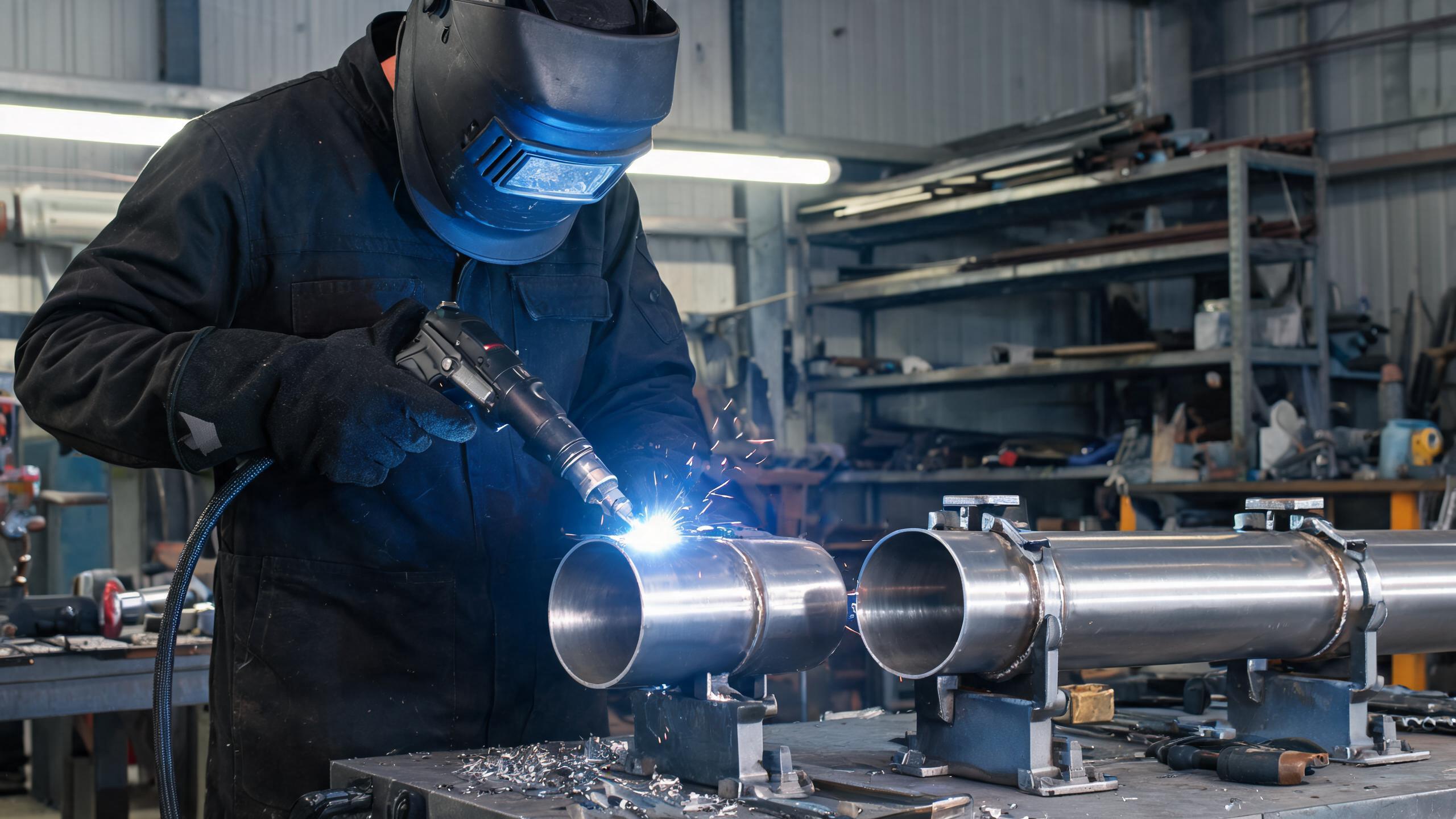
Ein käuferorientierter Leitfaden zur Auswahl des richtigen Handlaserschweißgeräts für Edelstahlrohr-Anwendungen, der Leistungsauswahl, Verbindungsarten, Eindringtiefe, Kühlanforderungen und Präzisionskriterien für Maschinen von 1000 W bis 3000 W abdeckt.
Warum handgeführte Laserschweißgeräte bei Edelstahlrohren überzeugen
Edelstahlrohre werden in der Lebensmittelverarbeitung, beim Chemietransport, bei architektonischen Geländern und Abgassystemen eingesetzt – Anwendungen, bei denen die Schweißqualität direkt die Korrosionsbeständigkeit und strukturelle Integrität beeinflusst. Ein Handlaserschweißmaschine gibt Bedienern die Freiheit, sich um gekrümmte Rohroberflächen und enge Verbindungsgeometrien zu manövrieren, die für feste Schweißstationen unerreichbar sind. Im Vergleich zum herkömmlichen WIG-Schweißen liefern handgeführte Faserlaserschweißgeräte eine schmalere Wärmeeinflusszone, eine schnellere Verfahrgeschwindigkeit und ein deutlich saubereres Nahtbild mit minimalem Nachschleifaufwand.
Wichtige Auswahlkriterien für das Rohrschweißen
1. Laserleistung an die Rohrwanddicke anpassen
Der kritischste Faktor ist die Anpassung der Laserleistung an die Rohrwanddicke, die Sie schweißen möchten. Eine allgemeine Richtlinie für Edelstahlrohre:
- 1000 W – geeignet für dünnwandige Rohre bis ca. 2 mm Wanddicke. Ideal für dekorative Rohre und leichte Abgaskomponenten.
- 1500 W – bewältigt bis zu 3 mm maximale Eindringtiefe in Edelstahl. Das 1500-W-Modell liefert eine Nahtkonsistenz von ±0,1 mm und ist damit die vielseitigste Wahl für Standardrohre.
- 2000 W – durchdringt dickwandigere Rohre (ca. 3–4 mm), geeignet für schwerere industrielle Rohrleitungssysteme.
- 3000 W – ausgelegt für dickwandige Rohre und anspruchsvolle strukturelle Anwendungen, bei denen tiefe Eindringtiefe und hohe Abscheiderate erforderlich sind.
Wenn Ihre Arbeit hauptsächlich Rohre mit Standardwanddicken von 1–3 mm umfasst, bietet der 1500-W- Handlaserschweißmaschine die beste Balance aus Leistungsfähigkeit, Kosten und Präzision.
2. Strahlqualität und Nahtkonsistenz bewerten
Beim Rohrschweißen ist die Nahtkonsistenz genauso wichtig wie die Eindringtiefe. Eine gleichmäßige Naht gewährleistet eine gleichmäßige Korrosionsbeständigkeit entlang der gesamten Verbindung – entscheidend für Sanitär- und Chemierohrleitungen. Das 1500-W-Modell erreicht eine Nahtkonsistenz von ±0,1 mm, was bedeutet, dass jeder Schweißdurchgang ein vorhersehbares, wiederholbares Nahtprofil erzeugt. Dieses Maß an Präzision reduziert Nacharbeit und Prüfungsausfälle, insbesondere bei der Serienfertigung von Rohrbaugruppen.
3. Das Kühlsystem für den Dauerbetrieb berücksichtigen
Das Rohrschweißen umfasst oft lange, durchgehende Nähte – Umfangsnähte an Rohrverbindungen können sich über beträchtliche Entfernungen erstrecken. Ein Wasserkreislauf-Kühlsystem ist unerlässlich, um die Stabilität der Laserquelle während des Dauerbetriebs aufrechtzuerhalten. Das wassergekühlte Design des 1500-W-Modells unterstützt 8+ Stunden Dauerbetrieb, sodass ein einzelner Bediener volle Produktionsschichten ohne thermische Ausfallzeiten absolvieren kann. Luftgekühlte Maschinen sind zwar leichter, können aber typischerweise die Einschaltdauer, die für die industrielle Rohrfertigung erforderlich ist, nicht aufrechterhalten.
4. Schweißkopf und Manövrierfähigkeit bewerten
Handgeführte Schweißköpfe müssen sich frei um Rohrumfänge drehen und die Rückseite von Verbindungen in engen Räumen erreichen können. Achten Sie auf ein Scankopfdesign, das eine zugängliche Verbindungspositionierung aus mehreren Winkeln ermöglicht. Die Möglichkeit, Schweißprofile zu speichern und abzurufen, ist ebenfalls wertvoll – Bediener, die wiederholt denselben Rohrdurchmesser und dasselbe Material schweißen, können optimierte Parameter speichern und sofort zwischen den Aufgaben wechseln.
Häufige Rohrverbindungstypen und Empfehlungen
| Verbindungstyp | Typische Wanddicke | Empfohlene Leistung |
|---|---|---|
| Stumpfnaht (gerades Rohr) | 1–2 mm | 1000W–1500W |
| T-Stoß (Abzweigverbindung) | 2–3 mm | 1500 W |
| Umfangsnaht (Flansch zu Rohr) | 2–3 mm | 1500W–2000W |
| Dickwandige Strukturverbindung | 3 mm+ | 2000W–3000W |
Praktische Tipps für das Schweißen von Edelstahlrohren
- Reinigen Sie die Rohroberfläche vor dem Schweißen – Öl, Oxide und Verunreinigungen sind die Hauptursachen für Porosität in Edelstahlschweißnähten.
- Verwenden Sie Argonschutzgas um das Schweißbad vor Oxidation zu schützen, insbesondere auf der Wurzelseite von Stumpfnähten.
- Stellen Sie die Drahtvorschubgeschwindigkeit so ein, dass sie zur Verfahrgeschwindigkeit passt – zu viel Zusatzwerkstoff verursacht Nahtüberhöhung, zu wenig verursacht Unterschneidungen.
- Testen Sie Parameter an einem Probestück derselben Rohrdurchmesser und desselben Materials, bevor Sie mit den Produktionsschweißnähten beginnen.
Konformität und Zertifizierung
Für Käufer, die in europäische Märkte liefern, stellen Sie sicher, dass die Maschine CE- und RoHS-Zertifizierungen trägt. Die handgeführten Laserschweißgerät für Edelstahl Anwendungen von Xinhong CNC sind CE- und RoHS-zertifiziert, und das Unternehmen arbeitet nach dem Qualitätsmanagement ISO 9001:2015 – abdeckend Forschung und Entwicklung, Produktion und Kundendienst. Diese Zertifizierungen bestätigen, dass die Ausrüstung die europäischen Sicherheits- und Umweltstandards erfüllt, die für industrielle Rohrfertigungsanlagen erforderlich sind.