
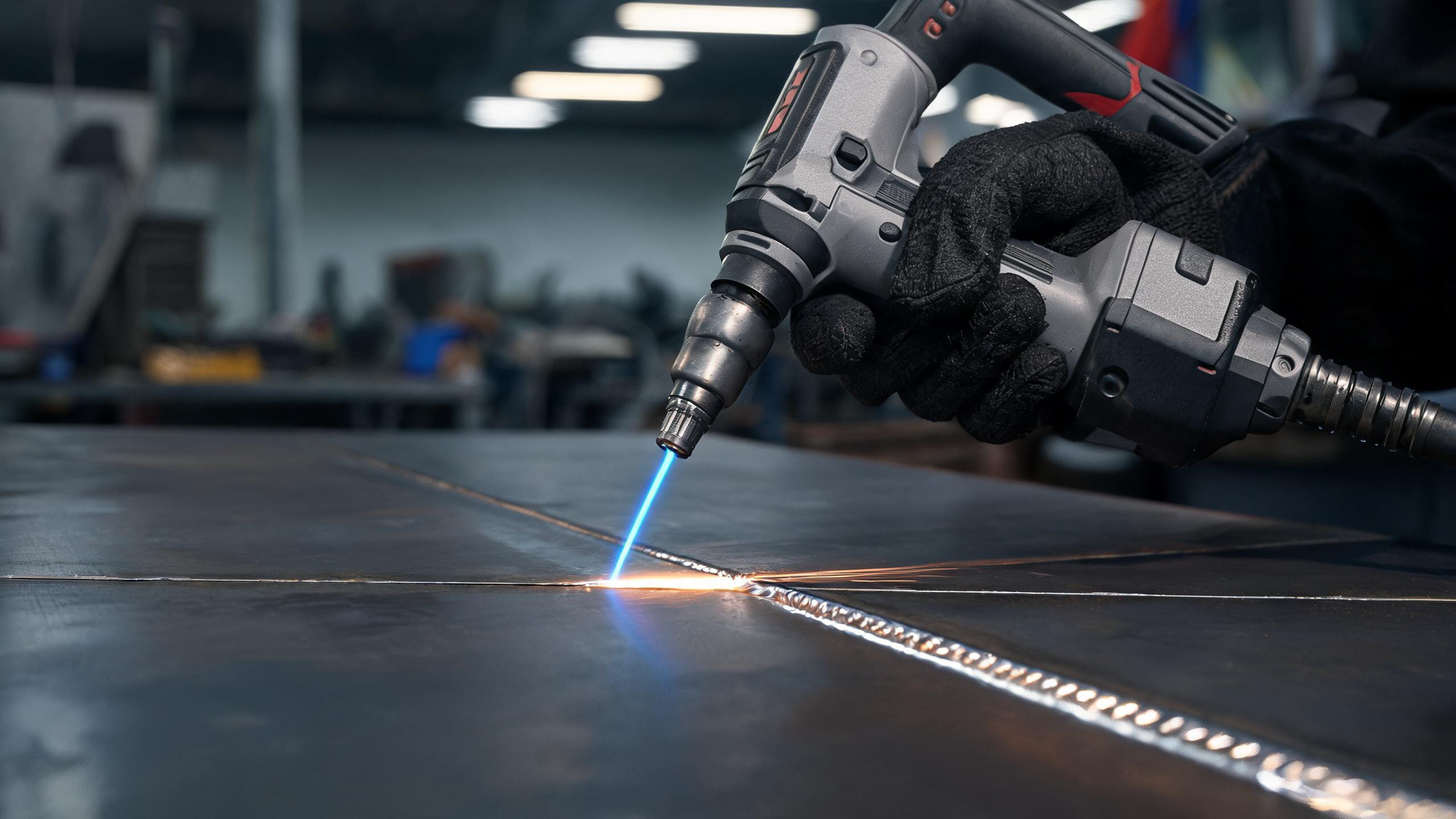
Sveobuhvatan vodič za odabir najboljeg ručnog stroja za lasersko zavarivanje za obradu čelika, koji pokriva usklađivanje snage, dubinu prodiranja, preciznost zavara, sustave hlađenja, sukladnost s certifikatima i ergonomiju operatera.
Što čini ručni laserski zavarivač “najboljim” za čelik?
Najbolji ručni stroj za lasersko zavarivanje za čelik nije onaj s najvećom snagom – već onaj koji odgovara vašim specifičnim vrstama čelika, rasponima debljina, obujmu proizvodnje i zahtjevima sukladnosti. Obrada čelika obuhvaća ugljični čelik, pocinčani čelik i nehrđajući čelik, od kojih svaki ima različite karakteristike toplinske vodljivosti i refleksivnosti. Odabir pravog stroja znači procjenu pet ključnih kriterija: raspon snage, preciznost zavarivanja, kapacitet hlađenja, certifikacija i ergonomija za operatera.
Kriterij 1: Raspon snage i kompatibilnost materijala
Ručni laserski zavarivači s vlaknima dostupni su u četiri primarne razine snage. Svaka razina snage služi za različit raspon debljina čelika i vrsta primjene:
- 1000W – Početna snaga za tanki čelični lim i lagane komponente do približno 2 mm. Prikladno za male radionice, popravke i izradu prototipova.
- 1500W – Najsvestranija razina, koja obrađuje do 3 mm maksimalnog prodiranja u nehrđajućem čeliku i aluminiju. Model od 1500W postiže konzistentnost zavara od ±0,1 mm, što ga čini prikladnim i za kozmetičke i za strukturne zavare.
- 2000W – Prošireno prodiranje za ploče i profile od srednje debelog čelika, približno u rasponu od 3–4 mm.
- 3000W – Razina visoke snage za debele čelične ploče, tešku strukturnu obradu i proizvodnju velikog obujma koja zahtijeva duboko prodiranje.
Za većinu općih radionica za obradu čelika, 1500W ručni stroj za lasersko zavarivanje nehrđajućeg čelika predstavlja optimalnu ravnotežu – obrađuje većinu uobičajenih debljina čelika uz zadržavanje preciznosti i isplativosti.
Kriterij 2: Preciznost zavara i ponovljivost
U obradi čelika, kvaliteta zavara izravno utječe na čvrstoću spoja, izgled i rezultate inspekcije. Konzistentnost zavara od ±0,1 mm koju postiže model od 1500W znači da svaki prolaz zavarivanja proizvodi ujednačen profil šava unutar odstupanja od jedne desetine milimetra. Ova razina ponovljivosti ključna je za:
- Serijsku proizvodnju gdje svaki dio mora zadovoljiti identične standarde kvalitete
- Kozmetičke zavare na vidljivim čeličnim konstrukcijama poput arhitektonskih čeličnih radova
- Strukturne zavare gdje geometrija zavara utječe na nosivost
- Audite kvalitete koji zahtijevaju dokumentiranu konzistentnost zavara
Kriterij 3: Sustav hlađenja i radni ciklus
Radionice za obradu čelika obično rade u kontinuiranim proizvodnim smjenama. Sustav hlađenja s cirkulacijom vode ključni je omogućivač za kontinuirani rad. Dizajn s vodenim hlađenjem modela od 1500W podržava 8+ sati neprekidnog zavarivanja bez toplinskih prekida – što odgovara standardnom rasporedu jedne smjene. Prilikom procjene strojeva, razmotrite:
- Je li sustav hlađenja integriran ili zahtijeva vanjski priključak hladnjaka
- Radni raspon temperature okoline hladnjaka
- Intervale održavanja za zamjenu rashladne tekućine i čišćenje filtera
Strojevi sa zračnim hlađenjem mogu biti dovoljni za povremene ili lagane primjene, ali ne mogu dosegnuti radni ciklus sustava s vodenim hlađenjem za industrijsku obradu čelika.
Kriterij 4: Certifikacija i sukladnost s tržištem
Ako isporučujete zavarene čelične proizvode na europska ili međunarodna tržišta, certifikacija stroja nije opcija – to je uvjet nabave. Ključne certifikate koje treba provjeriti:
- CE oznaka – potvrđuje sukladnost s europskim standardima zdravlja, sigurnosti i zaštite okoliša
- RoHS sukladnost – osigurava da ograničene opasne tvari nisu prisutne u opremi
- ISO 9001:2015 certifikat – potvrđuje da sustav upravljanja kvalitetom proizvođača pokriva istraživanje i razvoj, proizvodnju i usluge nakon prodaje
Ručni laserski zavarivači tvrtke Xinhong CNC nose CE i RoHS certifikate, a tvrtka posluje pod ISO 9001:2015. Laserski izvori potječu od svjetski poznatih proizvođača uključujući IPG, RAYCUS i GW, osiguravajući kvalitetu snopa i dugoročnu pouzdanost.
Kriterij 5: Ergonomija i upotrebljivost za operatera
Ručni stroj za zavarivanje produktivan je koliko i operater može izdržati. Ključni ergonomski čimbenici:
- Težina glave za zavarivanje – lakše glave smanjuju umor tijekom dugih smjena
- Pohrana profila – mogućnost spremanja 50+ profila zavarivanja omogućuje operaterima trenutnu promjenu između vrsta čelika i debljina
- Integracija dodavača žice – ugrađeni dodavač žice eliminira potrebu za zasebnom jedinicom dodavača
- Sigurnosne blokade – automatsko isključivanje lasera kada se otpusti okidač štiti operatera
Sažetak odluke
| Vaša primjena | Preporučena snaga | Ključno obrazloženje |
|---|---|---|
| Tanki čelični lim (≤2 mm) | 1000W | Niži trošak, dovoljno prodiranje |
| Opća obrada čelika (1–3 mm) | 1500W | Najbolja svestranost, preciznost ±0,1 mm, 8h+ neprekidnog rada |
| Srednja ploča (3–4 mm) | 2000W | Prošireno prodiranje za deblje spojeve |
| Teški strukturni čelik (4 mm+) | 3000W | Maksimalno prodiranje i brzina taloženja |