
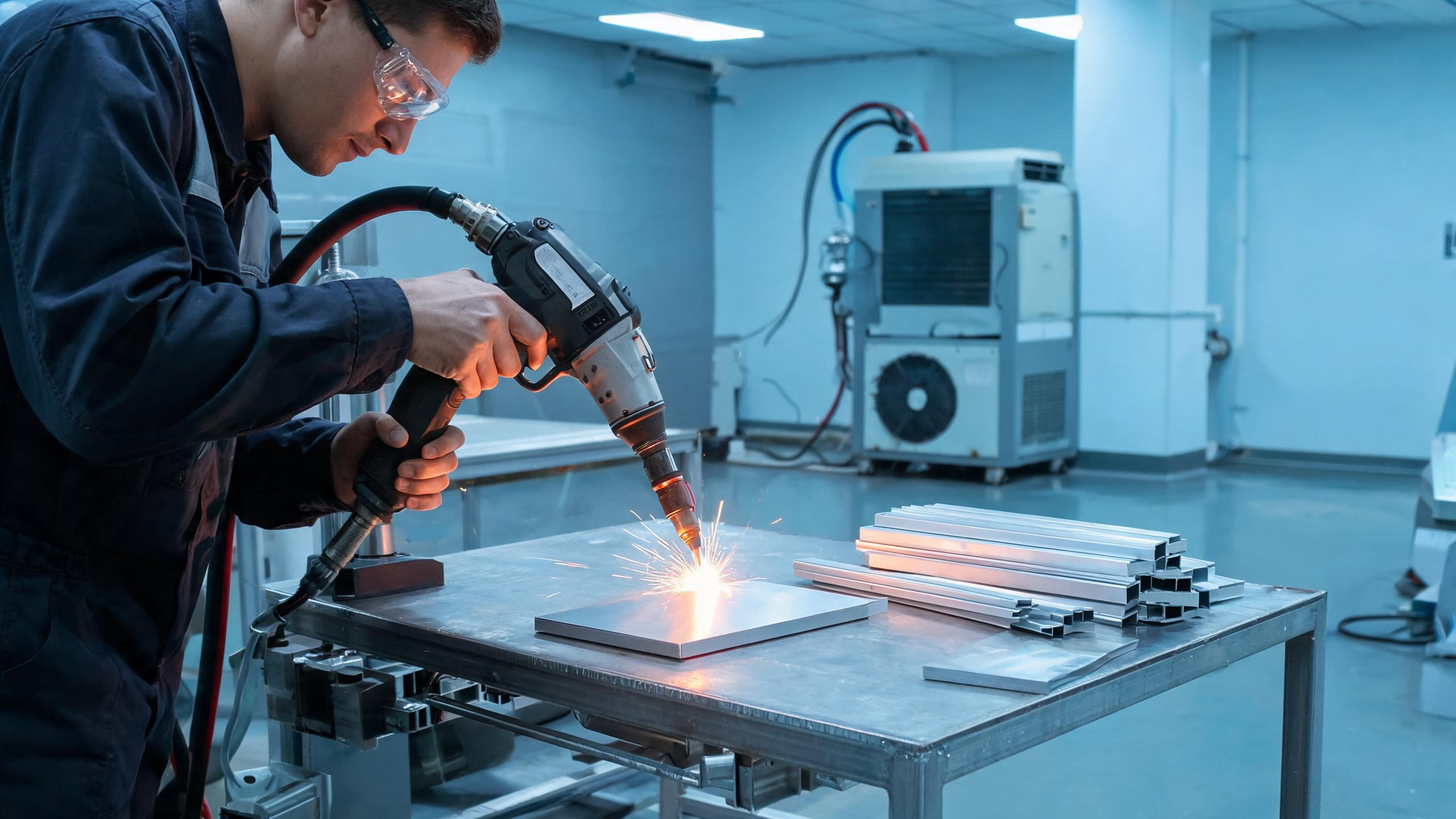
Gyakorlati paraméter-útmutató alumínium kézi lézerhegesztéséhez, amely lefedi a teljesítményt, sebességet, huzalelőtolást, védőgázt, oxideltávolítást és porozitásszabályozást.
Műszaki útmutató
Miért fontosak az alumíniumhegesztési paraméterek
Az alumínium az egyik legnagyobb kihívást jelentő anyag a lézerhegesztésben. Magas reflexiós képessége az 1064 nm-es szálas lézerhullámhosszon, a hővezető képessége, amely nagyjából négyszerese az acélénak, valamint a természetesen képződő oxidréteg, amelynek olvadáspontja meghaladja a 2000 °C-ot, mind pontos paraméterbeállítást igényel. Egy kézi lézerhegesztő gép kiváló alumíniumhegesztéseket tud produkálni – de csak akkor, ha a teljesítmény, a sebesség, a huzalelőtolás és a védőgáz megfelelően van összehangolva az adott ötvözettel és vastagsággal.
Ez az útmutató bemutatja azokat a kulcsfontosságú paramétereket, amelyeket be kell állítania a konzisztens, pórusmentes alumíniumhegesztésekhez, konkrét referenciaértékekkel a termékcsaládunk 1000 W és 3000 W közötti kézi szálas lézerhegesztőihez. A hordozható lézerhegesztő gép alumíniumhozkiválasztásával kapcsolatos átfogóbb útmutatásért lásd kísérő cikkünket.
Az alumínium lézerhegesztésének alapvető paraméterei
Lézer teljesítmény
A teljesítmény kiválasztása elsősorban az anyagvastagságtól és a kötéstípustól függ. Alumíniumötvözeteknél az 1500 W-os modell egyetlen menetben legfeljebb 3 mm-es behatolást ér el. Vastagabb keresztmetszetekhez a 2000 W-os vagy 3000 W-os modellek szükségesek. A túlzott teljesítmény vékony alumíniumon átégést és alámetszést okoz; a túl alacsony teljesítmény hiányos olvadást eredményez.
| Anyagvastagság | Ajánlott teljesítmény | Modell |
|---|---|---|
| 0,5–1,0 mm | 600–900 W | 1000 W |
| 1,0–2,0 mm | 900–1300 W | 1500 W |
| 2,0–3,0 mm | 1300–1500 W | 1500 W / 2000 W |
| 3,0–4,0 mm | 1800–2200 W | 2000 W / 3000 W |
| 4,0 mm+ | 2500–3000 W | 3000 W |
Kulcspont: Az alumínium szobahőmérsékleten a beeső szálas lézerenergia akár 90%-át is visszaveri. Amint az anyag eléri az olvadáspontot, az elnyelőképesség meredeken megnő. Ez azt jelenti, hogy az egyes hegesztési impulzusok első ezredmásodpercei kritikusak – a nem megfelelő csúcsteljesítmény azt okozhatja, hogy a sugár visszaverődik ahelyett, hogy behatolna, ami egyenetlen hegesztési kezdéseket eredményez.
Hegesztési sebesség
A haladási sebesség közvetlenül befolyásolja az egységnyi hosszra eső hőbevitelt. Alumínium esetében a nagyobb sebesség csökkenti a hőhatásövezetet (HAZ) és minimalizálja a torzulást, de a túl nagy sebesség hiányos olvadást okozhat. Jellemző sebességtartományok:
- Vékony lemez (0,5–1,5 mm): 20–40 mm/s
- Közepes lemez (1,5–3,0 mm): 10–25 mm/s
- Vastag lemez (3,0 mm+): 5–15 mm/s
Az összefüggés egyértelmű: a nagyobb teljesítmény nagyobb sebességet tesz lehetővé azonos behatolási mélység mellett. A rendszer több mint 50 hegesztési paraméterkészletet tud tárolni, így ha megtalálja az optimális teljesítmény-sebesség kombinációt egy adott ötvözethez és vastagsághoz, elmentheti azt a reprodukálható gyártási sorozatokhoz.
Impulzusos vs. folyamatos hullámú üzemmód
Alumínium esetén a folyamatos hullámú (CW) üzemmód általában előnyösebb a teljes behatolású hegesztéseknél, mert stabil kulcslyukat tart fenn. Az impulzusos üzemmód azonban hasznos lehet vékony alumíniumlemeznél, ahol a hőkezelés kritikus – az impulzusok közötti szünet lehetővé teszi a hegesztési medence részleges megszilárdulását, csökkentve az átégés kockázatát.
Huzalelőtolási sebesség
Ha töltőhuzalt használ alumíniumkötésekhez, az előtolási sebességet össze kell hangolni a haladási sebességgel és a teljesítménnyel. Túl sok huzal domború varratot és esetleges olvadási hiányt okoz a varrat lábainál; túl kevés huzal alultöltést eredményez. Gyakorlati kiindulási pont az 1,5–3,0 m/perc 1,0 mm-es alumíniumhuzal esetén, vastagabb anyagoknál és nagyobb haladási sebességnél növelve.
Védőgáz kiválasztása és áramlási sebesség
A gázválasztás nagyobb hatással van az alumíniumhegesztés minőségére, mint az acél esetében. A három leggyakoribb lehetőség:
| Gáz típusa | Áramlási sebesség | Legjobb erre |
|---|---|---|
| Argon (Ar) | 15–20 L/perc | Általános alumíniumhegesztés; stabil ív, tiszta varratok |
| Argon + hélium (50/50) | 15–25 L/perc | Vastagabb szelvények; mélyebb behatolás, forróbb medence |
| Nitrogén (N&sub2;) | 15–20 L/perc | Költségérzékeny alkalmazások; nem kritikus kötéseknél elfogadható |
Figyelem: A nitrogén reakcióba léphet az olvadt alumíniummal, alumínium-nitridet képezve, ami a hegesztési zóna ridegségét okozhatja. Szerkezeti vagy teherviselő alkalmazásokhoz erősen ajánlott az argon vagy argon-hélium keverék használata.
Felület-előkészítés: Az oxidréteg problémája
Az alumínium természetes oxidréteget képez (Al&sub2;O&sub3;), amelynek olvadáspontja közel 2072 °C – nagyjából háromszorosa az alapalumínium olvadáspontjának (660 °C). Ha ezt az oxidréteget nem távolítják el a hegesztés előtt, hiányos olvadást, porozitást és zárványokat okozhat.
Ajánlott előkészítési lépések:
- Mechanikus eltávolítás: Használjon rozsdamentes acél drótkefét (kizárólag alumíniumhoz), és távolítsa el az oxidréteget a hegesztés előtt 2–4 órán belül.
- Kémiai tisztítás: Kritikus alkalmazásoknál zsírtalanítson acetonnal vagy speciális oldószerrel, majd marassa nátrium-hidroxid-oldatban, és öblítse le ioncserélt vízzel.
- Időbeosztás: Az oxidréteg 4–8 órán belül újraképződik a tisztítást követően, környezeti körülmények között. A hegesztést az előkészítés után haladéktalanul meg kell kezdeni.
A porozitás szabályozása alumíniumhegesztésnél
A hidrogénporozitás a leggyakoribb hiba az alumínium lézerhegesztésében. A folyékony alumínium nagy hidrogénoldékonysággal rendelkezik, de ahogy a hegesztési medence megszilárdul, az oldékonyság élesen csökken, és gázbuborékok csapdázódnak.
Gyakorlati ellenintézkedések:
- Gondoskodjon arról, hogy a védőgáz lefedettsége 5–10 mm-rel túlnyúljon a hegesztési medence hátsó szélén.
- Tárolja a töltőhuzalt száraz, fűtött környezetben; az alumíniumhuzal nedvességet szív fel.
- Tartson stabil haladási sebességet – a hirtelen lassulás a medence megnagyobbodását és több hidrogén felszívódását okozza.
- Ellenőrizze, hogy a varrat egyenletessége ±0,1 mm-en belül marad, mert a szabálytalan hézagok levegőt csapdáznak és növelik a porozitás kockázatát.
Hegesztési egyenletesség és minőségellenőrzés
Az 1500 W-os kézi lézerhegesztő gépünk megfelelő paraméterek mellett ±0,1 mm-es varrategyenletességet ér el. Ez a pontosság a legtöbb ipari alumíniumalkalmazáshoz elegendő, beleértve az akkumulátortálcákat, hőcserélőket és szerkezeti profilokat. A vízhűtéses rendszer 8+ órás folyamatos üzemet támogat, ami azt jelenti, hogy a paraméterek stabilitása hosszú gyártási műszakokon át megmarad, hőeltolódás nélkül a lézerforrásban.
Gyorsindítási paraméter-referencia
| Paraméter | 1 mm-es Al lemez | 2 mm-es Al lemez | 3 mm-es Al lemez |
|---|---|---|---|
| Teljesítmény | 800–1000 W | 1200–1400 W | 1400–1500 W |
| Sebesség | 25–35 mm/s | 12–20 mm/s | 8–12 mm/s |
| Huzalelőtolás | 1,5–2,0 m/perc | 2,0–2,5 m/perc | 2,5–3,0 m/perc |
| Gáz (Ar) | 15 L/perc | 18 L/perc | 20 L/perc |
| Fókusztávolság | 0 és +1 mm között | 0 mm | −0,5 és 0 mm között |
Ezek az értékek kiindulási pontok az 5000-es és 6000-es sorozatú alumíniumötvözetekhez. A finomhangolás az adott kötésgeometria, ötvözet-állapot és huzalösszetétel alapján hozza meg a legjobb eredményeket.
Használhatom ugyanazokat a paramétereket különböző alumíniumötvözetekhez?
Nem. Az 5000-es sorozat (Mg-ötvözetű) és a 6000-es sorozat (Mg-Si-ötvözetű) alumínium eltérő olvadási tartománnyal és repedésérzékenységgel rendelkezik. A 6000-es sorozat hajlamosabb a melegrepedésre, és módosított impulzusparamétereket vagy más töltőhuzalt (például 4043 vagy 5356 ötvözetet) igényelhet.
Miért van fekete maradék a hegesztési varrataimon?
A fekete maradék általában elégtelen védőgáz-lefedettséget vagy szennyeződést jelez az alumínium felületén. Növelje a gázáramlási sebességet, ellenőrizze, hogy a fúvóka tiszta és megfelelően van elhelyezve, és győződjön meg arról, hogy az oxidréteget eltávolították a hegesztés előtt.
Hány paraméterkészletet tudok tárolni?
A rendszer több mint 50 paramétercsoport tárolását támogatja, lehetővé téve a kezelők számára, hogy optimalizált beállításokat mentsenek különböző ötvözetekhez, vastagságokhoz és kötéstípusokhoz, gyors előhívás céljából a gyártás során.