
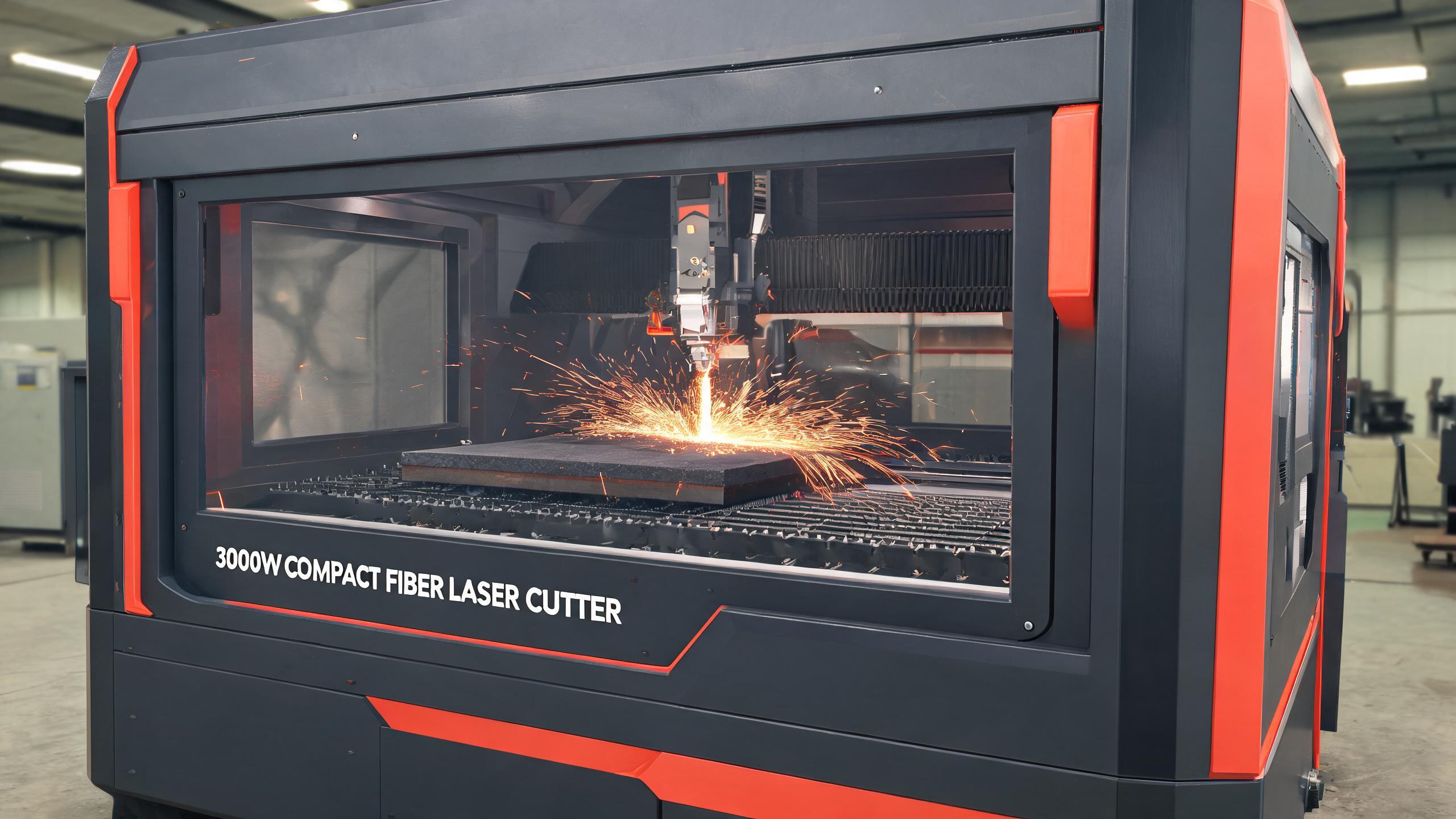
Rincian total biaya kepemilikan (TCO) untuk mesin pemotong laser serat, mencakup pembelian awal, konsumsi listrik berdasarkan tingkat daya, biaya gas bantu, perawatan dan konsumabel, serta strategi pengurangan biaya.…
Biaya Mesin Pemotong Laser Serat: Rincian Total Biaya Kepemilikan
Harga pembelian mesin pemotong laser serat hanyalah permulaan. Untuk memahami biaya mesin pemotong laser serat yang sebenarnya, Anda perlu melihat total biaya kepemilikan (TCO) — yaitu jumlah dari investasi awal, listrik, gas bantu, perawatan, tenaga kerja, dan bahan habis pakai selama masa pakai mesin. Pembeli yang hanya fokus pada harga tertera sering kali menemukan bahwa biaya operasional menambah 50–150% dari total selama periode 5–10 tahun. Panduan ini menguraikan setiap komponen biaya sehingga Anda dapat menganggarkan dengan akurat.
Mengapa Total Biaya Kepemilikan Penting
Mesin pemotong laser serat adalah investasi 10+ tahun. Mesin yang Anda pilih hari ini akan menimbulkan biaya operasional setiap hari mesin itu beroperasi. Memahami TCO membantu Anda:
- Membandingkan mesin secara adil — mesin dengan harga lebih rendah tetapi konsumsi daya dan biaya bahan habis pakai lebih tinggi mungkin lebih mahal selama 5 tahun daripada model premium
- Membenarkan investasi kepada pemangku kepentingan keuangan dengan angka yang konkret
- Mengidentifikasi peluang penghematan biaya dalam pemilihan gas, penjadwalan perawatan, dan perencanaan produksi
- Menentukan tingkat daya yang tepat untuk volume produksi Anda untuk menghindari pembayaran lebih untuk kapasitas yang tidak Anda gunakan
Rincian Komponen TCO
Tabel di bawah ini menunjukkan kategori biaya utama yang membentuk total biaya kepemilikan dan pengoperasian mesin pemotong laser serat. Persentase bersifat indikatif dan bervariasi berdasarkan tingkat daya, pola penggunaan, dan tarif utilitas setempat.
| Kategori Biaya | Deskripsi | Bagian Khas dari TCO (5 tahun) | Variabel atau Tetap |
|---|---|---|---|
| Pembelian awal | Mesin, sumber laser, sistem kontrol, penutup | 40–55% | Tetap (sekali bayar) |
| Listrik | Daya sumber laser, pendingin, kompresor udara, kipas pembuangan, pengontrol CNC | 15–25% | Variabel (tergantung penggunaan) |
| Gas bantu | Oksigen untuk baja karbon; nitrogen untuk pemotongan bebas oksida pada baja tahan karat/aluminium | 10–20% | Variabel (tergantung material & gas) |
| Perawatan & bahan habis pakai | Lensa pelindung, nosel, filter, pelumas, cairan pendingin, penggantian sabuk | 5–10% | Semi-variabel |
| Tenaga kerja operator | Upah operator mesin, pelatihan, waktu pemrograman | 10–20% | Variabel (tergantung shift) |
| Fasilitas & infrastruktur | Ruang lantai, instalasi listrik, ventilasi, penyimpanan gas | 3–8% | Tetap (berulang) |
Konsumsi Listrik berdasarkan Tingkat Daya
Listrik adalah salah satu biaya operasional berkelanjutan terbesar. Efisiensi daya dari dinding ke output laser serat (biasanya 25–35%) berarti sumber laser 3000W menarik sekitar 9–12 kW daya listrik selama pemotongan, ditambah daya tambahan untuk pendingin, kompresor, dan sistem pembuangan.
| Daya Mesin | Perkiraan Total Daya yang Ditarik (Pemotongan) | Konsumen Daya Utama |
|---|---|---|
| 500W | ~3–4 kW | Sumber laser, pendingin kecil, kompresor udara, pengontrol |
| 1000W | ~5–7 kW | Sumber laser, pendingin, kompresor, kipas pembuangan |
| 3000W | ~12–18 kW | Sumber laser, pendingin suhu ganda, kompresor sekrup, sistem pembuangan |
| 6000W | ~25–35 kW | Sumber laser daya tinggi, pendingin industri, kompresor besar |
| 12000W | ~50–70 kW | Sumber daya sangat tinggi, pendingin sirkuit tiga, sistem gas bertekanan tinggi |
| 30000W | ~120–150 kW | Sumber laser unggulan, pendingin industri sirkuit tiga, sistem tambahan lengkap |
Tips penghematan biaya: Biaya listrik berbanding lurus dengan jam pemotongan. Jika bengkel Anda beroperasi 4 jam/hari vs. 8 jam/hari, biaya listrik tahunan Anda menjadi setengahnya. Menyesuaikan daya mesin dengan kebutuhan ketebalan material aktual Anda adalah cara paling efektif untuk mengendalikan TCO.
Biaya Gas Bantu: Variabel Utama
Gas bantu sering kali menjadi biaya operasional yang paling diremehkan. Gas yang Anda pilih memengaruhi kualitas potongan dan ekonomi operasional:
- Udara (terkompresi): Biaya terendah — cocok untuk baja karbon tipis dan pemotongan non-kritis. Membutuhkan kompresor udara sekrup yang bersih dan kering dengan pengering dan filtrasi terintegrasi.
- Oksigen: Biaya sedang — digunakan untuk pemotongan baja karbon di mana oksidasi membantu proses pemotongan. Kecepatan pemotongan yang lebih cepat pada baja karbon tebal sebagian mengimbangi biaya gas.
- Nitrogen: Biaya tertinggi — penting untuk pemotongan bebas oksida pada baja tahan karat dan aluminium. Nitrogen cair curah atau generator nitrogen PSA di lokasi adalah dua opsi pasokan.
Generator nitrogen PSA dapat secara signifikan mengurangi biaya nitrogen seiring waktu dengan memproduksi nitrogen tingkat pemotongan (kemurnian 99,9%) dari udara atmosfer. Meskipun menambah investasi awal, periode pengembalian modal biasanya 12–24 bulan untuk bengkel yang secara rutin memotong baja tahan karat.
Perawatan dan Bahan Habis Pakai
Perawatan rutin melindungi investasi Anda dan mencegah waktu henti tak terduga yang mahal. Bahan habis pakai utama dan interval penggantian khasnya:
| Bahan Habis Pakai/Item Layanan | Interval Penggantian Khas | Dampak Jika Diabaikan |
|---|---|---|
| Lensa pelindung | 200–500 jam pemotongan (tergantung material) | Kualitas potongan buruk; risiko kerusakan lensa fokus |
| Nosel | 100–300 jam pemotongan | Aliran gas tidak konsisten; penumpukan kerak |
| Cairan pendingin & filter | 6–12 bulan | Ketidakstabilan termal; perlindungan sumber laser terganggu |
| Pelumasan pemandu linier | Bulanan (gemuk), triwulanan (oli) | Keausan rel dipercepat; kehilangan akurasi posisi |
| Filter kompresor udara | 3–6 bulan (filter awal), 12 bulan (filter halus) | Udara bantu terkontaminasi; kerusakan lensa dan nosel |
| Filter ekstraksi asap | 6–12 bulan (kartrid), 12–24 bulan (HEPA) | Masalah kualitas udara di bengkel; ketidakpatuhan regulasi |
Perbandingan TCO: Analisis Tingkat Daya
Tingkat daya yang berbeda memiliki profil biaya operasional yang sangat berbeda. Tabel di bawah ini mengilustrasikan bagaimana TCO meningkat seiring dengan daya mesin:
| Faktor Biaya | Tingkat Pemula (500W–2000W) | Tingkat Menengah (3000W–6000W) | Industri (12000W–30000W) |
|---|---|---|---|
| Investasi awal | Tingkat terendah | Tingkat menengah | Tingkat tertinggi |
| Biaya listrik harian | Rendah (~3–7 kW daya) | Sedang (~12–35 kW daya) | Tinggi (~50–150 kW daya) |
| Konsumsi gas | Rendah (udara atau volume O2 kecil) | Sedang (O2 atau N2, laju aliran lebih tinggi) | Tinggi (N2 bertekanan tinggi untuk pelat tebal) |
| Biaya bahan habis pakai/bulan | Rendah (lensa kecil, penggunaan gas rendah) | Sedang | Tinggi (optik besar, volume gas tinggi) |
| Kompleksitas perawatan | Sederhana, tingkat operator | Sedang, beberapa layanan teknisi | Kompleks, memerlukan kunjungan teknisi terjadwal |
| Tingkat keterampilan operator | Tingkat pemula (perangkat lunak CypCut, intuitif) | Menengah (penjadwalan batch, manajemen gas) | Lanjutan (sistem multi-gas, manajemen produksi) |
Strategi untuk Mengurangi Biaya Operasional
- Berinvestasilah pada generator nitrogen PSA jika Anda memotong baja tahan karat secara rutin—pengembalian modal dalam 12–24 bulan dibandingkan dengan pengiriman nitrogen curah.
- Gunakan perangkat lunak nesting (seperti auto-nesting CypCut) untuk memaksimalkan pemanfaatan material dan mengurangi panjang jalur pemotongan per bagian.
- Jadwalkan produksi secara batch untuk meminimalkan siklus pemanasan mesin dan waktu pergantian.
- Pertahankan jadwal penggantian konsumabel yang ketat-menunda penggantian lensa atau nosel untuk menghemat uang menyebabkan kualitas potongan yang buruk sehingga memerlukan pengerjaan ulang, yang menghabiskan lebih banyak biaya tenaga kerja dan material.
- Pilih gas bantu yang tepat untuk setiap pekerjaan: gunakan udara untuk baja karbon tipis, oksigen untuk baja karbon tebal, dan nitrogen hanya jika tepi bebas oksida diperlukan.
- Sesuaikan ukuran mesin Anda: Mesin 3000W yang memotong lembaran 3mm membuang-buang listrik dan gas dibandingkan dengan sistem 1000W yang sesuai. Sesuaikan daya dengan ketebalan material yang umum Anda gunakan.
Untuk perbandingan harga terperinci di berbagai tingkat daya, baca Harga Mesin Laser Serat: Panduan Harga 2026 berdasarkan Daya dan Merek. Untuk membandingkan investasi mesin tingkat pemula vs. industri, lihat Harga Pemotong Laser Serat: Membandingkan Model Tingkat Pemula vs. Industri.
Anda juga dapat menonton video terkait di YouTube-cari “biaya operasional laser serat” atau “analisis TCO pemotongan laser” untuk menemukan video rincian dari pemilik bengkel fabrikasi yang berbagi data biaya operasional nyata mereka.
Artikel Terkait dalam Seri Ini
- Harga Mesin Laser Serat: Panduan Harga 2026 berdasarkan Daya dan Merek
- Laser Serat Baru vs. Bekas untuk Dijual: Mana yang Tepat untuk Bengkel Anda?
- Mesin Pemotong Laser Serat Bekas: Risiko, Manfaat, dan Daftar Periksa Sebelum Pembelian
- Harga Pemotong Laser Serat: Membandingkan Model Tingkat Pemula vs. Industri