
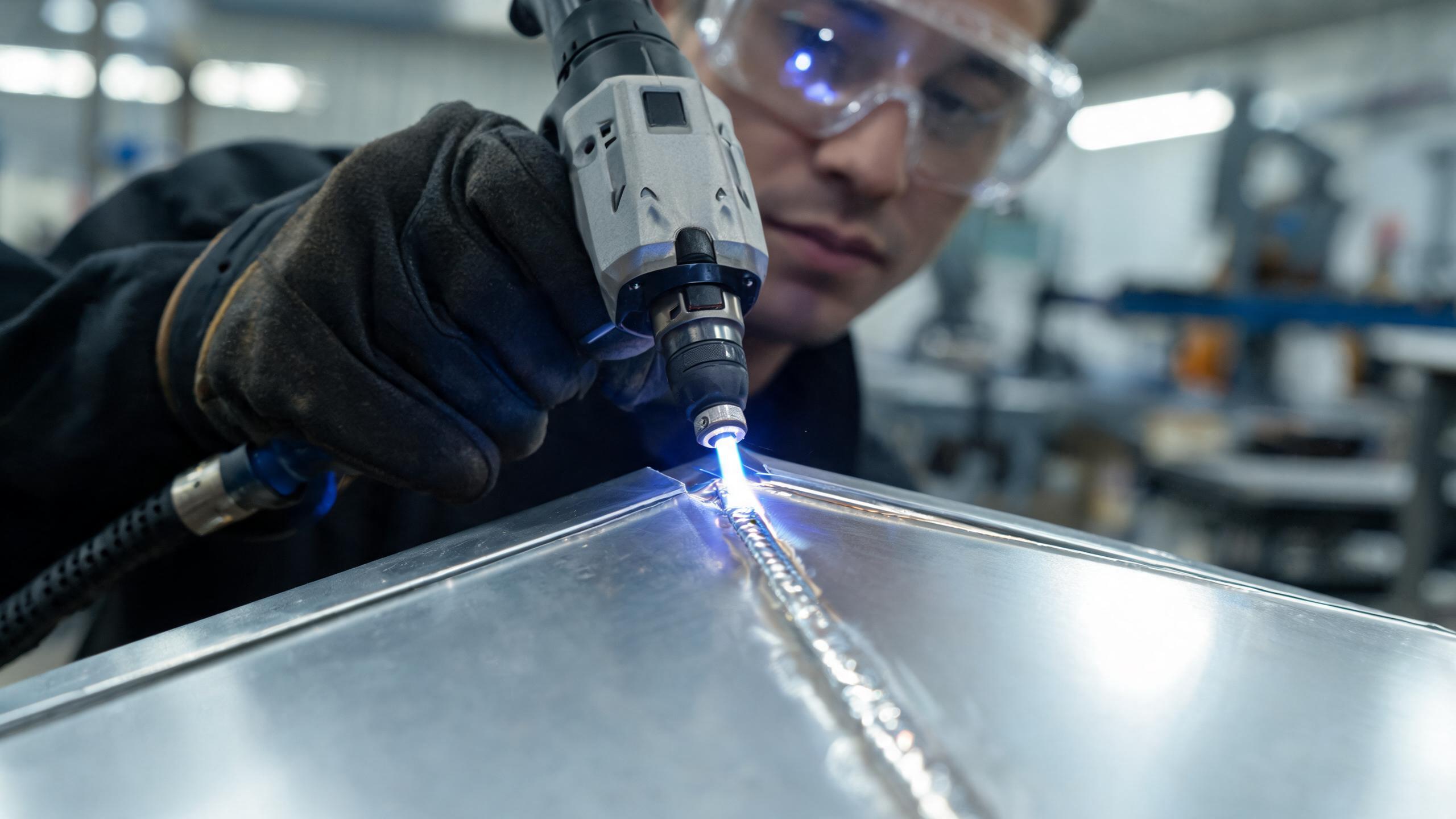
Panduan praktis untuk mengelas lembaran aluminium tipis dengan mesin las laser genggam, mencakup parameter, jenis sambungan, manajemen panas, kontrol distorsi, dan verifikasi kualitas.
Panduan Teknis
Mengapa Pengelasan Lembaran Aluminium Berbeda
Mengelas lembaran aluminium tipis - biasanya 0,5 mm hingga 2,0 mm - menghadirkan serangkaian tantangan yang berbeda dibandingkan dengan pelat yang lebih tebal. Kombinasi konduktivitas termal aluminium yang tinggi (sekitar 237 W/m·K) dan titik leleh yang rendah (660 °C) berarti panas menyebar dengan cepat melalui lembaran. Tanpa kontrol yang presisi, hal ini menyebabkan tembus terbakar, lengkung, dan distorsi. Aplikasi pengelasan laser genggam lembaran aluminium memerlukan parameter yang dicocokkan dengan cermat dan teknik khusus yang berbeda dari pengelasan bagian tebal.
Keunggulan las laser genggam untuk pekerjaan lembaran terletak pada masukan panas yang terkonsentrasi. Tidak seperti pengelasan TIG, yang menyebarkan panas ke area yang luas, laser serat memfokuskan energi ke titik sekecil diameter 0,2–0,6 mm, meminimalkan zona yang terpengaruh panas dan mengurangi distorsi pada material tipis. Untuk pandangan yang lebih luas tentang penggunaan mesin las laser portabel untuk aluminium, lihat panduan tips dan praktik terbaik kami.
Parameter yang Direkomendasikan untuk Lembaran Aluminium Tipis
| Ketebalan Lembaran | Daya | Kecepatan | Umpan Kawat | Gas (Ar) |
|---|---|---|---|---|
| 0,5 mm | 400–600 W | 30–45 mm/dtk | 0,8–1,2 m/mnt | 12–15 L/mnt |
| 0,8 mm | 600–800 W | 25–35 mm/dtk | 1,0–1,5 m/mnt | 12–15 L/mnt |
| 1,0 mm | 700–900 W | 20–30 mm/dtk | 1,2–1,8 m/mnt | 15–18 L/mnt |
| 1,5 mm | 900–1200 W | 15–25 mm/dtk | 1,5–2,0 m/mnt | 15–18 L/mnt |
| 2,0 mm | 1100–1400 W | 12–20 mm/dtk | 1,8–2,5 m/mnt | 18–20 L/mnt |
Model 1000 W menangani lembaran hingga sekitar 1,5 mm dengan nyaman. Untuk lembaran 2,0 mm yang memerlukan penetrasi penuh, model 1500 W direkomendasikan - model ini mencapai penetrasi maksimum 3 mm pada aluminium, memberikan margin yang memadai untuk pengelasan tembus yang konsisten.
Jenis Sambungan dan Persiapan untuk Lembaran Aluminium
Sambungan Tumpul
Untuk sambungan tumpul lembaran-ke-lembaran, kontrol celah sangat penting. Konsistensi jahitan las ±0,1 mm yang dapat dicapai dengan sistem genggam kami berarti celah harus dijaga dalam 0,1–0,2 mm dari ketebalan lembaran nominal. Celah yang lebih lebar dari 10% ketebalan lembaran memerlukan kawat pengisi untuk menghindari kekurangan pengisian.
Sambungan Tumpang Tindih
Sambungan tumpang tindih adalah konfigurasi yang paling mudah untuk lembaran tipis. Laser menembus lembaran atas dan menyatu ke lembaran bawah. Pertimbangan utama:
- Pastikan kedua lembaran bersentuhan datar - celah udara menyebabkan kurangnya fusi.
- Gunakan daya yang sedikit lebih rendah daripada sambungan tumpul pada ketebalan yang sama.
- Arahkan sinar ke tepi lembaran atas, bukan ke tengah, untuk aliran lelehan yang optimal.
Sambungan Sudut
Sambungan T dan sambungan sudut pada lembaran aluminium mendapat manfaat dari pengumpanan kawat sedikit untuk membentuk sudut. Pertahankan sudut pistol 35–45 derajat relatif terhadap garis sambungan untuk bentuk manik yang konsisten.
Teknik Manajemen Panas
Prinsip inti: Dalam pengelasan lembaran aluminium tipis, tujuannya bukan penetrasi maksimum tetapi masukan panas yang terkendali. Setiap penyesuaian parameter harus bertanya: “Apakah saya menambahkan lebih banyak panas daripada yang dapat dihamburkan lembaran ini?”
Mode Pulsa untuk Ketebalan Tipis
Mode pulsa sangat efektif untuk lembaran di bawah 1,0 mm. Dengan bergantian antara daya puncak (untuk penetrasi) dan daya dasar (untuk pendinginan), kolam las mengeras sebagian di antara pulsa. Ini mengurangi risiko tembus dan membatasi lebar HAZ. Pengaturan pulsa umum:
- Daya puncak: 1,2–1,5 kali daya CW untuk ketebalan yang sama
- Daya dasar: 20–30% dari puncak
- Frekuensi pulsa: 50–200 Hz
- Siklus kerja: 40–60%
Kecepatan Gerak dan Masukan Panas
Kecepatan gerak yang lebih tinggi mengurangi masukan panas linier dan umumnya lebih disukai untuk lembaran tipis. Namun, kecepatan yang terlalu tinggi dengan daya yang marginal dapat menyebabkan kurangnya fusi pada awal las, di mana reflektivitas awal aluminium yang tinggi menolak penyerapan sinar. Penahanan singkat (0,1–0,3 detik) di awal setiap las memastikan lubang kunci terbentuk sebelum gerakan dimulai.
Mengendalikan Distorsi pada Lembaran Aluminium
Distorsi adalah masalah produksi yang paling umum saat mengelas lembaran aluminium tipis. Penanggulangan praktis:
- Las titik: Tempatkan titik setiap 50–100 mm sebelum menjalankan jahitan penuh. Ini mengikat lembaran dan mencegah distorsi kumulatif.
- Teknik langkah mundur: Las dalam arah yang berlawanan dari kemajuan keseluruhan. Masukan panas setiap segmen sebagian mengimbangi distorsi segmen sebelumnya.
- Pembuangan panas: Jepit lembaran ke batang pendukung tembaga atau aluminium. Tembaga lebih disukai karena konduktivitas termalnya yang tinggi (401 W/m·K).
- Pengelasan simetris: Untuk rakitan dengan banyak jahitan, selang-seling sisi untuk menyeimbangkan tegangan termal.
Gas Pelindung untuk Aplikasi Lembaran
Argon murni pada 12–18 L/mnt adalah pilihan standar untuk lembaran aluminium. Nosel gas harus diposisikan 8–12 mm dari permukaan benda kerja. Untuk lembaran yang lebih tipis dari 0,8 mm, kurangi laju aliran menjadi 10–12 L/mnt - tekanan gas yang berlebihan dapat mengganggu kolam las tipis dan menyebabkan turbulensi yang menarik udara atmosfer.
Perisai gas ekor memperpanjang cakupan di belakang kolam las, yang penting karena aluminium tetap cair selama beberapa milimeter di belakang busur. Tanpa cakupan ekor, bagian ekor manik las teroksidasi dan dapat mengembangkan porositas.
Persiapan Permukaan untuk Lembaran Aluminium
Lembaran tipis sangat sensitif terhadap kontaminasi permukaan karena volume material yang sedikit untuk mengencerkan kotoran. Ikuti langkah-langkah ini:
- Hilangkan lapisan oksida dengan sikat baja tahan karat khusus segera sebelum pengelasan.
- Lap dengan aseton untuk menghilangkan minyak dan residu - jangan gunakan pelarut terklorinasi, yang dapat menghasilkan gas beracun di bawah paparan laser.
- Hindari menyentuh zona las dengan tangan kosong; minyak kulit berkontribusi pada porositas.
- Las dalam waktu 4 jam setelah pembersihan; lapisan oksida terbentuk kembali secara progresif dalam kondisi sekitar.
Berapa ketebalan minimum yang dapat ditangani oleh mesin las laser genggam pada aluminium?
Dengan pengaturan parameter yang tepat (daya rendah, mode pulsa, kecepatan tinggi), lembaran aluminium 0,5 mm dapat dilas dengan sukses. Di bawah 0,5 mm, risiko tembus meningkat secara signifikan, dan peralatan pengelasan mikro khusus mungkin lebih tepat.
Apakah saya perlu kawat pengisi untuk pengelasan lembaran aluminium?
Untuk sambungan tumpul yang rapat pada lembaran di bawah 1,0 mm, pengelasan autogenous (tanpa pengisi) seringkali cukup. Untuk celah, sambungan tumpang tindih, atau sambungan yang memerlukan penguatan sudut, gunakan kawat pengisi 1,0 mm atau 1,2 mm 4043 (Al-Si) atau 5356 (Al-Mg).
Bagaimana cara mencegah lembaran menempel pada batang pendukung?
Oleskan lapisan tipis senyawa anti-percikan berbasis grafit atau keramik ke permukaan batang pendukung. Atau, gunakan batang pendukung tembaga beralur yang memungkinkan akar las terbentuk tanpa menyentuh batang.
Verifikasi Kualitas
Setelah pengelasan, periksa hal-hal berikut pada sambungan lembaran aluminium:
- Inspeksi visual: Manik las harus seragam dalam lebar dan tinggi, tanpa perubahan warna di luar HAZ yang sempit.
- Pemeriksaan penetrasi: Untuk sambungan tumpul, verifikasi penetrasi penuh dengan memeriksa sisi akar. Manik belakang yang konsisten menunjukkan fusi tembus yang tepat.
- Pengukuran distorsi: Gunakan penggaris lurus untuk memeriksa kerataan. Distorsi di luar 0,5 mm per 100 mm panjang menunjukkan perlunya penyesuaian parameter atau penjepitan.
- Konsistensi jahitan: Konsistensi jahitan las ±0,1 mm dari mesin las laser genggam kami memastikan geometri manik yang dapat diulang ketika parameter dijaga konstan.