
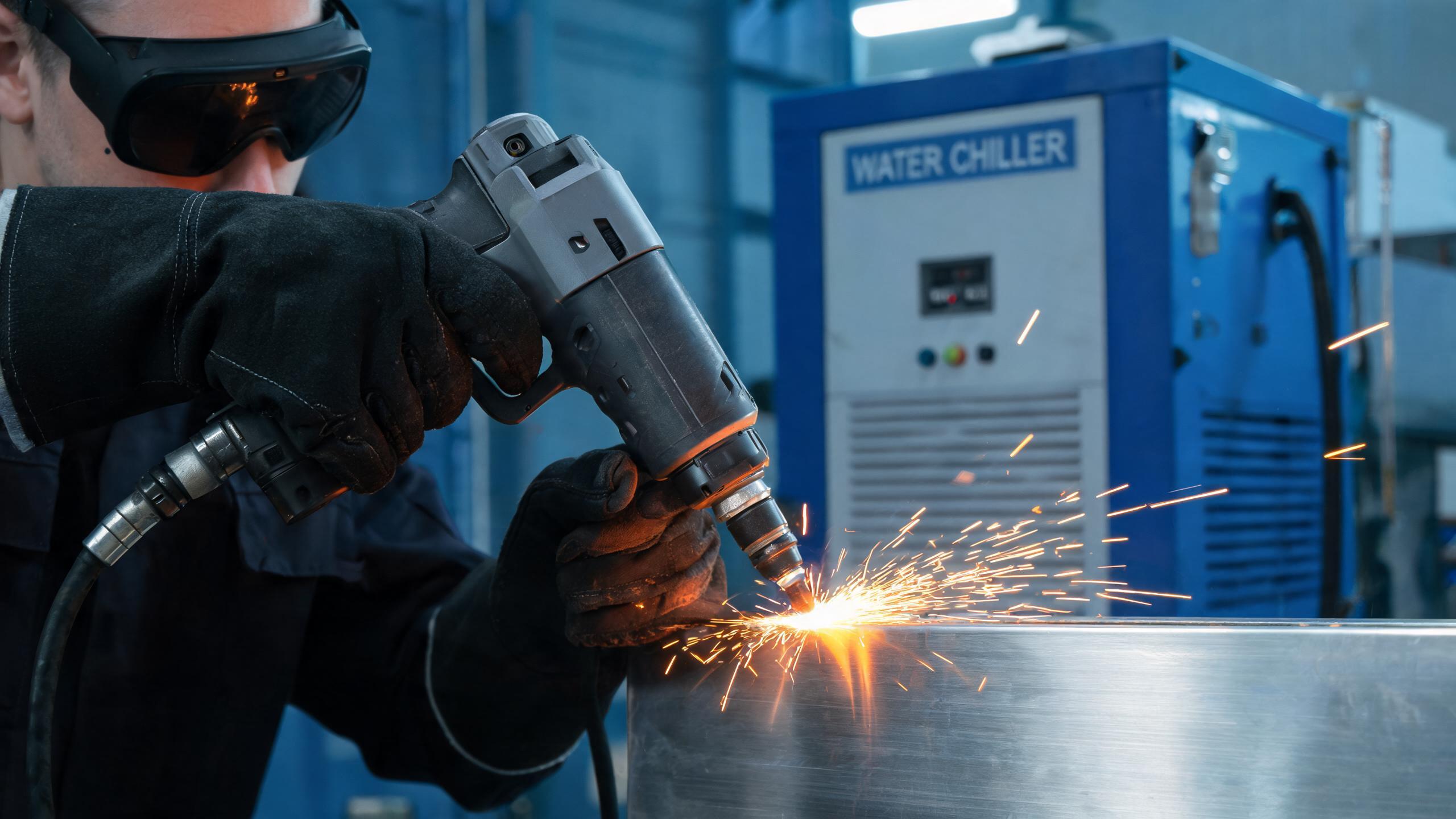
Perincian terperinci tentang apa yang mempengaruhi harga kilang pengimpal laser gentian pegang tangan - tahap kuasa, jenama sumber laser, sistem penyejukan, komponen, pensijilan, aksesori, dan logistik penghantaran.
Panduan Kos
Apabila mendapatkan sumber pengeluar pengimpal laser gentian pegang tangan di China, julat harga boleh berbeza secara drastik - dari kira-kira $3,000 untuk model peringkat permulaan hingga lebih $15,000 untuk konfigurasi kuasa tinggi. Memahami apa yang mendorong perbezaan kos ini membantu pasukan perolehan membuat keputusan termaklum dan mengelak daripada membayar lebih untuk ciri yang tidak diperlukan, atau membayar kurang untuk peralatan yang tidak akan berprestasi. Panduan ini menguraikan setiap faktor utama yang mempengaruhi harga kilang pengimpal laser gentian pegang tangan.
Tahap Kuasa: Pemacu Harga Utama
Kuasa undian bagi kimpalan laser tangan adalah faktor terbesar dalam harganya. Watt yang lebih tinggi bermakna sumber laser yang lebih berkuasa - dan lebih mahal - sistem penyejukan tugas berat, dan komponen elektrik yang lebih kukuh. Tahap kuasa biasa dan implikasi kosnya:
- 1000W: Peringkat permulaan, sesuai untuk kimpalan kepingan logam nipis (0.5-2mm). Pilihan paling berpatutan, sesuai untuk fabrikator kecil atau pengeluaran ringan.
- 1500W: Pilihan julat pertengahan yang popular menawarkan penembusan sehingga 3mm pada keluli tahan karat dan aluminium, dengan konsistensi jahitan kimpalan sekitar ±0.1mm. Mengimbangi kos dan keupayaan untuk kebanyakan keperluan fabrikasi umum.
- 2000W: Mengendalikan bahan yang lebih tebal dan kelajuan kimpalan yang lebih pantas, sesuai untuk aplikasi industri yang lebih berat.
- 3000W: Tahap kuasa tinggi untuk aplikasi yang mencabar termasuk kimpalan plat tebal dan pengeluaran volum tinggi yang berterusan. Memerlukan infrastruktur penyejukan yang besar.
Sebagai garis panduan kasar, bergerak dari 1000W ke 3000W boleh menggandakan atau tiga kali ganda kos peralatan asas, terutamanya kerana harga sumber laser meningkat dengan ketara dengan kuasa.
Jenama Sumber Laser
Jenama sumber laser memberi kesan utama kepada harga. Pengeluar China biasanya menawarkan beberapa pilihan:
- RAYCUS: Jenama sumber laser gentian China terkemuka yang menawarkan prestasi mantap pada harga yang kompetitif. Biasa dalam mesin julat pertengahan.
- GW (Max Photonics): Jenama China yang lain yang mantap, sering diposisikan sebagai alternatif nilai dengan output yang boleh dipercayai untuk aplikasi kimpalan standard.
- IPG: Jenama premium Jerman-Amerika yang terkenal dengan kualiti rasuk yang luar biasa, kestabilan, dan jangka hayat. Sumber IPG mendapat premium harga yang ketara - selalunya menambah 30-60% kepada kos sumber laser berbanding alternatif domestik.
Pembeli harus menimbang perbezaan kos terhadap keperluan aplikasi mereka. Untuk kimpalan ketepatan tinggi atau kritikal misi, pelaburan dalam sumber IPG mungkin wajar. Untuk fabrikasi tujuan umum, sumber RAYCUS atau GW memberikan prestasi yang boleh dipercayai pada kos yang lebih rendah.
Konfigurasi Sistem Penyejukan
Mesin kimpalan laser pegang tangan menjana haba yang ketara semasa operasi, dan sistem penyejukan secara langsung mempengaruhi kedua-dua harga dan prestasi:
- Penyejukan air: Standard untuk 1500W dan ke atas. Membolehkan operasi berterusan selama 8+ jam, mengekalkan kualiti kimpalan semasa penggunaan berpanjangan, dan memanjangkan jangka hayat sumber laser. Menambah kos untuk unit penyejuk, pam, dan paip.
- Penyejukan udara: Ditemui pada beberapa model kuasa rendah. Kurang mahal tetapi mengehadkan kitaran tugas dan secara amnya tidak sesuai untuk persekitaran pengeluaran yang memerlukan kimpalan berterusan.
Sistem penyejukan air yang berkualiti adalah pelaburan yang berbaloi untuk mana-mana mesin yang digunakan dalam pengeluaran tetap. Ia menghalang hanyutan haba yang boleh menjejaskan konsistensi kimpalan dan melindungi sumber laser daripada degradasi berkaitan haba.
Komponen Elektrik dan Kawalan
Kualiti komponen elektrik mempengaruhi kedua-dua harga dan kebolehpercayaan jangka panjang. Pengeluar yang menggunakan komponen daripada jenama global yang diiktiraf - contohnya, Schneider Electric untuk sistem kawalan dan perlindungan litar - biasanya mengenakan caj lebih daripada mereka yang menggunakan alternatif tanpa jenama. Perbezaan harga mencerminkan kualiti sebenar: komponen jenama mempunyai spesifikasi yang didokumenkan, jangka hayat yang lebih lama, dan ketersediaan penggantian yang lebih mudah. Apabila membandingkan sebut harga, minta setiap pembekal menyatakan jenama yang digunakan dalam sistem elektrik mereka.
Kos Pensijilan
Penandaan CE dan pematuhan RoHS menambah kos kepada peralatan, tetapi ia penting untuk banyak pasaran eksport. Mencapai pensijilan CE melibatkan:
- Dokumentasi teknikal dan penilaian risiko
- Pengujian oleh makmal bertauliah
- Perisytiharan pematuhan dan pemantauan pematuhan berterusan
Pengeluar yang telah melengkapkan pensijilan CE dan RoHS untuk barisan mesin kimpalan laser pegang tangan mereka telah menyerap kos ini. Peralatan tanpa pensijilan ini mungkin lebih murah pada awalnya tetapi boleh menyebabkan masalah besar di kastam, gagal dalam audit kawal selia, atau ditolak oleh pelanggan akhir dalam pasaran terkawal. Pensijilan ISO 9001:2015, walaupun bukan pensijilan produk secara langsung, menandakan bahawa pengeluar mengekalkan proses kualiti yang didokumenkan - satu lagi penunjuk pembekal yang berbaloi untuk dibayar lebih sedikit.
Aksesori dan Pilihan Konfigurasi
Harga kilang juga bergantung pada apa yang disertakan dalam pakej. Pembolehubah biasa termasuk:
- Pistol kimpalan dan panjang kabel: Kabel yang lebih panjang menawarkan lebih fleksibiliti tetapi kos lebih tinggi. Kualiti pistol mempengaruhi ketepatan dan keselesaan kimpalan.
- Sistem gas pelindung: Sistem bekalan argon atau nitrogen menambah kos tetapi diperlukan untuk kimpalan bebas pengoksidaan.
- Penyuap wayar: Membolehkan kimpalan wayar pengisi untuk sambungan yang lebih tebal. Tidak semua mesin termasuk ini.
- Peralatan keselamatan: Cermin mata keselamatan laser, kandang pelindung, dan papan tanda amaran.
- Perisian dan pratetap parameter: Parameter kimpalan pra-konfigurasi untuk bahan dan ketebalan biasa menjimatkan masa persediaan.
Penghantaran dan Logistik
Untuk pembeli antarabangsa, menghantar mesin kimpalan laser pegang tangan dari China melibatkan beberapa lapisan kos:
- Yuran pengangkutan: Pengangkutan laut adalah paling ekonomik untuk peralatan berat; pengangkutan udara lebih pantas tetapi jauh lebih mahal.
- Insurans: Perlindungan untuk kerosakan transit disyorkan untuk peralatan bernilai tinggi.
- Duti kastam dan cukai: Berbeza mengikut negara destinasi dan kod HS.
- Penghantaran tempatan: Pengangkutan pelabuhan-ke-gudang di negara destinasi.
Kos ini boleh menambah 10-25% kepada harga peralatan, bergantung pada destinasi dan kaedah penghantaran. Sesetengah pengeluar menawarkan harga FOB manakala yang lain memetik CIF atau DDP - jelaskan Incoterms untuk membandingkan sebut harga dengan tepat.
Jangkaan Harga Realistik
Contoh Rujukan
Shandong Xinhong CNC Technology Co., Ltd. mengeluarkan pelbagai mesin kimpalan laser gentian pegang tangan dari 1000W hingga 3000W dengan pilihan kimpalan robotik automatik. Syarikat menggunakan sumber laser daripada IPG, RAYCUS, dan GW, komponen elektrik Schneider, dan memegang pensijilan ISO 9001:2015, CE, dan RoHS. Gabungan komponen jenama dan pensijilan penuh ini mencerminkan tahap harga pertengahan-ke-atas - pembeli harus menjangkakan harga kilang yang kompetitif, tetapi bukan yang paling rendah di pasaran. Kos mencerminkan kualiti komponen sebenar dan pelaburan pematuhan.
Cara Mendapatkan Sebut Harga Tepat
Untuk menerima sebut harga yang bermakna daripada kilang, berikan pembekal perkara berikut:
- Tahap kuasa yang diperlukan (1000W, 1500W, 2000W, atau 3000W)
- Jenama sumber laser pilihan (atau minta pilihan untuk perbandingan)
- Bahan dan julat ketebalan yang perlu anda kimpal
- Kitaran tugas dan keperluan operasi berterusan
- Keperluan pensijilan (CE, RoHS)
- Syarat penghantaran dan pelabuhan destinasi
- Sebarang aksesori yang diperlukan (penyuap wayar, sistem gas, kabel tambahan)
Kesimpulan
Harga kilang pengimpal laser gentian pegang tangan ditentukan oleh tahap kuasa, jenama sumber laser, sistem penyejukan, kualiti komponen, status pensijilan, aksesori yang disertakan, dan logistik penghantaran. Sebut harga termurah jarang menjadi nilai terbaik - peralatan dengan komponen tanpa jenama, tanpa pensijilan, atau penyejukan yang tidak mencukupi akan menelan kos lebih dalam masa henti, pembaikan, dan kegagalan pematuhan. Dengan memahami setiap faktor kos, pasukan perolehan boleh membuat perbandingan termaklum dan memilih peralatan yang memberikan nilai jangka panjang yang sebenar.