
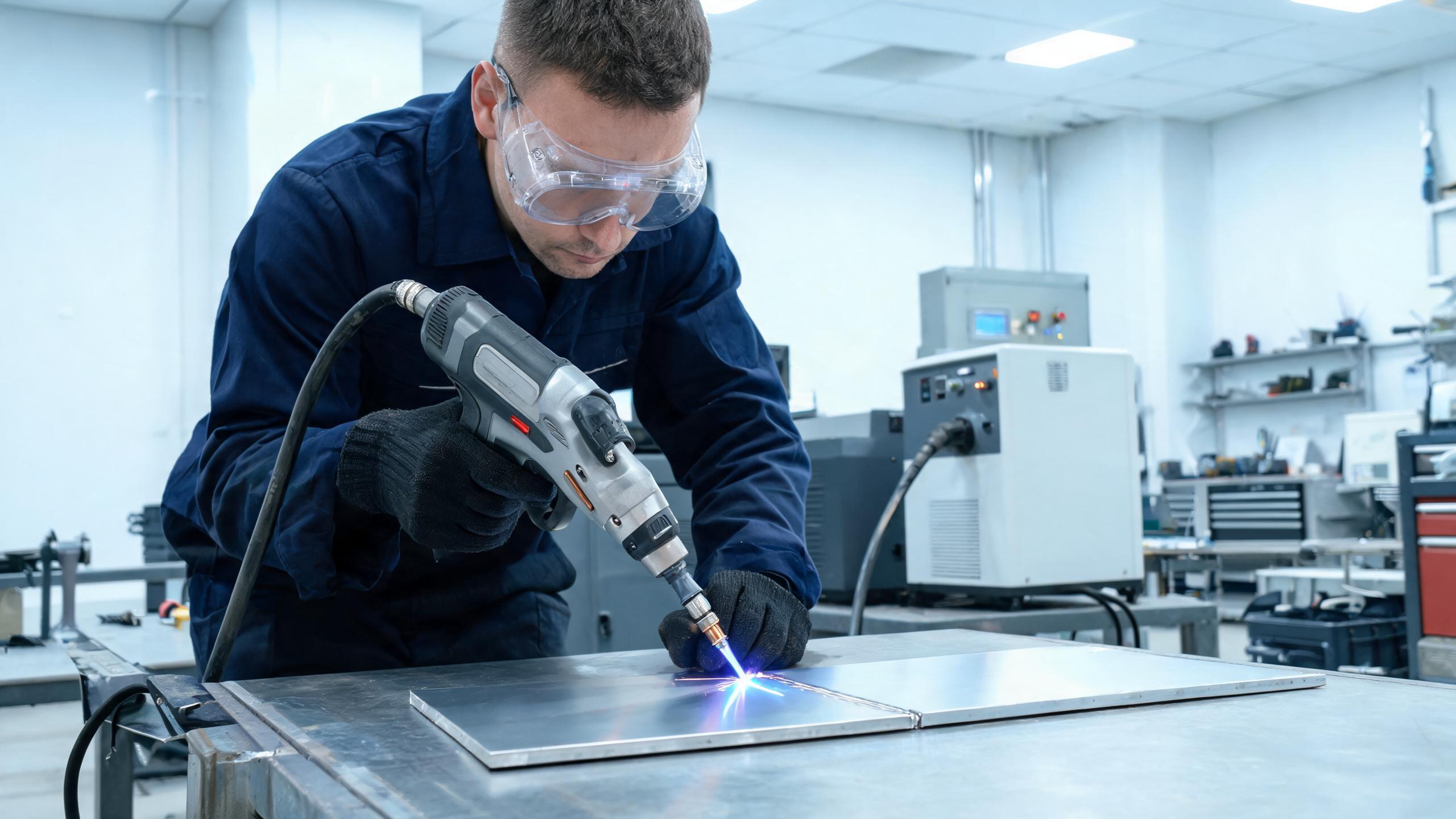
Techniki i wskazówki dotyczące spawania cienkiej blachy aluminiowej (0,5–1,5 mm) przenośną spawarką laserową, obejmujące dobór mocy, kontrolę ilości ciepła, zarządzanie warstwą tlenków, gaz osłonowy, przygotowanie złącza i podawanie drutu do wypełniania szczelin.
Poradnik techniczny
Dlaczego cienkie aluminium wymaga szczególnej uwagi
Cienkie aluminium – zwykle arkusze o grubości od 0,5 mm do 1,5 mm – jest szeroko stosowane w obudowach elektronicznych, panelach dekoracyjnych, radiatorach, obudowach baterii i lekkich elementach konstrukcyjnych. Spawanie tych cienkich blach stawia przed nami zestaw wyzwań odmiennych od spawania grubszych płyt aluminiowych. Margines błędu jest niewielki: zbyt duża ilość ciepła powoduje przepalenie; zbyt mała – niepełne przetopienie.
A przenośna spawarka laserowa daje operatorom precyzję niezbędną do spawania cienkiego aluminium, ponieważ energia lasera może być ściśle ogniskowana i kontrolowana na poziomie milisekund. Jednak sam sprzęt nie wystarczy – technika i dobór parametrów decydują o tym, czy spoiny będą czyste, czy elementy zostaną odrzucone. Aby uzyskać kompleksowy przegląd użycia przenośnej spawarki laserowej do aluminium, zobacz nasz dedykowany przewodnik.
Wybór odpowiedniego poziomu mocy dla cienkiego aluminium
W przypadku cienkich blach aluminiowych (0,5–1,5 mm) zazwyczaj bardziej odpowiednie są niższe ustawienia mocy. Firma Shandong Xinhong CNC Technology Co., Ltd. produkuje ręczna spawarka laserowa modele w konfiguracjach 1000W, 1500W, 2000W i 3000W. W przypadku cienkiego aluminium:
| Grubość materiału | Zalecana moc | Kluczowa zaleta |
|---|---|---|
| 0,5–0,8 mm | 1000 W | Minimalne wprowadzanie ciepła, mniejsze ryzyko przepalenia |
| 0,8–1,2 mm | 1000 W–1500 W | Równowaga między przetopieniem a kontrolą |
| 1,2–1,5 mm | 1500 W | Pełne przetopienie ze stabilnym jeziorkiem spawalniczym |
Model 1500W osiąga maksymalną głębokość przetopienia 3 mm w aluminium, przy stałości spoiny ±0,1 mm. W przypadku cienkich blach ta precyzja oznacza, że można konsekwentnie uzyskiwać spoiny w dolnej części zakresu przetopienia, bez przesterowania i uszkodzenia przedmiotu obrabianego.
Technika 1: Kontrola ilości ciepła za pomocą prędkości i mocy
Najważniejszą techniką spawania cienkiego aluminium jest zarządzanie ilością wprowadzanego ciepła. Ponieważ aluminium szybko przewodzi ciepło, strefa wpływu ciepła rozprzestrzenia się szybko – a w cienkim materiale cały arkusz może się szybko nagrzać. Oto jak to kontrolować:
- Stosuj większą prędkość spawania: Przesuwaj uchwyt spawalniczy z prędkością 15–25 mm/s dla blachy o grubości 0,5–0,8 mm. Większa prędkość zmniejsza całkowitą ilość ciepła na jednostkę długości, zapobiegając przepaleniu.
- Zmniejsz moc lasera: Nie pracuj z pełną mocą znamionową na cienkim materiale. W maszynie 1500W dla aluminium o grubości 0,5 mm zacznij od 600–900W i zwiększaj tylko wtedy, gdy przetopienie jest niewystarczające.
- Jeśli to możliwe, używaj trybu pulsacyjnego: Pulsowanie lasera dostarcza energię w kontrolowanych impulsach, umożliwiając metalowi lekkie schłodzenie między impulsami. To znacznie zmniejsza ryzyko przepalenia cienkiego materiału.
Praktyczna wskazówka: Zawsze testuj parametry na kawałku złomu z tego samego stopu i o tej samej grubości przed spawaniem właściwego elementu. Maszyna może przechowywać ponad 50 zestawów parametrów spawania, więc po znalezieniu właściwej kombinacji zapisz ją do przyszłego użytku.
Technika 2: Zarządzanie warstwą tlenków na cienkiej blasze
W cienkim aluminium warstwa tlenków jest proporcjonalnie bardziej znacząca w stosunku do grubości metalu rodzimego. Warstwa tlenku o grubości 4–5 nm ma mniejsze znaczenie na płycie 3 mm, ale na blasze 0,5 mm stanowi znaczącą część materiału i może powodować poważne wady spoin.
- Wyszczotkuj strefę spawania dedykowaną szczotką drucianą do aluminium bezpośrednio przed spawaniem. Nie używaj szczotek używanych do stali – cząsteczki żelaza w szczotce zanieczyszczą aluminium i spowodują wady.
- Oczyść rozpuszczalnikiem (acetonem lub alkoholem izopropylowym), aby usunąć oleje, odciski palców i wilgoć. Na cienkiej blasze nawet niewielkie zanieczyszczenie może prowadzić do porowatości, która zagraża integralności spoiny.
- Spawaj wkrótce po czyszczeniu. Warstwa tlenków zaczyna się odtwarzać w ciągu kilku minut. W przypadku cienkiego materiału najlepiej spawać w ciągu 30 minut od przygotowania powierzchni.
Technika 3: Optymalizacja gazu osłonowego dla cienkiego aluminium
Gaz osłonowy jest krytyczny dla cienkiego aluminium, ponieważ małe jeziorko spawalnicze jest bardziej podatne na zanieczyszczenia atmosferyczne. Argon jest standardowym wyborem, ale natężenie przepływu gazu i pozycja dyszy mają większe znaczenie przy cienkim materiale:
- Natężenie przepływu: Typowe jest 15–20 l/min. Zbyt wysokie natężenie przepływu może powodować turbulencje, które zasysają powietrze z otoczenia; zbyt niskie pozostawia spoinę niedostatecznie chronioną.
- Kąt dyszy: Trzymaj dyszę gazu osłonowego pod kątem 10–15° w kierunku ciągnionym względem kierunku spawania, aby gaz pokrywał krzepnące jeziorko spawalnicze za wiązką.
- Czystość gazu: Używaj argonu o czystości 99,999%. Niższe klasy czystości wprowadzają wilgoć i tlen, które przyczyniają się do porowatości, co jest szczególnie problematyczne w cienkich blachach, gdzie jest mniej materiału do tolerowania wad.
Technika 4: Przygotowanie złącza i mocowanie
Cienka blacha aluminiowa jest elastyczna i podatna na odkształcenia pod wpływem ciepła spawania. Właściwe przygotowanie złącza i mocowanie są niezbędne:
- Stosuj szczelne dopasowanie: W przypadku spawania laserowego tolerancja szczeliny powinna być mniejsza niż 0,2 mm. Cienkie aluminium nie może mostkować dużych szczelin bez nadmiernego dodatku materiału, co zwiększa ilość ciepła.
- Mocno zamocuj: Zabezpiecz obie części, aby zapobiec przesuwaniu się podczas spawania. Rozszerzalność cieplna może przesunąć złącze w miarę narastania ciepła.
- Rozważ spawanie punktowe (sczepne): Wykonaj małe spoiny sczepne w odstępach wzdłuż złącza przed wykonaniem pełnej spoiny. Utrzymuje to wyrównanie i zmniejsza odkształcenia.
Stałość spoiny ±0,1 mm tych maszyn oznacza, że wiązka lasera pozostaje precyzyjnie na torze, ale operator jest nadal odpowiedzialny za przedstawienie wiązce prawidłowo wyrównanego złącza.
Technika 5: Użycie podajnika drutu do wypełniania szczelin
Gdy szczeliny są nieuniknione lub trzeba narobić materiał na cienkim aluminium, automatyczny podajnik drutu jest nieoceniony. Stosując aluminiowy drut wypełniający ER4043 lub ER5356:
- ER4043 (5% krzemu) dobrze płynie i nadaje się do spawania ogólnego zastosowania na cienkich blachach. Ma niższą temperaturę topnienia i zmniejsza skłonność do pękania.
- ER5356 (5% magnezu) zapewnia wyższą wytrzymałość na ścinanie i jest preferowany do zastosowań konstrukcyjnych oraz do dopasowania do stopów aluminium z serii 5000.
- Zacznij od prędkości podawania drutu 2–4 m/min dla cienkiego materiału i dostosuj w zależności od wielkości szczeliny i pożądanego profilu ściegu.
Ciągła praca przy produkcji seryjnej
Cienkie elementy aluminiowe są często produkowane w partiach – części obudów, wsporniki lub panele. System chłodzenia wodnego w tych przenośnych spawarkach laserowych umożliwia ciągłą pracę przez 8 godzin lub dłużej, co oznacza, że można prowadzić serie produkcyjne bez przerw na chłodzenie. Stabilna temperatura lasera przekłada się na stałą jakość spoin w całej partii.
Certyfikaty CE i RoHS oraz zarządzanie jakością zgodnie z ISO 9001:2015 zapewniają udokumentowaną zgodność dla nabywców zaopatrujących branże regulowane lub rynki europejskie.
Częste błędy, których należy unikać
- Stosowanie zbyt dużej mocy na cienkiej blasze, powodujące przepalenia i odkształcenia.
- Pomijanie usuwania warstwy tlenków, prowadzące do porowatości i niejednolitego przetopienia.
- Używanie brudnych lub wilgotnych przewodów gazu osłonowego, co wprowadza wodór do spoiny.
- Słabe mocowanie, umożliwiające przesunięcie złącza w trakcie spawania i powodujące nieprawidłowe ściegi.
- Nie zapisywanie sprawdzonych parametrów, co wymusza ponowne strojenie od zera przy każdej partii.
Podsumowanie
Spawanie cienkiego aluminium przenośną spawarką laserową sprowadza się do kontrolowania ilości ciepła, właściwego przygotowania powierzchni, użycia odpowiedniego gazu osłonowego i prawidłowego zamocowania złącza. Dzięki opcjom mocy od 1000W do 3000W i możliwości przechowywania zoptymalizowanych zestawów parametrów, te przenośne spawarki laserowe dają wytwórcom narzędzia niezbędne do uzyskiwania spójnych, wysokiej jakości spoin na cienkiej blasze aluminiowej.