
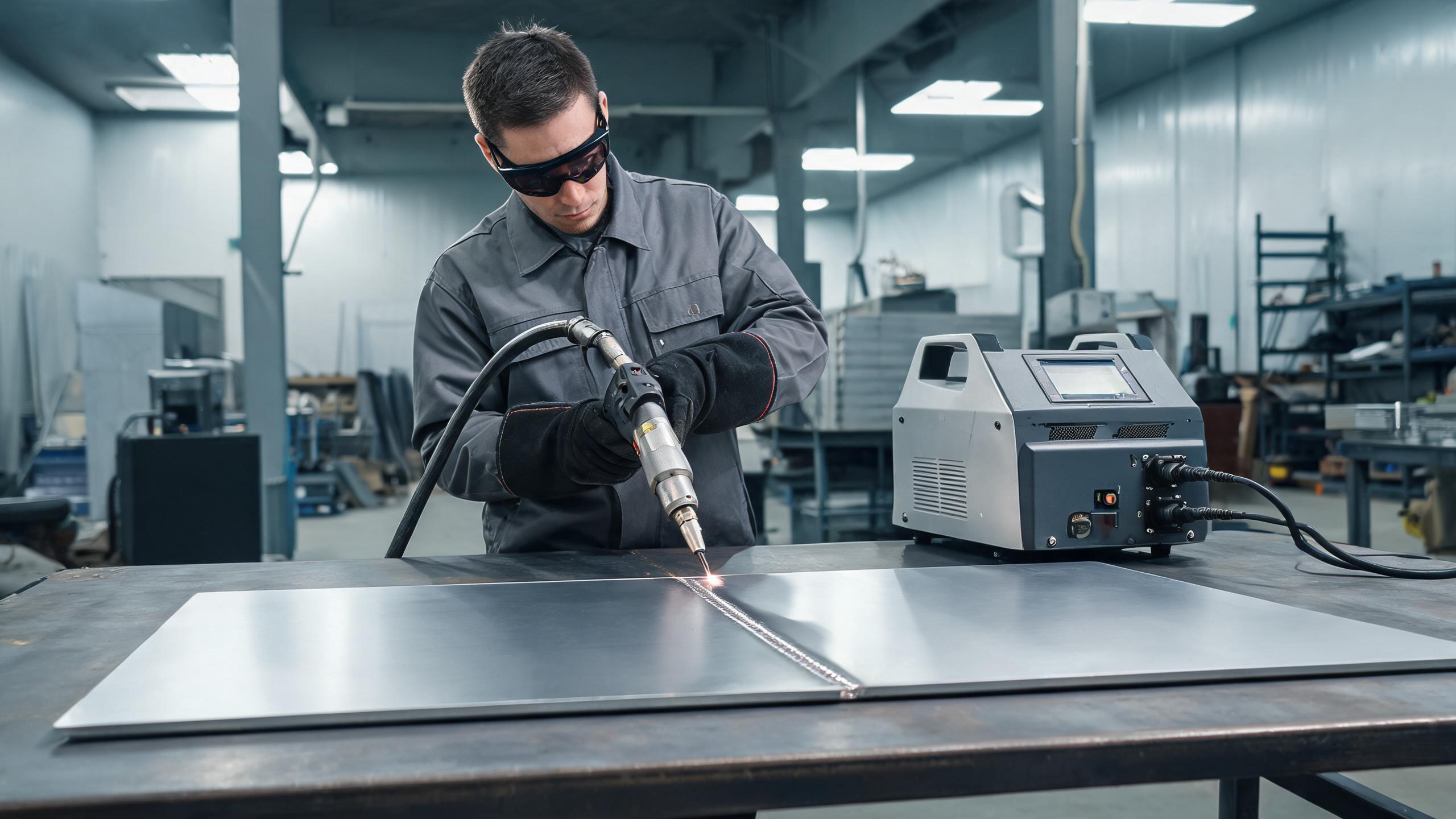
คู่มือปฏิบัติสำหรับการใช้เครื่องเชื่อมเลเซอร์แบบมือถือสำหรับแผ่นโลหะ ครอบคลุมการเลือกกำลังไฟ ประเภทของรอยต่อ เคล็ดลับการเชื่อม และข้อดีเหนือ TIG/MIG
เหตุใดแผ่นโลหะจึงเหมาะอย่างยิ่งกับการเชื่อมเลเซอร์แบบมือถือ
การขึ้นรูปแผ่นโลหะเป็นหนึ่งในการใช้งานที่พบได้บ่อยที่สุดสำหรับเครื่องเชื่อมเลเซอร์แบบมือถือ แผ่นสแตนเลสบาง - โดยทั่วไปหนา 0.5 มม. ถึง 3 มม. - เป็นช่วงที่การเชื่อมเลเซอร์เหนือกว่าวิธีการแบบดั้งเดิม เช่น TIG หรือ MIG ความร้อนที่รวมศูนย์ของเลเซอร์ไฟเบอร์สร้างแอ่งเชื่อมที่แคบและมีบริเวณที่ได้รับผลกระทบจากความร้อนน้อยที่สุด ซึ่งหมายถึงการบิดเบี้ยวจากความร้อนบนวัสดุบางน้อยลง ความเร็วในการเคลื่อนที่เร็วขึ้น และแนวเชื่อมที่สะอาดขึ้น ซึ่งมักไม่ต้องตกแต่งหลังการเชื่อมหรือต้องตกแต่งเพียงเล็กน้อย
ไม่ว่าคุณจะผลิตตู้ enclosures ตู้ cabinets ระบบท่อลม หรือแผงตกแต่ง ที่ดีที่สุดสำหรับเหล็กไม่ใช่เครื่องที่มีกำลังไฟสูงสุด แต่เป็นเครื่องที่ตรงกับประเภทเหล็ก ช่วงความหนา ปริมาณการผลิต และข้อกำหนดการปฏิบัติตามข้อกำหนดของคุณ การผลิตชิ้นส่วนเหล็กครอบคลุมเหล็กกล้าคาร์บอน เหล็กชุบสังกะสี และเหล็กกล้าไร้สนิม ซึ่งแต่ละชนิดมีคุณสมบัติการนำความร้อนและการสะท้อนแสงที่แตกต่างกัน การเลือกเครื่องจักรที่เหมาะสมหมายถึงการประเมินเกณฑ์หลัก 5 ประการ ได้แก่ ช่วงกำลังไฟ ความแม่นยำในการเชื่อม ความสามารถในการทำความเย็น การรับรอง และการยศาสตร์สำหรับผู้ปฏิบัติงาน ช่วยให้คุณมีความยืดหยุ่นในการจัดการรอยต่อที่ยากหรือเป็นไปไม่ได้ที่จะเข้าถึงด้วยสถานีเชื่อมแบบคงที่ คู่มือปฏิบัติฉบับนี้ครอบคลุมสิ่งที่คุณจำเป็นต้องรู้เพื่อให้ได้ผลลัพธ์ที่ดีที่สุดบนแผ่นโลหะ
การจับคู่กำลังไฟกับความหนาของแผ่นโลหะ
แผ่นโลหะมีช่วงความหนาที่หลากหลาย และระดับกำลังไฟที่เหมาะสมขึ้นอยู่กับวัสดุที่คุณทำงานด้วยบ่อยที่สุด กลุ่มผลิตภัณฑ์ Xinhong มีเครื่องเชื่อมเลเซอร์ไฟเบอร์แบบมือถือขนาด 1000W, 1500W, 2000W และ 3000W สำหรับงานแผ่นโลหะโดยเฉพาะ:
- 1000W - เหมาะสำหรับแผ่นเกจบาง (0.5–1.5 มม.) ให้แนวเชื่อมที่สะอาดและแคบโดยมีความร้อนเข้าสู่วัสดุน้อยที่สุด เหมาะอย่างยิ่งสำหรับงานที่กังวลเรื่องการบิดเบี้ยว เช่น เครื่องครัวสแตนเลสและตู้ไฟฟ้า
- 1500W - ตัวเลือกที่หลากหลายที่สุดสำหรับโรงงานแผ่นโลหะ ด้วยความลึกการเจาะสูงสุด 3 มม. บนสแตนเลสและอะลูมิเนียม ครอบคลุมช่วงความหนาทั่วไปทั้งหมด ความสม่ำเสมอของแนวเชื่อม ±0.1 มม. ช่วยให้มั่นใจได้ถึงคุณภาพลูกปัดเชื่อมที่ทำซ้ำได้ตลอดการผลิต
- 2000W–3000W - เหมาะกว่าเมื่องานของคุณขยายไปไกลกว่าแผ่นโลหะไปจนถึงแผ่นหนา หากโรงงานผลิตของคุณจัดการทั้งแผ่นบางและแผ่นหนา รุ่นกำลังสูงเหล่านี้ให้ความสามารถในการรองรับวัสดุที่หนาขึ้น ในขณะที่ยังทำงานได้ดีบนวัสดุที่บางกว่า
สำหรับการดำเนินงานที่เน้นแผ่นโลหะเป็นส่วนใหญ่ รุ่น 1500W ถือเป็นจุดที่เหมาะสมที่สุด - มีกำลังเพียงพอที่จะรองรับช่วงความหนาทั่วไปทั้งหมด พร้อมความแม่นยำและความสม่ำเสมอที่วัสดุบางต้องการ
ข้อดีเหนือวิธีการเชื่อมแบบดั้งเดิม
การเปลี่ยนจาก TIG หรือ MIG มาเป็น สำหรับเหล็กกล้าไร้สนิม สำหรับงานแผ่นโลหะให้ประโยชน์ที่เป็นรูปธรรมหลายประการ:
- ลดการบิดเบี้ยว: พลังงานที่รวมศูนย์ของเลเซอร์ให้ความร้อนกับพื้นที่ขนาดเล็กกว่า ซึ่งหมายความว่าวัสดุโดยรอบจะเย็นกว่า บนแผ่นโลหะบาง นี่คือความแตกต่างระหว่างแผ่นเรียบกับแผ่นที่บิดเบี้ยวระหว่างการเชื่อม
- ความเร็วสูงขึ้น: ความเร็วในการเชื่อมเลเซอร์โดยทั่วไปเร็วกว่า TIG 2–4 เท่าเมื่อเทียบที่ความหนาใกล้เคียงกัน สำหรับโรงงานที่ทำงานแผ่นโลหะหลายงานต่อวัน สิ่งนี้จะเพิ่มปริมาณงานโดยตรง
- แนวเชื่อมที่สะอาดขึ้น: การควบคุมความร้อนที่เข้าสู่วัสดุทำให้เกิดลูกปัดเชื่อมที่เรียบและสม่ำเสมอ ซึ่งมักไม่จำเป็นต้องเจียรหรือขัดเงา - ประหยัดแรงงานอย่างมากสำหรับผลิตภัณฑ์สำเร็จรูป เช่น ตู้สแตนเลสหรือขอบตกแต่งที่มองเห็นได้
- วัสดุเติมน้อยลง: การเชื่อมเลเซอร์แผ่นโลหะหลายประเภทเป็นแบบออโตจีนัส (autogenous) หมายความว่าเชื่อมต่อโดยไม่ต้องเติมลวดเชื่อม ซึ่งช่วยลดต้นทุนวัสดุและทำให้กระบวนการเชื่อมง่ายขึ้น
รอยต่อแผ่นโลหะทั่วไปและวิธีการจัดการ
รอยต่อชน (Butt Joints)
รอยต่อชน (Butt joints) - โดยวางขอบแผ่นสองแผ่นประกบกัน - เป็นการใช้งานที่ตรงไปตรงมาที่สุด จัดแนวแผ่นให้มีช่องว่างน้อยที่สุด ( ideally น้อยกว่า 0.1 มม. สำหรับการเชื่อมออโตจีนัส) แล้วเลเซอร์ไปตามแนวเชื่อม ความสม่ำเสมอของแนวเชื่อม ±0.1 มม. ของรุ่น 1500W ช่วยให้มั่นใจได้ถึงการเจาะที่สม่ำเสมอตลอดความยาวของรอยต่อ
รอยต่อทับซ้อน (Lap Joints)
ในรอยต่อทับซ้อน (lap joints) แผ่นหนึ่งทับอีกแผ่นหนึ่ง เลเซอร์เจาะทะลุแผ่นบนและเชื่อมติดกับแผ่นล่าง รอยต่อประเภทนี้พบได้ทั่วไปในการประกอบตู้และระบบท่อลม ปรับตำแหน่งโฟกัสให้ลึกขึ้นเล็กน้อยเพื่อให้แน่ใจว่าแอ่งเชื่อมถึงแผ่นล่าง
รอยต่อมุมและรอยต่อรูปตัว T
สำหรับรอยต่อมุมและรอยต่อรูปตัว T ในตู้แผ่นโลหะ ความคล่องตัวของปืนเชื่อมแบบมือถือเป็นข้อได้เปรียบที่สำคัญ ผู้ปฏิบัติงานสามารถปรับมุมปืนเพื่อส่งพลังงานไปยังโคนรอยต่อได้ ทำให้เกิดการหลอมรวมที่สมบูรณ์โดยไม่มีข้อจำกัดในการเข้าถึงของหัวเชื่อมแบบคงที่
การระบายความร้อนและการทำงานต่อเนื่อง
โรงงานผลิตแผ่นโลหะมักมีตารางการผลิตต่อเนื่อง ระบบระบายความร้อนด้วยน้ำบนเครื่องเชื่อมเลเซอร์แบบมือถือของ Xinhong รองรับการทำงานต่อเนื่อง 8+ ชั่วโมง หมายความว่าเครื่องสามารถทำงานได้เต็มกะโดยไม่มีการปิดเครื่องเนื่องจากความร้อน ซึ่งสำคัญอย่างยิ่งเมื่อเชื่อมแผ่นโลหะบางที่ความเร็วสูง ซึ่งแหล่งเลเซอร์ทำงานเกือบตลอดเวลา
การระบายความร้อนที่สม่ำเสมอยังช่วยให้คุณภาพการเชื่อมมีเสถียรภาพ เมื่ออุณหภูมิของแหล่งเลเซอร์ถูกควบคุม พารามิเตอร์ของลำแสงจะคงที่ ซึ่งจะทำให้ลูกปัดเชื่อมสม่ำเสมอ - สนับสนุนข้อกำหนดความสม่ำเสมอ ±0.1 มม. โดยตรง
เคล็ดลับปฏิบัติสำหรับการเชื่อมเลเซอร์แผ่นโลหะ
- ควบคุมช่องว่าง: สำหรับการเชื่อมออโตจีนัส (ไม่ใช้ลวดเติม) ให้รักษาช่องว่างรอยต่อให้ต่ำกว่า 0.1 มม. หากช่องว่างกว้างขึ้น ให้ใช้ลวดเชื่อมเติมหรือลดความเร็วในการเคลื่อนที่ลงเล็กน้อยเพื่อให้แอ่งเชื่อมเชื่อมช่องว่างได้
- ใช้แก๊สปกคลุม: แก๊สอาร์กอนหรือไนโตรเจนป้องกันการเกิดออกซิเดชันบนแผ่นสแตนเลส ทำให้ได้แนวเชื่อมที่สว่างและสะอาด โดยไม่ต้องทำความสะอาดหลังการเชื่อม
- ปรับความเร็วในการเคลื่อนที่ให้เหมาะสม: ช้าเกินไปอาจทำให้ทะลุบนวัสดุบาง เร็วเกินไปการเจาะไม่สมบูรณ์ เริ่มต้นจากพารามิเตอร์ที่ผู้ผลิตแนะนำและปรับแต่งตามเกรดและความหนาของวัสดุเฉพาะของคุณ
- รักษามุมปืนให้สม่ำเสมอ: มุมที่คงที่ 45–90 องศา (ขึ้นอยู่กับประเภทของรอยต่อ) ช่วยให้กระจายพลังงานตามแนวเชื่อมได้อย่างสม่ำเสมอ
- ทำความสะอาดวัสดุ: น้ำมัน ออกไซด์ หรือสิ่งปนเปื้อนบนพื้นผิวแผ่นอาจทำให้เกิดรูพรุนและแนวเชื่อมที่ไม่สม่ำเสมอ การเช็ดด้วยตัวทำละลายอย่างรวดเร็วก่อนเชื่อมใช้เวลาไม่กี่วินาทีและป้องกันข้อบกพร่อง
การรับรองที่มีความสำคัญสำหรับผู้ซื้อแผ่นโลหะ
เมื่อจัดซื้อ ที่ดีที่สุดสำหรับเหล็กไม่ใช่เครื่องที่มีกำลังไฟสูงสุด แต่เป็นเครื่องที่ตรงกับประเภทเหล็ก ช่วงความหนา ปริมาณการผลิต และข้อกำหนดการปฏิบัติตามข้อกำหนดของคุณ การผลิตชิ้นส่วนเหล็กครอบคลุมเหล็กกล้าคาร์บอน เหล็กชุบสังกะสี และเหล็กกล้าไร้สนิม ซึ่งแต่ละชนิดมีคุณสมบัติการนำความร้อนและการสะท้อนแสงที่แตกต่างกัน การเลือกเครื่องจักรที่เหมาะสมหมายถึงการประเมินเกณฑ์หลัก 5 ประการ ได้แก่ ช่วงกำลังไฟ ความแม่นยำในการเชื่อม ความสามารถในการทำความเย็น การรับรอง และการยศาสตร์สำหรับผู้ปฏิบัติงาน สำหรับการผลิตแผ่นโลหะ การรับรองเป็นเรื่องที่ใช้งานได้จริง ไม่ใช่พิธีการ เครื่องจักรในกลุ่มผลิตภัณฑ์ Xinhong ได้รับการรับรอง CE และ RoHS ยืนยันการปฏิบัติตามมาตรฐานความปลอดภัยและสิ่งแวดล้อมของยุโรป การรับรอง ISO 9001:2015 ของบริษัทหมายความว่ากระบวนการผลิตอยู่ภายใต้ระบบการจัดการคุณภาพที่ได้รับการบันทึกไว้ สำหรับผู้ผลิตแผ่นโลหะที่ส่งออกไปยังลูกค้าในยุโรปหรือต่างประเทศ การรับรองเหล่านี้มักเป็นข้อกำหนดของลูกค้า