
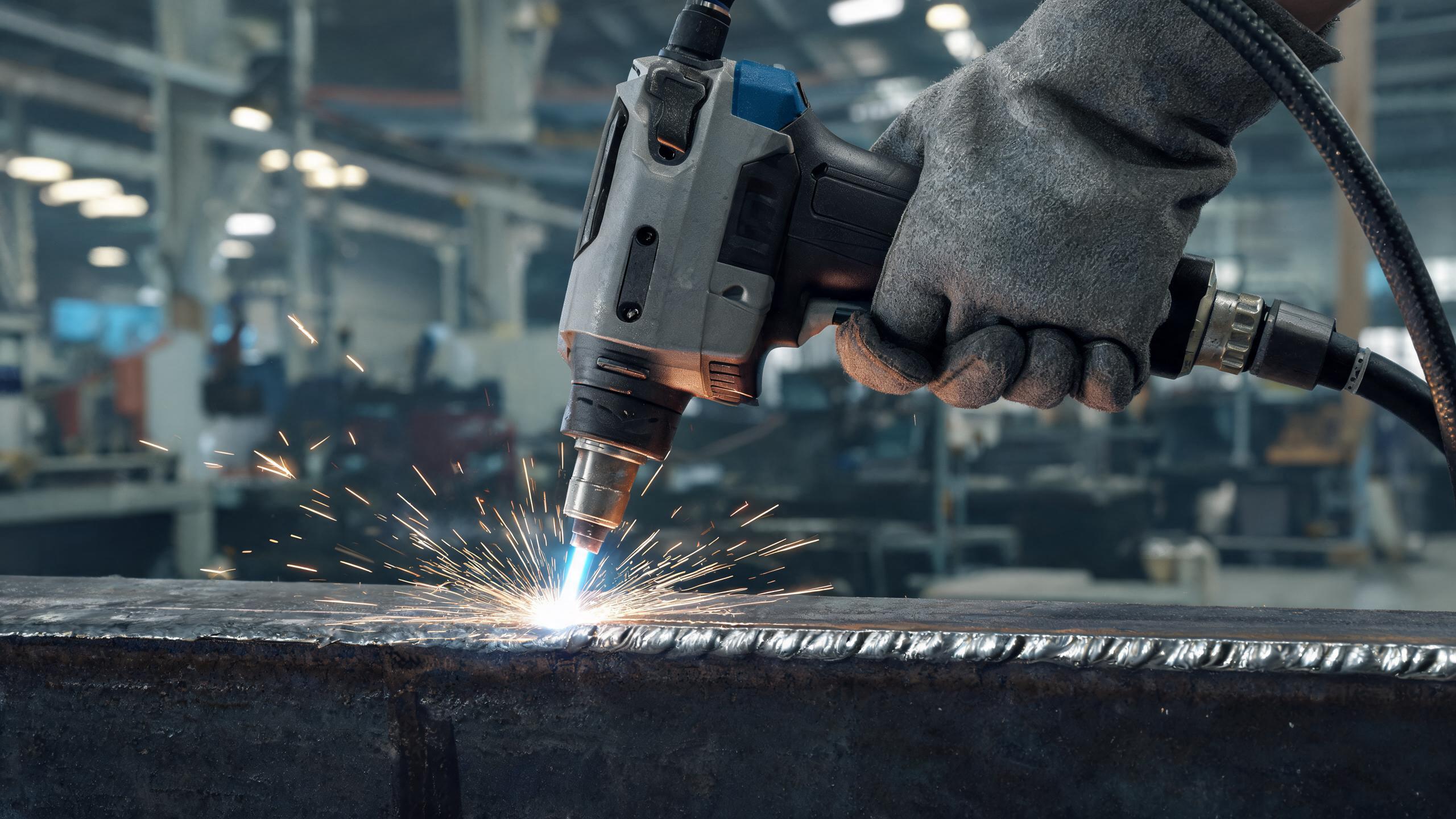
คู่มือทางเทคนิคสำหรับการเชื่อมแผ่นเหล็กด้วยเครื่องเชื่อมเลเซอร์แบบมือถือ ครอบคลุมการตั้งค่ากำลังไฟที่แนะนำตามความหนาของแผ่นเหล็ก พารามิเตอร์การหลอมลึก ข้อกำหนดการระบายความร้อน และเคล็ดลับที่ใช้งานได้จริงเพื่อให้ได้รอยเชื่อมที่สะอาดและทำซ้ำได้
การเชื่อมแผ่นเหล็กด้วยเลเซอร์แบบมือถือ: พื้นฐาน
แผ่นเหล็กเป็นหนึ่งในวัสดุที่พบได้บ่อยที่สุดในการผลิตโครงสร้าง การสร้างเครื่องจักร และการผลิตอุปกรณ์หนัก เครื่อง ที่ดีที่สุดสำหรับเหล็กไม่ใช่เครื่องที่มีกำลังไฟสูงสุด แต่เป็นเครื่องที่ตรงกับประเภทเหล็ก ช่วงความหนา ปริมาณการผลิต และข้อกำหนดการปฏิบัติตามข้อกำหนดของคุณ การผลิตชิ้นส่วนเหล็กครอบคลุมเหล็กกล้าคาร์บอน เหล็กชุบสังกะสี และเหล็กกล้าไร้สนิม ซึ่งแต่ละชนิดมีคุณสมบัติการนำความร้อนและการสะท้อนแสงที่แตกต่างกัน การเลือกเครื่องจักรที่เหมาะสมหมายถึงการประเมินเกณฑ์หลัก 5 ประการ ได้แก่ ช่วงกำลังไฟ ความแม่นยำในการเชื่อม ความสามารถในการทำความเย็น การรับรอง และการยศาสตร์สำหรับผู้ปฏิบัติงาน ช่วยเพิ่มความยืดหยุ่นในการเชื่อมแผ่นเหล็กซึ่งระบบแกนยึดคงที่ไม่สามารถทำได้ ผู้ปฏิบัติงานสามารถเคลื่อนที่ได้อย่างอิสระรอบแผ่นเหล็กขนาดใหญ่ เชื่อมในทุกทิศทาง และเข้าถึงมุมและขอบได้โดยไม่ต้องจัดตำแหน่งชิ้นงานใหม่ การทำความเข้าใจพารามิเตอร์ที่ถูกต้องสำหรับความหนาของแผ่นเหล็กแต่ละแบบเป็นสิ่งสำคัญเพื่อให้ได้รอยเชื่อมที่แข็งแรงและสะอาดโดยมีการบิดเบือนจากความร้อนน้อยที่สุด
การตั้งค่ากำลังไฟตามความหนาของแผ่นเหล็ก
ช่วงอุณหภูมิ สำหรับเหล็กกล้าไร้สนิม มีให้เลือกในรุ่น 1000W, 1500W, 2000W และ 3000W แต่ละระดับกำลังไฟมีช่วงความหนาของแผ่นเหล็กที่ใช้งานได้จริงซึ่งให้ประสิทธิภาพดีที่สุด:
- 1000W – เหมาะที่สุดสำหรับแผ่นบาง (1–2 มม.) ให้รอยเชื่อมที่สะอาดบนเหล็กเกจเบาโดยใช้ความร้อนน้อยที่สุด หลีกเลี่ยงการใช้งานเกิน 2 มม. เนื่องจากการหลอมลึกไม่เพียงพอจะทำให้รอยต่ออ่อนแอ
- 1500W – ระดับที่ใช้กันอย่างแพร่หลายที่สุดสำหรับการเชื่อมแผ่นเหล็ก ให้การหลอมลึกสูงสุด 3 มม. ในสแตนเลสและอะลูมิเนียม โดยมีความสม่ำเสมอของแนวเชื่อม ±0.1 มม. เหมาะสำหรับงานผลิตแผ่นเหล็กส่วนใหญ่
- 2000W – ขยายความสามารถในการเชื่อมแผ่นหนา 3–4 มม. เหมาะสำหรับขายึดโครงสร้าง ตัวเรือนเครื่องจักร และการประกอบแผ่นเหล็กความหนาปานกลาง
- 3000W – ออกแบบมาสำหรับแผ่นหนา (4 มม. ขึ้นไป) ให้การหลอมลึกและความเร็วในการเคลื่อนที่สูงสำหรับงานโครงสร้างหนัก
พารามิเตอร์การเชื่อมที่สำคัญที่ต้องควบคุม
กำลังเลเซอร์และความลึกการหลอม
ความลึกการหลอมถูกกำหนดโดยกำลังเลเซอร์และความเร็วในการเคลื่อนที่เป็นหลัก สำหรับรุ่น 1500W ที่ใช้งานกับแผ่นสแตนเลสหนา 3 มม. พารามิเตอร์ที่สำคัญคือ:
- การตั้งค่ากำลังไฟ: 1200–1500W (ปรับตามการเตรียมรอยต่อ)
- ความเร็วในการเคลื่อนที่: โดยทั่วไป 10–20 มม./วินาที สำหรับการหลอมลึกเต็มที่บนแผ่นหนา 3 มม.
- การหลอมลึกสูงสุด: 3 มม. ในสแตนเลสและอะลูมิเนียม
- ความสม่ำเสมอของแนวเชื่อม: ±0.1 มม. ตลอดความยาวรอยเชื่อม
สำหรับแผ่นหนาขึ้น ให้เพิ่มกำลังไฟตามสัดส่วนและลดความเร็วในการเคลื่อนที่ แต่ควรทดสอบกับชิ้นงานตัวอย่างก่อนเสมอ กำลังไฟสูงเกินไปกับความเร็วสูงทำให้เกิดรอยบาก ขณะที่กำลังไฟไม่เพียงพอกับความเร็วต่ำทำให้เกิดการเสริมความหนามากเกินไป
โหมดพัลส์เทียบกับโหมดคลื่นต่อเนื่อง
เครื่องเชื่อมเลเซอร์ไฟเบอร์แบบมือถือส่วนใหญ่มีทั้งโหมดคลื่นต่อเนื่อง (CW) และโหมดพัลส์:
- โหมด CW – ให้กำลังไฟคงที่เพื่อการหลอมลึก เหมาะที่สุดสำหรับแผ่นหนาและรอยเชื่อมโครงสร้างที่ต้องการการหลอมเต็มที่
- โหมดพัลส์ – สลับระหว่างกำลังไฟสูงสุดและช่วงหยุด ลดความร้อนสะสมทั้งหมด ทำให้เหมาะสำหรับแผ่นบางและการใช้งานที่ไวต่อความร้อนซึ่งต้องลดการบิดเบือนให้เหลือน้อยที่สุด
การป้อนลวดและวัสดุเติม
สำหรับการเชื่อมแผ่นเหล็กที่ต้องเติมช่องว่างหรือเสริมความแข็งแรง ระบบป้อนลวดในตัวเป็นสิ่งจำเป็น ข้อควรพิจารณาที่สำคัญ:
- เส้นผ่านศูนย์กลางลวด: 0.8–1.2 มม. เป็นมาตรฐานสำหรับการเชื่อมแผ่นเหล็ก
- วัสดุลวด: ต้องตรงกับโลหะฐาน ใช้ลวดสแตนเลสสำหรับแผ่นสแตนเลส ลวดเหล็กกล้าคาร์บอนสำหรับแผ่นเหล็กกล้าคาร์บอน
- อัตราการป้อน: ควรสมดุลกับความเร็วในการเคลื่อนที่และกำลังเลเซอร์ เร็วเกินไปทำให้เกิดการกระเด็น ช้าเกินไปทำให้การเติมไม่เพียงพอ
การระบายความร้อนและการจัดการความร้อน
การเชื่อมแผ่นเหล็กก่อให้เกิดความร้อนจำนวนมาก โดยเฉพาะบนแผ่นหนาและรอยเชื่อมยาว ระบบระบายความร้อนด้วยน้ำหมุนเวียนบนรุ่น 1500W รองรับการทำงานต่อเนื่อง 8+ ชั่วโมง รักษาอุณหภูมิของแหล่งกำเนิดเลเซอร์ให้คงที่ตลอดกะการทำงาน ข้อควรพิจารณาในการระบายความร้อนที่สำคัญ:
- การตั้งค่าอุณหภูมิเครื่องทำความเย็น: ปฏิบัติตามช่วงที่ผู้ผลิตแนะนำ โดยทั่วไป 20–25°C
- คุณภาพน้ำหล่อเย็น: ใช้น้ำกลั่นหรือน้ำปราศจากไอออนเพื่อป้องกันการสะสมของตะกรันในวงจรทำความเย็น
- ช่วงเวลาการตรวจสอบ: ตรวจสอบระดับน้ำหล่อเย็นและสภาพตัวกรองทุกสัปดาห์ระหว่างการผลิตต่อเนื่อง
เคล็ดลับปฏิบัติสำหรับรอยเชื่อมแผ่นเหล็กคุณภาพ
- เตรียมรอยต่ออย่างเหมาะสม – ต้องขจัดคราบตะกรันจากการรีด สนิม และน้ำมันออกจากพื้นผิวแผ่นเหล็กก่อนการเชื่อม สิ่งปนเปื้อนเป็นสาเหตุหลักของความพรุน
- รักษาความเร็วเคลื่อนที่ให้สม่ำเสมอ – ความเร็วที่แปรผันทำให้โปรไฟล์แนวเชื่อมไม่สม่ำเสมอและการหลอมลึกไม่สอดคล้องกัน ใช้แนวทางหรืออุปกรณ์จับยึดสำหรับรอยเชื่อมตรง
- ควบคุมระยะยื่นของลวด – รักษาความยาวของลวดเติมให้สม่ำเสมอ (โดยทั่วไป 8–12 มม. จากปลายสัมผัส) เพื่อให้มั่นใจว่าอาร์กและการป้อนมีเสถียรภาพ
- ใช้แก๊สปกคลุมอาร์กอน – อัตราการไหล 15–20 ลิตร/นาที เป็นค่าทั่วไปสำหรับการเชื่อมแผ่นเหล็ก การปกคลุมไม่เพียงพอทำให้เกิดออกซิเดชันและการเปลี่ยนสี
- จัดเก็บโปรไฟล์ที่ปรับแต่งแล้ว – รุ่น 1500W จัดเก็บโปรไฟล์การเชื่อมได้ 50+ โปรไฟล์ เมื่อคุณตรวจสอบพารามิเตอร์สำหรับความหนาของแผ่นเหล็กเฉพาะแล้ว ให้บันทึกไว้เพื่อเรียกใช้ทันทีในงานอนาคต
รายการตรวจสอบการตรวจสอบคุณภาพ
| พารามิเตอร์ | ช่วงที่ยอมรับได้ |
|---|---|
| ความกว้างของแนวเชื่อม | สม่ำเสมอตลอดความยาวรอยเชื่อม |
| ความสม่ำเสมอของแนวเชื่อม | ค่าเบี่ยงเบน ±0.1 มม. (รุ่น 1500W) |
| การหลอมลึก | การหลอมเต็มที่ตลอดความหนาของแผ่นเหล็ก |
| สีพื้นผิว | สีเงินถึงสีฟางอ่อน (การปกคลุมที่เหมาะสม) |
| รอยบาก | ไม่เห็นรอยแตกที่ขอบแนวเชื่อม |
การรับรองสำหรับการใช้งานในอุตสาหกรรม
สำหรับการเชื่อมแผ่นเหล็กในอุตสาหกรรมที่ได้รับการควบคุม การรับรองเครื่องจักรเป็นสิ่งที่ขาดไม่ได้ เครื่องเชื่อมเลเซอร์แบบมือถือของ Xinhong CNC ได้รับการรับรอง CE และ RoHS ผลิตภายใต้ระบบการจัดการคุณภาพ ISO 9001:2015 แหล่งกำเนิดเลเซอร์จาก IPG, RAYCUS และ GW รับประกันคุณภาพลำแสงที่สม่ำเสมอตลอดช่วงกำลังไฟทั้งหมด