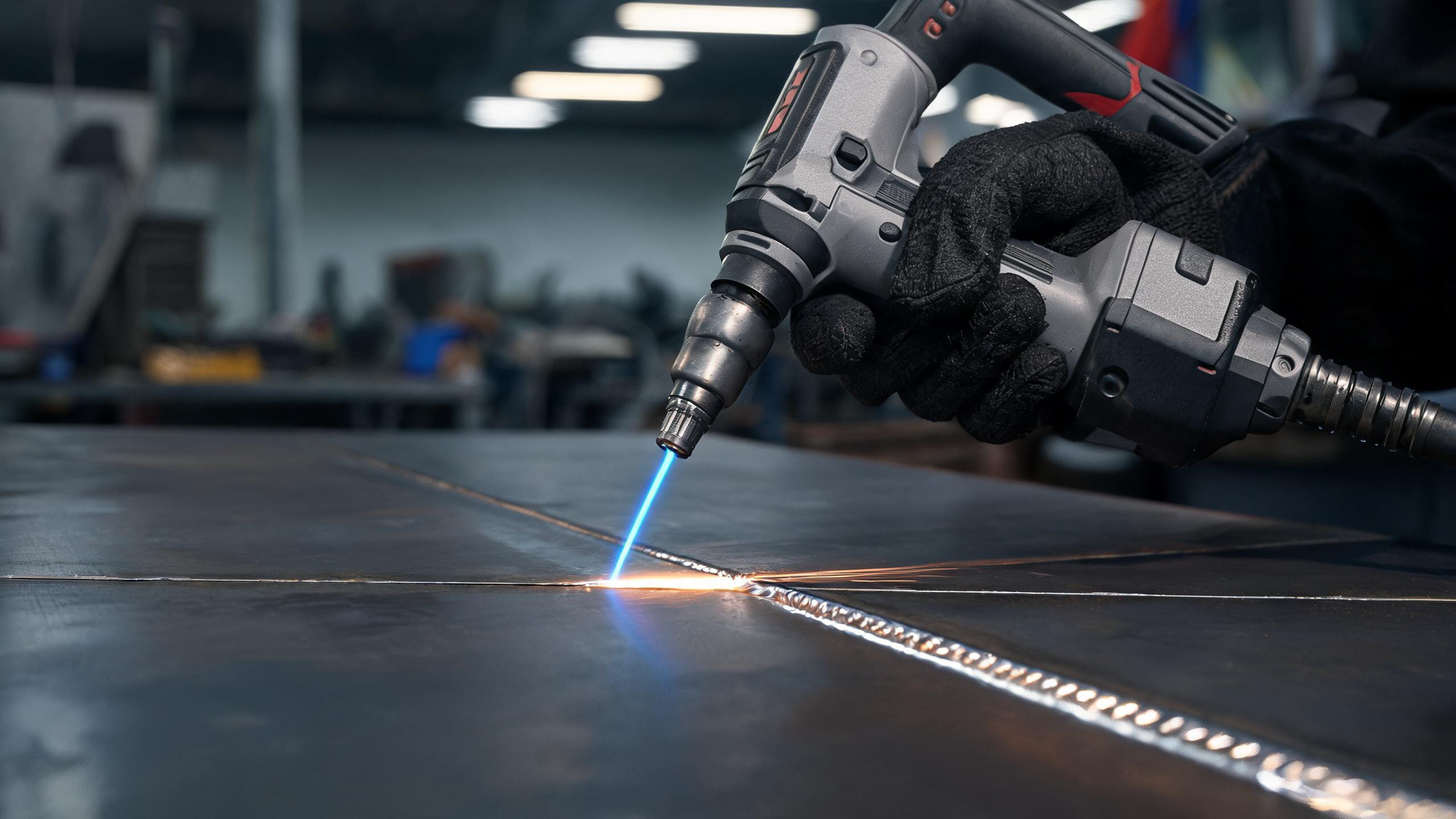
اسٹیل فیبریکیشن کے لیے بہترین ہینڈ ہیلڈ لیزر ویلڈنگ مشین کے انتخاب کے لیے ایک جامع گائیڈ، جس میں پاور میچنگ، دخول کی گہرائی، بیڈ کی درستگی، کولنگ سسٹم، سرٹیفیکیشن کی تعمیل اور آپریٹر ایرگونومکس شامل ہیں۔
اسٹیل کے لیے ہینڈ ہیلڈ لیزر ویلڈر کو ”بہترین“ کیا بناتا ہے؟
بہترین ہینڈ ہیلڈ لیزر ویلڈنگ مشین اسٹیل کے لیے وہ نہیں ہے جس کی پاور ریٹنگ سب سے زیادہ ہو — بلکہ وہ ہے جو آپ کے مخصوص اسٹیل کی اقسام، موٹائی کی حدود، پیداواری حجم اور تعمیل کی ضروریات سے مطابقت رکھتی ہو۔ اسٹیل فیبریکیشن میں کاربن اسٹیل، جستی اسٹیل اور سٹینلیس اسٹیل شامل ہیں، جن میں سے ہر ایک کی تھرمل کنڈکٹیویٹی اور ریفلیکٹیویٹی کی خصوصیات مختلف ہوتی ہیں۔ صحیح مشین کا انتخاب کرنے کا مطلب پانچ بنیادی معیارات کا جائزہ لینا ہے: پاور رینج، ویلڈ کی درستگی، کولنگ کی صلاحیت، سرٹیفیکیشن اور آپریٹر کی ایرگونومکس۔
معیار 1: پاور رینج اور مواد کی مطابقت
ہینڈ ہیلڈ فائبر لیزر ویلڈر چار بنیادی پاور لیولز میں دستیاب ہیں۔ ہر پاور ٹیئر اسٹیل کی موٹائی اور ایپلیکیشن کی ایک الگ رینج کے لیے موزوں ہے:
- 1000W – پتلی اسٹیل شیٹ اور ہلکے گیج کے اجزاء کے لیے ابتدائی پاور، تقریباً 2mm تک۔ چھوٹی ورکشاپس، مرمت کے کام اور پروٹوٹائپ فیبریکیشن کے لیے موزوں۔
- 1500W – سب سے زیادہ ورسٹائل ٹیئر، سٹینلیس اسٹیل اور ایلومینیم میں 3mm تک زیادہ سے زیادہ دخول۔ 1500W ماڈل ±0.1mm بیڈ مستقل مزاجی حاصل کرتا ہے، جو کاسمیٹک اور ساختی ویلڈز دونوں کے لیے موزوں ہے۔
- 2000W – درمیانی موٹائی کی اسٹیل پلیٹوں اور پروفائلز کے لیے توسیعی دخول، تقریباً 3–4mm رینج۔
- 3000W – موٹی اسٹیل پلیٹ، بھاری ساختی فیبریکیشن اور زیادہ حجم کی پیداوار کے لیے ہائی پاور ٹیئر جس میں گہرا دخول درکار ہوتا ہے۔
زیادہ تر عام اسٹیل فیبریکیشن شاپس کے لیے، 1500W سٹینلیس اسٹیل کے لیے ہینڈ ہیلڈ لیزر ویلڈنگ مشین بہترین توازن فراہم کرتی ہے — یہ عام اسٹیل کی موٹائیوں کی اکثریت کو سنبھالتی ہے جبکہ درستگی اور لاگت کی کارکردگی برقرار رکھتی ہے۔
معیار 2: ویلڈ بیڈ کی درستگی اور ریپیٹ ایبلٹی
اسٹیل فیبریکیشن میں، ویلڈ بیڈ کا معیار براہ راست جوڑوں کی مضبوطی، ظاہری شکل اور معائنہ کے نتائج کو متاثر کرتا ہے۔ 1500W ماڈل کے ذریعے حاصل کردہ ±0.1mm بیڈ مستقل مزاجی کا مطلب ہے کہ ہر ویلڈ پاس ایک ملی میٹر کے دسویں حصے کے انحراف کے اندر یکساں سیون پروفائل تیار کرتا ہے۔ ریپیٹ ایبلٹی کی یہ سطح درج ذیل کے لیے اہم ہے:
- بیچ پروڈکشن جہاں ہر پرزہ معیار کے یکساں معیارات پر پورا اترے
- کاسمیٹک ویلڈز مرئی اسٹیل ڈھانچوں پر جیسے آرکیٹیکچرل اسٹیل ورک
- ساختی ویلڈز جہاں بیڈ جیومیٹری بوجھ برداشت کرنے کی کارکردگی کو متاثر کرتی ہے
- کوالٹی آڈٹ جن کے لیے دستاویزی ویلڈ مستقل مزاجی درکار ہوتی ہے
معیار 3: کولنگ سسٹم اور ڈیوٹی سائیکل
اسٹیل فیبریکیشن شاپس عام طور پر مسلسل پیداواری شفٹیں چلاتی ہیں۔ پانی کی گردش کا کولنگ سسٹم مسلسل آپریشن کے لیے کلیدی اہل کار ہے۔ 1500W ماڈل کا واٹر کولڈ ڈیزائن بغیر تھرمل رکاوٹ کے 8+ گھنٹے مسلسل ویلڈنگ کی حمایت کرتا ہے — جو معیاری سنگل شفٹ پیداواری شیڈول سے مطابقت رکھتا ہے۔ مشینوں کا جائزہ لیتے وقت درج ذیل پر غور کریں:
- آیا کولنگ سسٹم انٹیگریٹڈ ہے یا بیرونی چلر کنکشن کی ضرورت ہے
- چلر کی ایمبیئنٹ ٹمپریچر آپریٹنگ رینج کیا ہے
- دیکھ بھال کے وقفے کولنٹ کی تبدیلی اور فلٹر کی صفائی کے لیے
ایئر کولڈ مشینیں وقفے وقفے یا ہلکے ڈیوٹی ایپلیکیشنز کے لیے کافی ہو سکتی ہیں، لیکن صنعتی اسٹیل فیبریکیشن کے لیے واٹر کولڈ سسٹمز کے ڈیوٹی سائیکل کا مقابلہ نہیں کر سکتیں۔
معیار 4: سرٹیفیکیشن اور مارکیٹ کی تعمیل
اگر آپ یورپی یا بین الاقوامی مارکیٹوں میں ویلڈڈ اسٹیل مصنوعات فراہم کرتے ہیں، تو مشین سرٹیفیکیشن اختیاری نہیں ہے — یہ خریداری کی ضرورت ہے۔ تصدیق کے لیے اہم سرٹیفیکیشنز:
- CE مارکنگ – یورپی صحت، حفاظت اور ماحولیاتی تحفظ کے معیارات کی تعمیل کی تصدیق کرتا ہے
- RoHS تعمیل – اس بات کو یقینی بناتا ہے کہ آلات میں محدود خطرناک مادے موجود نہیں ہیں
- ISO 9001:2015 سرٹیفیکیشن – اس بات کی توثیق کرتا ہے کہ پیداوار کنندہ کا کوالٹی مینجمنٹ سسٹم R&D، پیداوار اور بعد از فروخت سروس کا احاطہ کرتا ہے
Xinhong CNC کی ہینڈ ہیلڈ لیزر ویلڈنگ مشینیں CE اور RoHS سرٹیفیکیشن رکھتی ہیں، اور کمپنی ISO 9001:2015 کے تحت کام کرتی ہے۔ لیزر ذرائع IPG، RAYCUS اور GW سمیت عالمی معیار کے پیداوار کنندگان سے حاصل کیے جاتے ہیں، جو بیم کے معیار اور طویل مدتی بھروسے کو یقینی بناتے ہیں۔
معیار 5: آپریٹر ایرگونومکس اور استعمال میں آسانی
ہینڈ ہیلڈ ویلڈنگ مشین صرف اتنی ہی پیداواری ہوتی ہے جتنا آپریٹر اسے برقرار رکھ سکتا ہے۔ اہم ایرگونومک عوامل:
- ویلڈنگ ہیڈ کا وزن – ہلکے ہیڈ لمبی شفٹوں کے دوران تھکاوٹ کم کرتے ہیں
- پروفائل اسٹوریج – 50+ ویلڈ پروفائلز محفوظ کرنے کی صلاحیت آپریٹرز کو اسٹیل کی اقسام اور موٹائیوں کے درمیان فوری طور پر سوئچ کرنے دیتی ہے
- وائر فیڈ انٹیگریشن – بلٹ ان وائر فیڈ علیحدہ فیڈر یونٹ کی ضرورت ختم کرتا ہے
- سیفٹی انٹرلاکس – ٹرگر چھوڑنے پر خودکار لیزر شٹ آف آپریٹر کی حفاظت کرتا ہے
فیصلے کا خلاصہ
| آپ کی ایپلیکیشن | تجویز کردہ پاور | بنیادی وجہ |
|---|---|---|
| پتلی اسٹیل شیٹ (≤2mm) | 1000W | کم لاگت، کافی دخول |
| عام اسٹیل فیبریکیشن (1–3mm) | 1500W | بہترین ورسٹیلیٹی، ±0.1mm درستگی، 8h+ مسلسل آپریشن |
| درمیانی پلیٹ (3–4mm) | 2000W | موٹے جوڑوں کے لیے توسیعی دخول |
| بھاری ساختی اسٹیل (4mm+) | 3000W | زیادہ سے زیادہ دخول اور جمع کرنے کی شرح |