
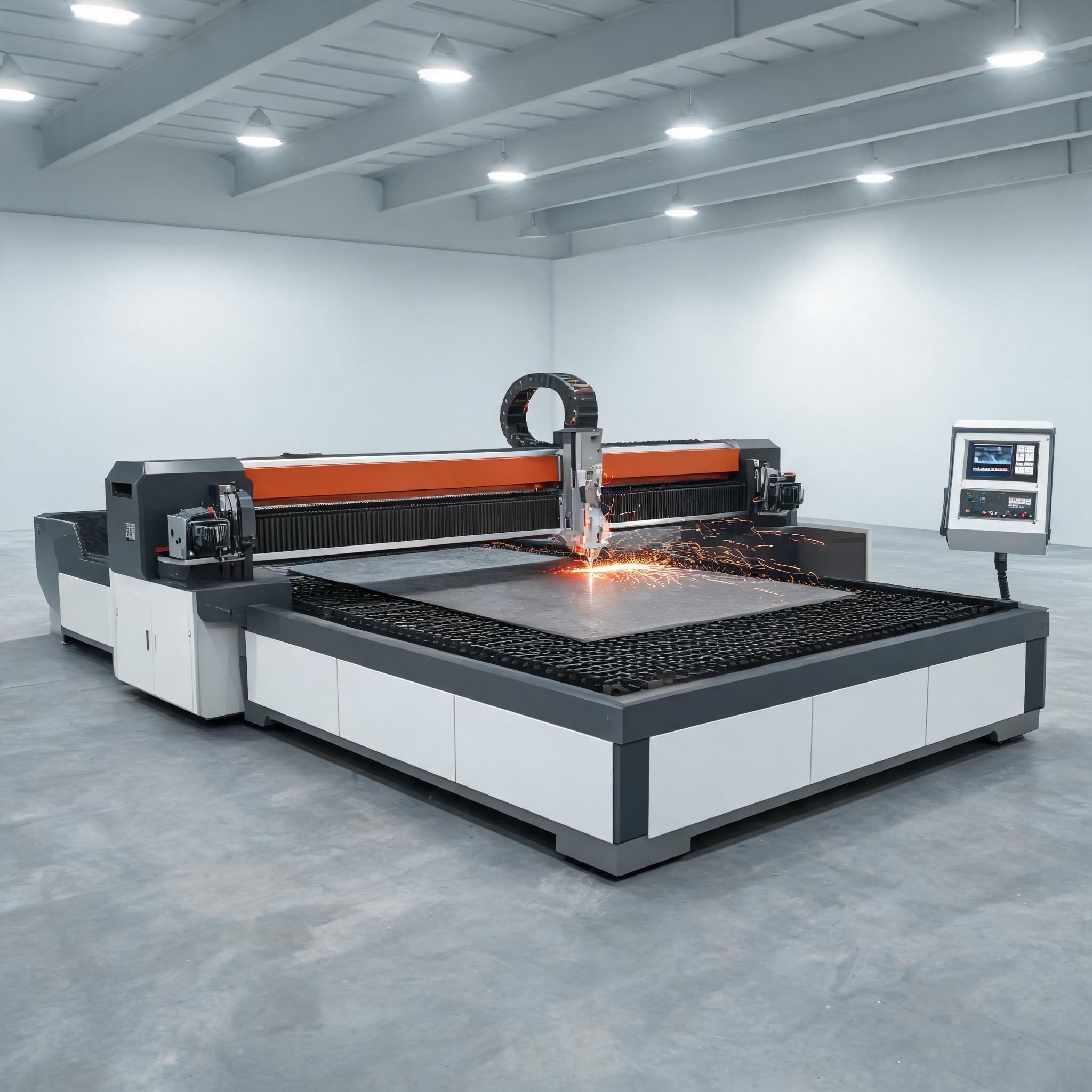
A practical guide for B2B buyers on where to buy a milling machine, how to evaluate milling machine suppliers, and how CNC milling compares to laser cutting for different production needs.
BUYER GUIDE
If you are sourcing a milling machine for a workshop, job shop, or production line, the first question is not which brand — it is where to buy a milling machine that matches your part geometry, material, tolerance, and budget. The second question is whether you need a milling machine at all, or whether laser cutting would do the job cheaper and faster.
This guide covers the main sourcing channels, how to evaluate a milling machine supplier, and a practical comparison of CNC milling versus laser cutting — so you can make a buying decision based on facts, not marketing.
- Buy from specialized machinery dealers, direct from manufacturers, or through B2B platforms — each has trade-offs in price, support, and lead time.
- Always verify spindle power, travel, taper, control system, and after-sales support before you buy.
- CNC milling removes material with rotating cutters; laser cutting melts or vaporizes material with a focused beam. Choose based on material, thickness, tolerance, and production volume.
- For prototypes and thin sheet metal, laser is often faster; for 3D shapes, threads, and tight tolerances, milling is the standard.
- Ask your supplier for a machine test report and a list of reference installations in your industry.
Where to Buy a Milling Machine: Sourcing Channels Compared
There are three common routes to purchase a milling machine: direct from the manufacturer, through a local or regional dealer, or via an online B2B marketplace. Each route suits different buyer profiles.
1. Direct from the Manufacturer
Buying directly from a milling machine supplier who builds the machine gives you the lowest unit price in theory, and the most direct access to engineering support. You can request custom spindle configurations, special table sizes, or specific control systems. Lead times are typically longer — often 30 to 90 days depending on the machine and your location.
Direct sourcing works best when you have a clear specification, a container-load quantity, or a long-term relationship. It also requires you to handle import logistics, customs clearance, and any local compliance (CE, UL, or other regional standards).
2. Local or Regional Dealers
Dealers stock machines from multiple brands, provide local installation, training, and warranty service. You pay a markup, but you gain faster delivery and a single point of contact for spare parts and repairs. For a first-time buyer or a company without an in-house maintenance team, a dealer is often the safer choice.
3. B2B Marketplaces and Online Directories
Platforms like Alibaba, Made-in-China, and Global Sources list thousands of milling machine suppliers. You can compare specifications, request quotes, and check company profiles. However, you must do your own due diligence: verify the supplier's manufacturing capability, request a video of the machine running, and ask for a list of export destinations.
Many suppliers on these platforms are trading companies, not factories. Ask directly: “Are you the manufacturer?” and request factory registration documents.
| Sourcing Channel | Pros | Cons | Best For |
|---|---|---|---|
| Direct manufacturer | Lower price, custom options, direct technical support | Longer lead time, you handle import and compliance | Buyers with clear specs and volume |
| Local dealer | Faster delivery, local service, easier returns | Higher price, limited brand choice | First-time buyers, urgent needs |
| B2B marketplace | Wide selection, easy price comparison | Risk of trading companies, quality variance | Buyers who can vet suppliers |
How to Evaluate a Milling Machine Supplier
Once you have a shortlist of suppliers, check the following before you commit:
- Machine specifications: Spindle power (kW), spindle taper (BT30, BT40, etc.), travel (X/Y/Z), maximum spindle speed, and control system (Fanuc, Siemens, Mitsubishi, or domestic).
- Quality assurance: Does the factory have ISO 9001 certification? Do they run a test cut on every machine before shipment?
- After-sales support: What is the warranty period? Are spare parts available locally? What is the response time for remote diagnostics?
- Reference installations: Ask for a list of customers in your industry (e.g., mold making, automotive parts, aerospace). If possible, contact one of them.
- Export experience: Which countries have they shipped to? Do they have CE certification if you are in the EU?
If a supplier cannot provide a machine test video or a list of export destinations, treat that as a red flag. A reputable milling machine supplier will share these documents freely.
CNC Milling vs. Laser Cutting: Which One Do You Need?
The choice between CNC milling and laser cutting depends on the material, part geometry, tolerance, and production volume. Both are subtractive processes, but they work differently.
How CNC Milling Works
CNC milling uses a rotating cutting tool (end mill, drill, or face mill) to remove material from a workpiece. The machine moves the tool along multiple axes (typically 3, 4, or 5) to create slots, holes, threads, pockets, and complex 3D surfaces. It works on metals, plastics, wood, and composites.
Key advantages of milling:
- Handles thick materials (up to several inches, depending on machine size and spindle power).
- Produces accurate holes, threads, and flat surfaces with tight tolerances (±0.01 mm or better).
- Can create 3D shapes, undercuts, and features that laser cutting cannot.
- Leaves a machined surface finish suitable for functional parts.
How Laser Cutting Works
Laser cutting uses a focused high-power laser beam to melt, burn, or vaporize material along a path. It is typically used for flat sheet material — metal, plastic, wood, or acrylic — and produces a clean edge with a narrow kerf.
Key advantages of laser cutting:
- Very fast for thin materials (e.g., 1–10 mm sheet metal).
- No tool wear — no physical contact, so no tool replacement cost.
- High precision for 2D profiles, with minimal heat-affected zone if parameters are set correctly.
- Easy to automate for batch production of identical flat parts.
Side-by-Side Comparison: CNC Milling vs. Laser Cutting
| Criteria | CNC Milling | Laser Cutting |
|---|---|---|
| Material thickness | Up to 100+ mm (depending on machine) | Typically up to 20–25 mm in steel (fiber laser) |
| Part geometry | 3D shapes, pockets, threads, undercuts | 2D profiles, flat parts only |
| Tolerance | ±0.01 mm or better | ±0.05 mm to ±0.1 mm typical |
| Surface finish | Machined, can be polished | Edge may have slight dross or oxidation |
| Tooling cost | Cutting tools wear and need replacement | No tool wear, but laser tube or resonator has a lifespan |
| Setup time | Longer (fixturing, tool changes) | Short (just load sheet and program) |
| Best for | Functional parts, molds, prototypes with 3D features | Sheet metal enclosures, brackets, decorative panels |
In practice, many shops use both: laser for cutting blanks from sheet, then milling for finishing features like holes and threads. If you are buying a milling machine, you are likely producing parts that need more than a flat profile.
Cost Considerations: Not Just the Purchase Price
The purchase price of a milling machine is only part of the total cost. Consider:
- Tooling: End mills, holders, and workholding fixtures. Budget for a starter set.
- Installation: Leveling, electrical connection, and any foundation work.
- Training: Operator training for CNC programming and setup.
- Maintenance: Regular lubrication, spindle checks, and calibration.
- Spare parts: Common wear items like filters, belts, and sensors.
Ask your milling machine supplier for a total cost of ownership estimate, including recommended spare parts for the first year.
Frequently Asked Questions
Q1: Can a milling machine replace a laser cutter?
No. They are complementary. A milling machine cannot cut thin sheet metal as fast as a laser, and a laser cannot create 3D features. Choose based on your part geometry and volume.
Q2: What is the minimum order quantity (MOQ) when buying from a manufacturer?
MOQ varies. Some manufacturers sell single machines, others require a minimum of 2–5 units. Confirm with the supplier directly.
Q3: How long does shipping take for a milling machine?
Sea freight from Asia to Europe or North America typically takes 30–45 days, plus production time. Ask the supplier for a specific lead time based on your destination port.
Q4: Do I need a 5-axis machine?
Only if your parts require complex angled features or undercuts. For most flat or prismatic parts, a 3-axis machine is sufficient and more economical.
Next Steps: What to Prepare Before Contacting a Supplier
To get accurate quotes and avoid back-and-forth, prepare the following:
- Part drawings (PDF or CAD files) with tolerances and material grade.
- Production volume per month.
- Required machine specifications (spindle speed, travel, control system).
- Your workshop's electrical supply (voltage, phase).
- Any compliance requirements (CE, UL, etc.).
With this information, a milling machine supplier can give you a precise recommendation and a firm quotation. If you are still comparing processes, send the same part drawing to both a milling supplier and a laser cutting service to see which process is more cost-effective for your specific part.
"The best machine is the one that matches your part's requirements, not the one with the most features."
If you have a specific part or production need, contact us with your drawings and volume — we can advise on the right machine configuration and provide a detailed quotation.