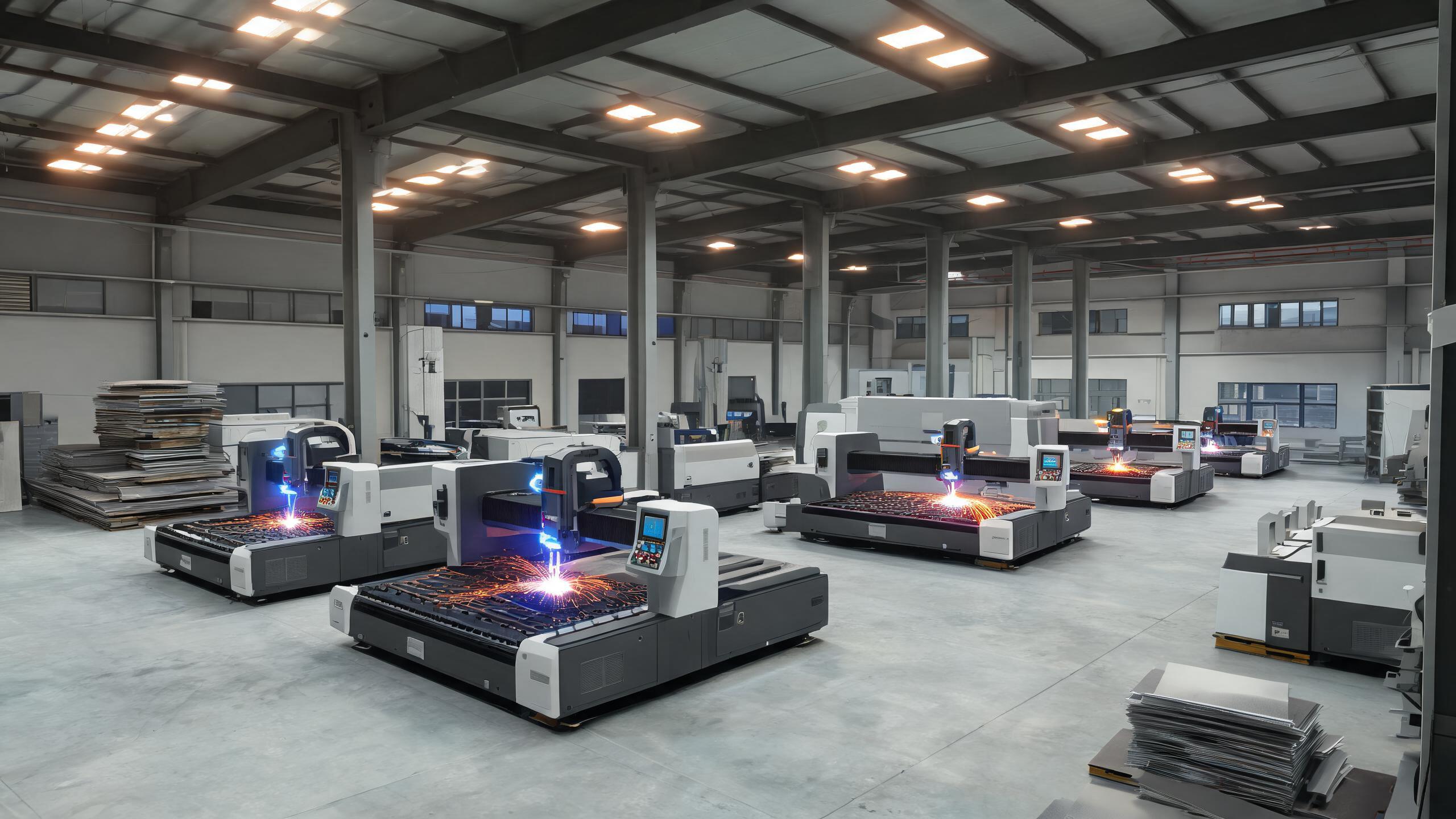
Bottled nitrogen costs add up quickly for laser cutting. This guide breaks down the real cost drivers of nitrogen tanks versus an on-site PSA nitrogen generator, covering purity, logistics, and ROI—so you can decide when switching makes financial sense.
How Much Is a Tank of Nitrogen? The Question That Changes Your Cost Model
If you run a laser cutting operation, you have probably asked: how much is a tank of nitrogen? The answer is not a single number—it depends on your region, supplier, contract volume, cylinder size, and delivery frequency. But the bigger question is what that tank really costs your business over a year, once you add logistics, handling, and downtime. For many shops, the recurring expense of bottled nitrogen becomes the single largest consumable cost after the laser itself.
This article compares the true cost of bottled nitrogen against an on-site PSA nitrogen generator, so you can decide whether switching makes sense for your cutting volume, purity needs, and workflow.
What Drives the Cost of a Nitrogen Tank?
When you buy nitrogen in cylinders or dewars, you are not just paying for the gas. The invoice includes several components that vary widely by supplier and location:
- Gas itself: The base price per cubic meter or per kilogram, which fluctuates with energy and production costs.
- Cylinder rental or demurrage: Many suppliers charge a daily or monthly fee for the tank, even when it sits unused.
- Delivery charges: Fuel, driver time, and minimum order quantities often make small refills disproportionately expensive.
- Handling and storage: Moving heavy cylinders, securing them, and managing inventory takes labor and floor space.
- Administrative fees: Paperwork, hazmat documentation, and invoicing can add hidden overhead.
Because these costs scale with the number of deliveries, the true cost per cubic meter of nitrogen can be two to three times the quoted gas price—especially for shops that use small cylinders or have irregular consumption. A supplier may quote a low per-cylinder price, but the effective cost per liter of gas delivered to your nozzle is what matters for your P&L.
Nitrogen Tank vs Generator: What Changes in the Cost Equation?
An on-site nitrogen generator produces nitrogen from compressed air using pressure swing adsorption (PSA). Instead of paying for gas and logistics, you pay for electricity, compressed air, and periodic maintenance. The comparison is not just about the price per unit of gas—it changes the structure of your costs.
| Cost Factor | Bottled Nitrogen | On-Site PSA Generator |
|---|---|---|
| Recurring gas cost | Per delivery, plus rental and delivery fees | Electricity for air compressor and generator |
| Logistics | Delivery scheduling, cylinder handling, inventory management | None—gas produced on demand |
| Storage space | Dedicated area for cylinders, often with safety requirements | Compact unit near the laser |
| Purity control | Fixed purity per grade; you pay for higher grade even if not needed | Adjustable to your required purity (e.g., 99.9%) |
| Downtime risk | Running out of gas stops production; delivery delays are common | Continuous supply as long as power and air are available |
| Maintenance | None (supplier handles cylinders) | Monthly filter cartridge replacement; routine checks |
| Upfront investment | Low—no equipment purchase | Capital cost of generator and compressor |
The table shows that bottled nitrogen offers low upfront cost but high variable cost. A generator flips that: higher initial investment, but much lower ongoing cost—and greater control over your supply.
Purity Matters: 99.9% Is Often Enough for Laser Cutting
Laser cutting typically requires nitrogen at 99.9% purity or higher to prevent oxidation on the cut edge. Many suppliers sell higher grades (99.995% or 99.999%), which cost more per cubic meter. If your process only needs 99.9%, paying for a higher grade is wasted money.
An on-site PSA generator can produce nitrogen at 99.9% purity consistently, without the premium charged for bottled high-purity grades. For most mild steel and stainless steel cutting applications, 99.9% is the sweet spot between cost and cut quality. If your parts require higher purity, you can often adjust the generator settings or add a purification stage—but many shops find 99.9% sufficient.
Logistics: The Hidden Cost of Bottled Nitrogen
Bottled nitrogen is a logistical headache. Each cylinder change interrupts production, requires trained staff, and creates safety risks. Delivery schedules may not align with your consumption, forcing you to keep extra inventory—which ties up capital and space. In high-volume operations, cylinder changes can happen several times a day, adding up to hours of lost cutting time per week.
On-site generation eliminates most of this. The generator runs continuously, producing nitrogen as needed. There is no cylinder to swap, no delivery to wait for, and no risk of running dry mid-shift. For facilities with multiple shifts or high utilization, this reliability alone can justify the switch.
ROI: When Does a Nitrogen Generator Pay for Itself?
The return on investment (ROI) for a PSA nitrogen generator depends on your current nitrogen consumption and the cost of bottled gas in your area. As a rule of thumb, facilities that use more than a few cylinders per week often see payback within 6 to 12 months—the range commonly cited for laser cutting applications.
Here is how to estimate your own payback period:
- Calculate your annual bottled nitrogen spend. Include gas, rental, delivery, and handling costs over the past 12 months.
- Estimate your compressed air cost. The generator uses a certain amount of compressed air per cubic meter of nitrogen. Your compressor's power consumption and electricity rate determine this cost.
- Add maintenance. For a PSA generator, plan for monthly filter cartridge replacement and periodic checks. This is a small, predictable cost compared to gas deliveries.
- Divide the equipment cost by the annual savings. The result is your payback period in years.
For example, if you currently spend €30,000 per year on bottled nitrogen and the generator (plus installation) costs €20,000, your annual savings might be €15,000–€20,000 after operating costs—putting payback at around 12 months. The exact numbers depend on your volume and local rates, but the logic is consistent: the more nitrogen you use, the faster the generator pays off.
What to Look for in a PSA Nitrogen Generator for Laser Cutting
If you decide to evaluate a generator, focus on specifications that match your cutting requirements:
- Purity: Confirm the generator can deliver 99.9% purity consistently. Some models can go higher with additional equipment.
- Flow rate: Match the generator's output to your maximum simultaneous demand. For laser cutting, systems in the 10–80 m³/h range cover most single- and dual-laser setups.
- Inlet pressure: Ensure your existing compressed air system can supply the required inlet pressure, typically 0.6–0.8 MPa for efficient PSA operation.
- Filtration: Look for dual filtration plus membrane separation to protect the system from oil, water, and particulates in the air supply.
- Certification and noise: CE certification ensures compliance with EU standards. A noise level below 75 dB keeps the unit comfortable near the production floor.
- Maintenance: Ask about the service interval. Monthly filter cartridge replacement is typical for PSA systems, and you should factor that into your operating cost.
Shandong Xinhong manufactures PSA nitrogen generators specifically for laser cutting, with these characteristics: 99.9% purity, 10–80 m³/h flow, 0.6–0.8 MPa inlet pressure, dual filtration plus membrane separation, CE certification, and noise below 75 dB. Their systems are designed to integrate with existing compressed air infrastructure, and the 6–12 month ROI is based on typical laser cutting operations.
When Should You Stick with Bottled Nitrogen?
Not every shop needs a generator. If you use nitrogen only occasionally—say, a few cylinders per month—the capital cost of a generator may not be justified. Bottled nitrogen is also easier if you have no compressed air system on site, or if your purity requirements are unusually high (above 99.9%) and you prefer the simplicity of buying a certified grade.
However, as your cutting volume grows, the economics shift quickly. The break-even point depends on your local gas prices and consumption. If you are using enough nitrogen that deliveries and rental fees are a recurring burden, it is worth running the numbers on a generator.
Frequently Asked Questions
How much does a tank of nitrogen cost for laser cutting?
There is no fixed price—it varies by region, supplier, and contract. Expect to pay for the gas, cylinder rental, and delivery. To compare fairly, calculate your total cost per cubic meter, not just the per-cylinder price.
Is 99.9% nitrogen pure enough for laser cutting?
Yes, for most mild steel and stainless steel cutting, 99.9% purity is sufficient. Higher purity is only needed for specialized materials or surface finish requirements.
Can a nitrogen generator replace bottled nitrogen entirely?
Yes, for most laser cutting applications. The generator produces nitrogen on-site, eliminating delivery logistics and cylinder handling. You will need a reliable compressed air supply and a small amount of floor space.
What is the ROI for a PSA nitrogen generator?
For typical laser cutting operations, payback is often 6–12 months, based on savings in gas purchase, rental, and delivery costs. Your payback depends on your consumption volume and local utility rates.
What maintenance does a nitrogen generator require?
Monthly filter cartridge replacement is standard. The system should also be checked periodically for air quality and pressure settings. This is a minor cost compared to ongoing gas deliveries.
Next Step: Run Your Own Cost Comparison
The decision between bottled nitrogen and an on-site generator comes down to your specific consumption and cost structure. Start by tracking your nitrogen usage and total invoice for three months. Then estimate the operating cost of a generator using your electricity rate and compressed air capacity. If the payback is under two years—and for many shops it is under one—the switch is worth serious consideration.
To evaluate a PSA nitrogen generator for your laser cutting line, review the specifications of Shandong Xinhong's nitrogen generator system and request a quotation tailored to your flow and purity requirements. A supplier can help you size the unit based on your cutting schedule and confirm the projected ROI for your site.