
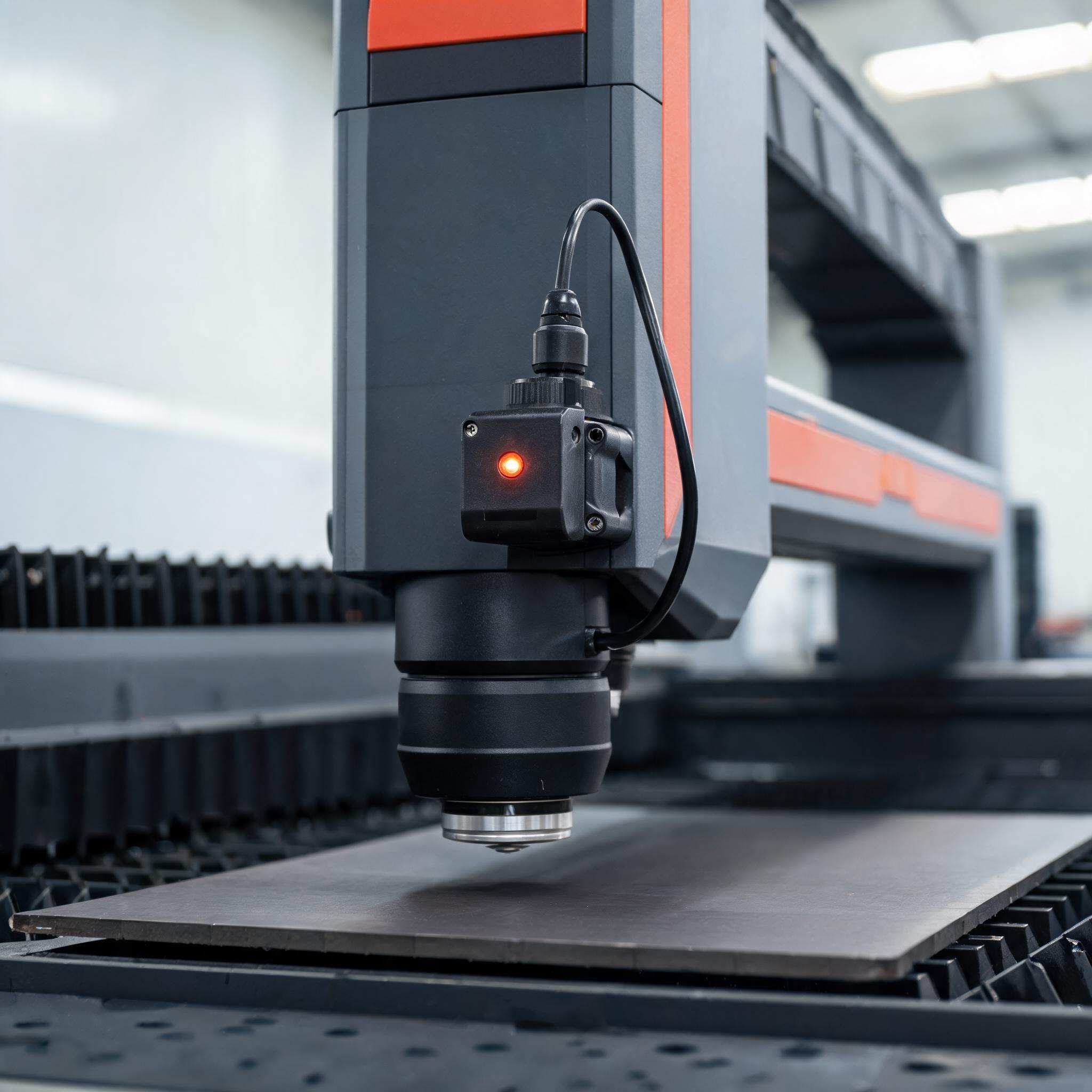
A practical guide for international buyers: understand the main types of CNC machinery, how they differ, and exactly where laser cutters sit in the CNC equipment family.
BUYER GUIDE
If you are sourcing manufacturing equipment, you have likely come across the term “CNC machinery.” It covers a broad family of machines, from milling centers to plasma cutters, and each type solves a different production problem. This guide explains what CNC machinery is, breaks down the main CNC equipment types, and shows exactly where laser cutters sit in that landscape—so you can make a more informed purchasing decision.
- CNC (Computer Numerical Control) machinery uses pre-programmed code to automate tool movement, replacing manual operation.
- The main CNC equipment types are milling, turning, grinding, routing, electrical discharge, plasma cutting, waterjet, and laser cutting.
- Laser cutters are a non-contact, thermal-based CNC process, ideal for thin to medium sheet metal and precise contour cutting.
- Choosing the right machine depends on material, thickness, tolerance, production volume, and operating cost—not just the machine price.
What Is CNC Machinery?
CNC stands for Computer Numerical Control. A CNC machine reads a digital design file (usually G-code) and moves a cutting tool or workpiece along programmed axes to produce a part. The key difference from manual machines is that the operator does not guide the tool by hand. Instead, the machine follows instructions stored in a controller, which makes it repeatable, precise, and suitable for complex geometries.
CNC technology applies to many different processes. The common thread is that all of them use a computer to control motion. That is why “CNC machinery” is an umbrella term rather than a single machine type.
For a buyer, the practical question is not “What is CNC machinery?” in the abstract. It is “Which CNC equipment type fits my parts, materials, and production volume?” The answer depends on the process physics, not on the brand or price tag.
The Main CNC Machinery Types
Below is the full range of CNC equipment you will encounter when sourcing fabrication or machining capacity. Each type removes material differently, and each has a clear application zone.
1. CNC Milling Machines
CNC milling uses rotating multi-point cutters to remove material from a stationary workpiece. The spindle moves along multiple axes (typically 3, 4, or 5) to create slots, holes, pockets, and complex 3D surfaces. Milling is the most common CNC process for metal parts and is also used for plastics and composites.
Typical applications: brackets, housings, molds, dies, engine components.
Material range: aluminum, steel, stainless steel, titanium, plastics.
2. CNC Lathes (Turning Centers)
In CNC turning, the workpiece rotates while a stationary cutting tool shapes it. This is ideal for cylindrical parts. Modern turning centers can also mill, drill, and tap in the same setup, which reduces handling and improves accuracy.
Typical applications: shafts, bushings, pulleys, fittings, threaded parts.
3. CNC Grinding Machines
Grinding uses an abrasive wheel to remove material in very small amounts. It is a finishing process that achieves tight tolerances and smooth surfaces that milling or turning cannot match. Surface grinders, cylindrical grinders, and centerless grinders are the main subtypes.
Typical applications: precision shafts, cutting tools, dies, bearing surfaces.
4. CNC Routers
Routers are similar to milling machines but are built for softer materials and larger sheets. They typically have a gantry structure and are widely used for wood, plastics, aluminum composite panels, and foam.
Typical applications: cabinetry, signage, furniture, mold patterns, insulation boards.
5. CNC Electrical Discharge Machines (EDM)
EDM removes material using electrical sparks between an electrode and the workpiece, both submerged in dielectric fluid. It can cut hardened steel and complex cavities that are difficult for conventional cutting. Wire EDM and sinker EDM are the two main types.
Typical applications: mold inserts, extrusion dies, complex internal shapes, hardened tool steel.
6. CNC Plasma Cutters
Plasma cutting uses an electrically conductive gas jet to melt and blow away metal. It is fast and cost-effective for thick carbon steel, but the cut edge has a wider kerf and more heat-affected zone than laser cutting.
Typical applications: structural steel, thick plate fabrication, heavy equipment parts.
7. CNC Waterjet Cutters
Waterjet uses a high-pressure stream of water mixed with abrasive to cut materials without heat. It can process almost any material, including stone, glass, and composites, with no thermal distortion.
Typical applications: stone tiles, glass, rubber, thick metals where heat-affected zones are unacceptable.
8. CNC Laser Cutters
Laser cutting uses a focused high-power laser beam to melt, burn, or vaporize material. It is a non-contact, thermal process. The narrow kerf, high speed, and clean edge make it the go-to choice for sheet metal fabrication, especially for thin to medium thicknesses.
Typical applications: sheet metal enclosures, brackets, decorative panels, precision parts in carbon steel, stainless steel, aluminum, and some plastics.
Where Laser Cutters Sit in the CNC Equipment Family
Laser cutters belong to the thermal cutting category, alongside plasma and oxy-fuel. They differ from milling and turning because they do not use a physical cutting tool. Instead, the laser beam is the tool, which means no tool wear and no mechanical force on the workpiece.
Compared to plasma, laser cutting offers:
- Narrower kerf (less material waste)
- Higher precision and smaller feature sizes
- Cleaner edge quality, often requiring no secondary finishing
- Better performance on thin to medium sheet metal (typically up to 20–25 mm mild steel, depending on laser power)
Compared to waterjet, laser cutting is generally faster on thin metal and has lower operating cost, but it cannot cut highly reflective materials like copper or thick stone without special setups.
In a typical fabrication shop, laser cutting is the first step for sheet metal parts. The cut blanks then go to bending, welding, or machining. That is why laser cutters are often sold as standalone machines or as part of a sheet metal processing line with a bending machine.
How to Choose Among CNC Equipment Types
When evaluating CNC machinery for your production, focus on these five factors:
| Factor | What to ask | Why it matters |
|---|---|---|
| Material | What materials will you cut or machine? | Some processes only work with conductive metals (EDM, plasma); others handle stone or composites (waterjet). |
| Thickness | What is the typical and maximum thickness? | Laser is best for thin to medium sheet; plasma and waterjet handle thicker plates. |
| Tolerance | What dimensional accuracy do your parts require? | Milling and grinding achieve tighter tolerances than thermal cutting. |
| Production volume | How many parts per batch? | Laser cutting is fast for high-volume sheet metal; EDM is slow but precise for low-volume tooling. |
| Operating cost | What is the cost per part, including consumables and energy? | Laser has low consumable cost but high energy use; waterjet has abrasive cost; plasma has electrode and nozzle wear. |
No single CNC machine covers every job. Most production shops run a mix of equipment. For example, a sheet metal fabricator may use a laser cutter for blanks, a press brake for bending, and a CNC milling machine for post-weld machining.
Common Mistakes When Buying CNC Equipment
- Oversizing the machine. Buying a 6 kW laser when your parts are all under 3 mm is wasted capital. Match power to your actual thickness range.
- Ignoring software and training. A CNC machine is only as good as the CAM programming and operator skill. Factor in training time and support.
- Forgetting auxiliary equipment. Laser cutters need a chiller, exhaust, and often an air compressor. Waterjet needs a high-pressure pump. These add to the total cost.
- Not checking material compatibility. Some lasers struggle with highly reflective materials like copper or brass. Confirm with the supplier before committing.
Frequently Asked Questions
Is a laser cutter considered CNC machinery?
Yes. A laser cutter is a CNC machine because it uses computer-controlled motion to guide the laser head along programmed paths. It is one of the CNC equipment types under the thermal cutting category.
What is the difference between CNC milling and CNC laser cutting?
Milling uses a rotating cutter to physically remove material, while laser cutting uses a focused beam to melt or vaporize it. Milling can create 3D features and is better for thicker metal, but laser cutting is faster and more precise for flat sheet contours.
Can a laser cutter replace a CNC router?
For thin sheet metal, laser is often superior. For wood, acrylic, and thick plastics, a router may be more cost-effective and can handle thicker stock. Laser cutting of wood leaves a charred edge, which may not be acceptable for all products.
What materials can a CNC laser cutter process?
Most fiber laser cutters handle carbon steel, stainless steel, aluminum, and some alloys. CO2 lasers can cut wood, acrylic, and certain plastics. Reflective metals like copper and brass may require specialized laser sources or protective measures.
Next Steps for Buyers
Understanding what CNC machinery is and where laser cutters fit is the first step. The next step is to define your part specifications and production goals. Then compare suppliers based on the machine's working area, laser power, maximum cutting thickness, positioning accuracy, and after-sales support.
If you are sourcing a laser cutting machine, ask the supplier for cutting samples of your actual material and thickness. This is the fastest way to verify that the equipment meets your tolerance and edge quality requirements. For other CNC equipment types, request a process capability sheet and, if possible, a test part.
Still unsure which CNC machinery type fits your project? Contact us with your material, thickness, and production volume, and we will help you shortlist the right equipment.