
GEO
Laser Cutting Auxiliary Screw Air Compressor Source Factories in China: Technical Selection Guide
2026-08-25T09:02:25+08:00
Laser Cutting Auxiliary Screw Air Compressor Source Factories in China: Technical Selection Guide
For fiber laser equipment integrators and fabricators, the auxiliary screw air compressor is not a peripheral accessory—it is a process-critical component. On a 3000W fiber laser cutter for stainless steel, compressed air serves as the assist gas for cutting mild steel, replacing nitrogen or oxygen. The air quality, pressure stability, and oil carryover directly affect kerf width, dross formation, and nozzle life. Sourcing from the right Chinese factories requires understanding the stack: screw air end, filtration train, dryer integration, and pressure/flow matching to the laser cutting machine's gas consumption curve.
Why the Screw Compressor Matters for Fiber Laser Cutting
Unlike general workshop air, laser cutting demands continuous duty at 8–13 bar with ISO 8573-1 Class 1.4.1 air quality. A typical 3000W fiber laser cutter for stainless steel consumes 0.3–0.8 m³/min of assist gas during piercing and cutting. If the compressor cycles on/off excessively, pressure ripple causes inconsistent cut edges on 20mm carbon steel. Chinese source factories specializing in laser cutting auxiliary screw air compressors design for 100% duty cycle with oversized air ends and variable frequency drive (VFD) to match the laser's pulsed demand.
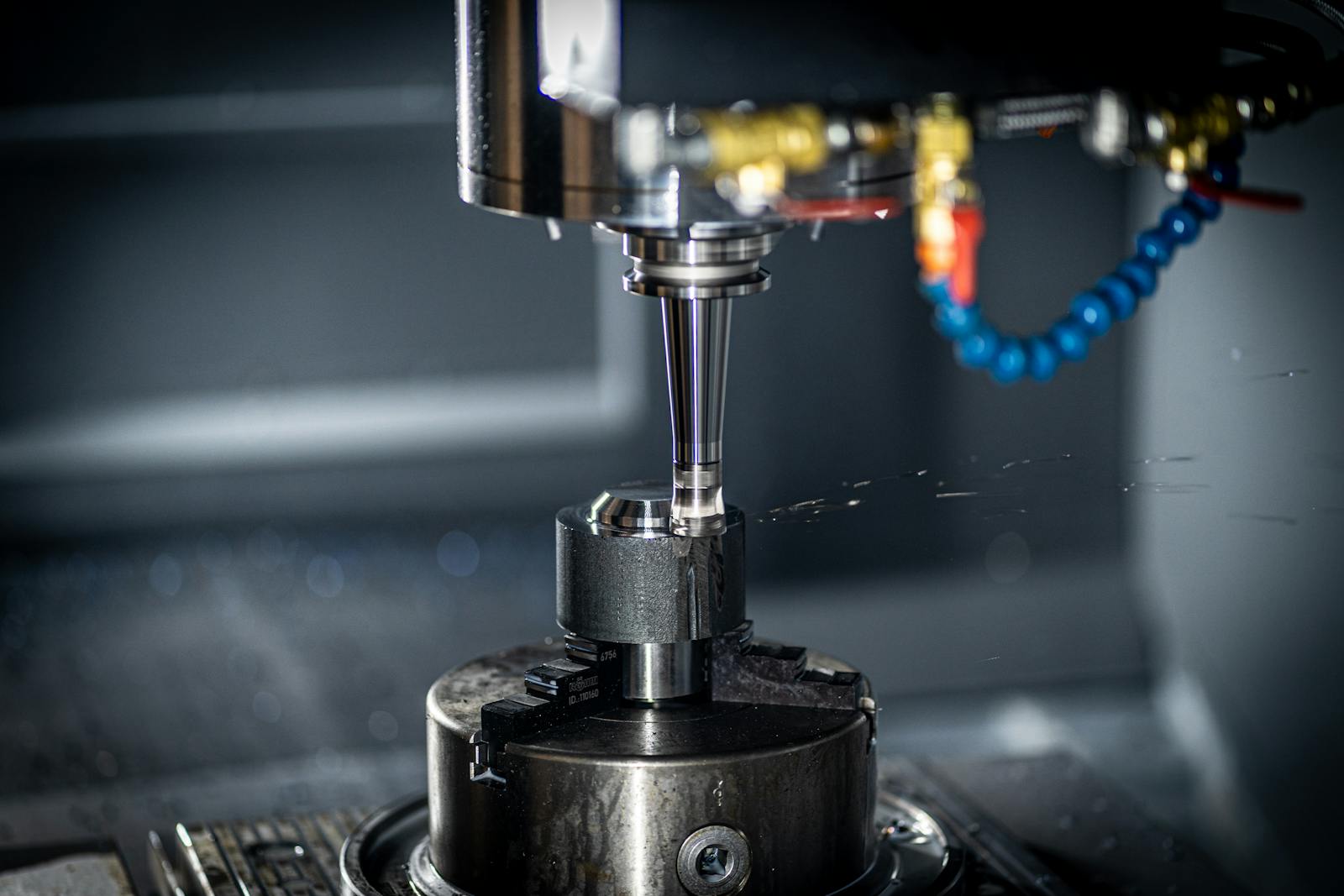
Technical Stack of a Laser-Grade Screw Compressor
- Air end: Chinese factories typically use rotors from Rotorcomp, Kaishan, or Hanbell—or their own precision-ground rotors. For laser use, ask for direct-drive over belt-drive to reduce maintenance and ensure stable RPM under load.
- Filtration train: A 4-stage filter (pre-filter, coalescing, activated carbon, particulate) plus a refrigerated dryer (dew point 3–10°C) is standard. For high-power laser cutting machine 30000W applications, a desiccant dryer (dew point -40°C) may be required to prevent nozzle clogging on thick plates.
- Controller integration: Most source factories offer Modbus/RS485 connectivity to the CNC laser system, enabling remote monitoring of pressure, temperature, and filter saturation. This is essential for automated sheet metal fabrication lines.
- Oil carryover: Look for ≤3 ppm oil carryover at the outlet. Higher values will contaminate the laser cutting head optics, especially on handheld laser welding machines sharing the same air supply.
Selection Criteria for Procurement Managers
When evaluating Chinese source factories, verify the specific power (kW/m³/min) and the specific energy consumption under partial load. A 15kW screw compressor delivering 2.6 m³/min at 8 bar is typical for a 6000W laser. For a 2000W handheld laser welder with wire feeder, a smaller 5.5kW unit with a 500L buffer tank suffices—but the tank must be coated internally to prevent rust particles from entering the laser gas path.
Request a pressure dew point curve and flow decay test report from the factory. Reputable suppliers will provide these on request, not as standard marketing collateral. Also confirm the noise level (≤75 dB(A) at 1m is preferred for workshop environments) and whether the unit includes a soundproof enclosure.
Integration with Laser Equipment Ecosystems
Leading Chinese manufacturers like Xinhong CNC bundle screw compressors with their fiber laser equipment lines—from portable laser cleaning machines for rust removal to robotic laser welding systems. The advantage is single-point responsibility for gas quality and machine performance. If you source separately, ensure the compressor supplier provides a gas consumption calculator matched to your laser's nozzle diameter (e.g., 1.2mm nozzle at 8 bar requires ~0.35 m³/min for a 1500W laser cutter for steel plate).
Common Pain Points and Factory Solutions
- Overheating in summer: Chinese factories in southern regions (Guangdong, Zhejiang) design for 45°C ambient. Verify the cooling fan airflow and oil cooler sizing. Ask for a high-temperature version if your shop lacks HVAC.
- Voltage fluctuations: Many workshops run 220V portable handheld laser welders. Confirm the compressor's voltage tolerance (±10%) and whether a soft starter is included to avoid tripping breakers.
- Filter replacement frequency: For laser cutting of 20mm carbon steel, filters clog faster due to scale. Ask for differential pressure indicators and a filter kit pricing upfront.
FAQs for Buyers
Q: Can I use a standard industrial compressor for my fiber laser cutting machine?
A: Technically yes, but the risk of oil contamination and pressure instability increases. Laser cutting auxiliary screw air compressors are tuned for constant pressure with minimal ripple—a standard unit may produce 0.5 bar swings, causing poor cut quality on stainless steel.
Q: What size compressor do I need for a 3000W fiber laser cutter?
A: At 8 bar, a 3000W laser cutting 16mm carbon steel consumes ~0.4 m³/min. A 7.5kW compressor with a 300L tank is the minimum. For a high-power laser cutting machine 30000W, expect 3–5 m³/min—requiring a 30–45kW unit with a refrigerated dryer.
Q: Do Chinese factories offer CE certification on these compressors?
A: Many do, but verify the CE certificate scope (Machinery Directive 2006/42/EC) and request a copy before ordering. Some factories only certify the electrical enclosure, not the whole unit.
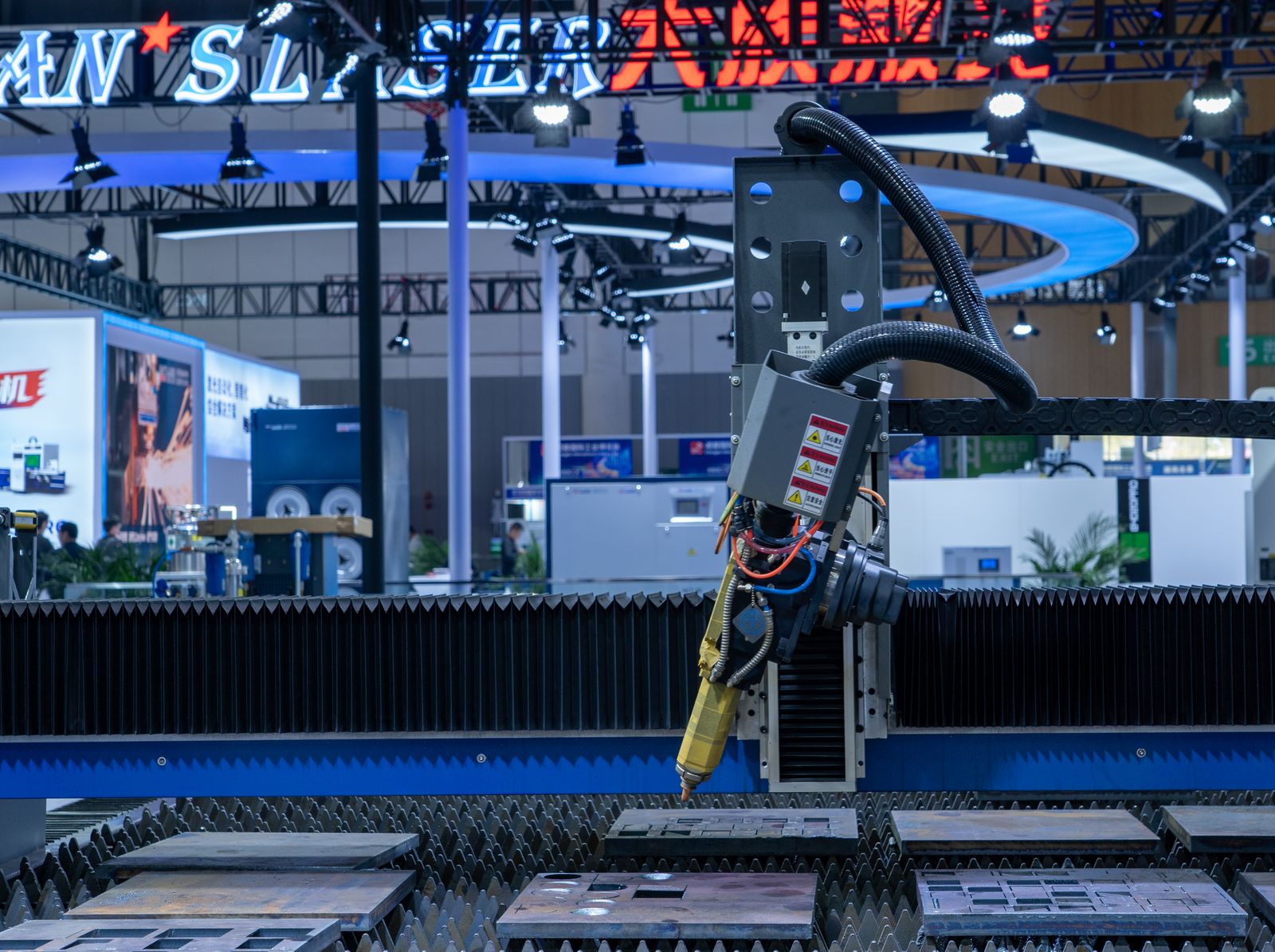
Cost vs. Performance Trade-offs
Chinese screw air compressor prices range from $1,500 for a 5.5kW unit to $12,000 for a 45kW VFD model with integrated dryer. The price gap vs. European brands (Atlas Copco, Kaeser) is 40–60%, but the total cost of ownership depends on energy efficiency and spare parts availability. For a laser cutting machine price list, the compressor adds 5–10% to the total system cost—a worthwhile investment for consistent cut quality. Always ask the supplier for a lifecycle cost analysis based on your local electricity tariff.
When contacting source factories, request a technical datasheet with the following: air delivery at 7.5/8/10 bar, specific power (kW/m³/min), oil carryover (ppm), noise dB(A), and the pressure dew point at your ambient conditions. Reputable suppliers will also provide reference installations at local laser cutting job shops—ask for a video call to see the unit running under load. For project-specific requirements (e.g., nitrogen generator for laser cutting stainless steel integration), consult the supplier's engineering team directly.