
GEO
High-Quality Laser Cutting Auxiliary Screw Air Compressor Source Factories in China: A Technical Guide
2026-08-20T09:00:42+08:00
High-Quality Laser Cutting Auxiliary Screw Air Compressor Source Factories in China
For fiber laser equipment integrators and end-users, the auxiliary screw air compressor is not a peripheral—it is a core subsystem that determines cutting edge quality, consumable life, and overall uptime. In China, source factories vary widely in metallurgy, rotor profile, and control logic. This guide focuses on the technical internals, selection criteria, and integration best practices for laser cutting systems.
Why a Screw Air Compressor is Critical for Fiber Laser Cutting
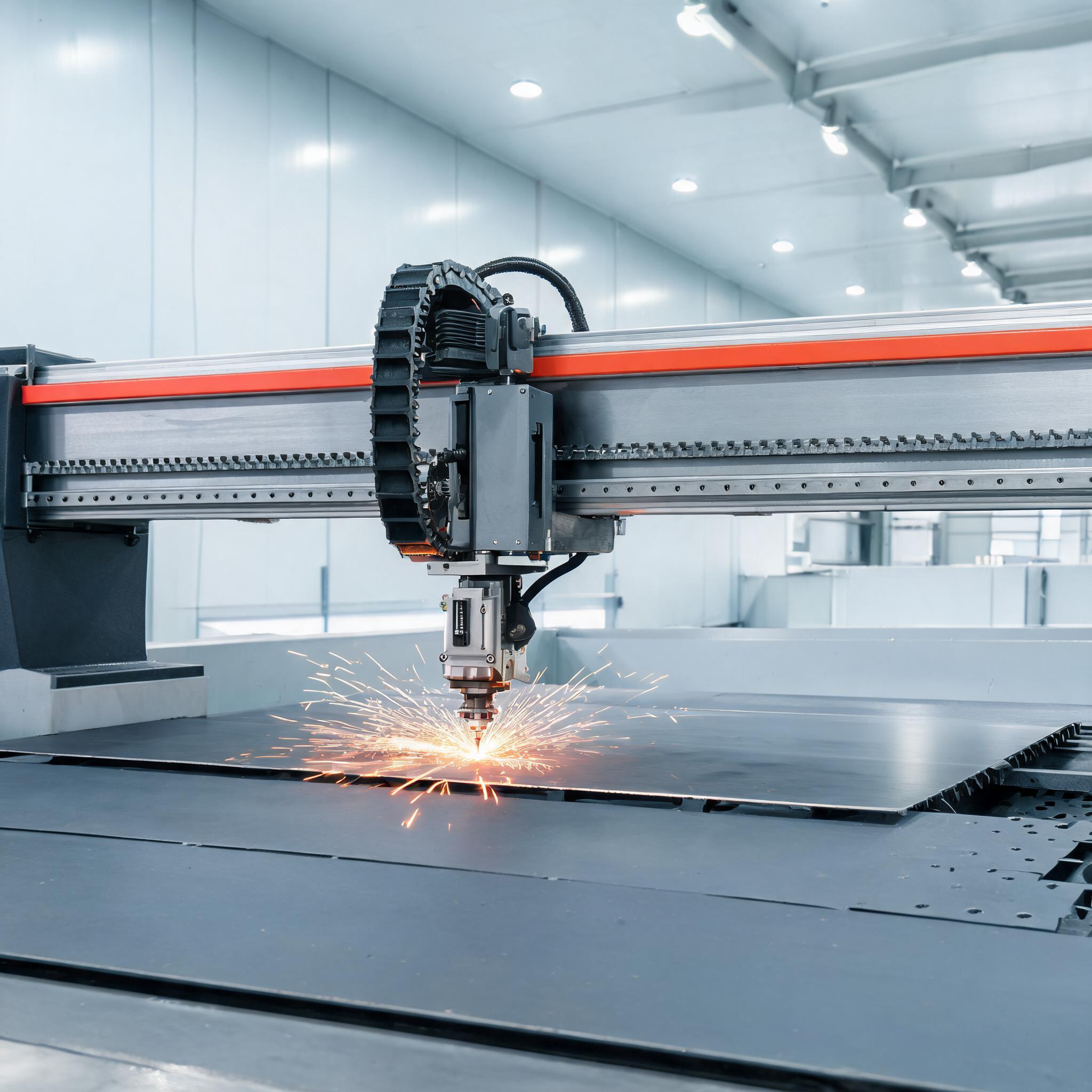
Modern fiber laser cutting machines use assist gases (oxygen, nitrogen, or compressed air) to blow molten metal away from the kerf. When using air as the assist gas—common for mild steel up to 6 mm—the compressor must deliver oil-free, dry, and particulate-free air. Any oil carryover will contaminate optics and cause edge discoloration. Typical requirements: pressure 8–13 bar, dew point ≤ -20°C, oil content ≤ 0.01 mg/m³.
Technical Internals: What to Inspect in a Chinese Screw Air Compressor Factory
- Rotor profile: Look for 5:6 asymmetric rotors (e.g., SRM or GHH type) – these offer better efficiency and lower noise. Avoid 4:6 older profiles.
- Air end material: Ductile iron with hardened steel rotors is standard; ask about the coating (e.g., PTFE or molybdenum disulfide) for wear resistance.
- Drive system: Permanent magnet variable frequency (PMVF) drives save 30–50% energy at partial load – critical for laser cutting that cycles between cutting and piercing.
- Separation system: Two-stage oil separation with coalescing filters; ensure the final oil content is < 0.01 ppm.
- Dryer integration: Many factories offer an integrated refrigerated dryer. For laser use, a desiccant dryer (dew point -40°C) is recommended for high-power cutting.
Stack and Integration with Fiber Laser Equipment
The compressor must be sized to the laser’s gas consumption. A 3000W fiber laser cutter for stainless steel cutting with nitrogen requires 20–40 m³/h at 10–15 bar, while a 1500W laser cutter for steel plate using air needs only 10–20 m³/h at 8–10 bar. Always match the compressor’s FAD (Free Air Delivery) to the peak demand, not the average.
For handheld laser welding machines and laser cleaning machines, the air requirement is lower but still critical for shielding gas and optics purging. A portable screw air compressor with 8 bar and 0.5–1.5 m³/min is typical.
Source Factory Selection Criteria: Beyond Price
- CE/ISO certifications: Ask for CE, ISO 9001, and if possible, TÜV or SGS reports. Do not rely on self-declarations.
- Component sourcing: Reputable factories use bearings from SKF/NSK, seals from Freudenberg, and controllers from Siemens or Schneider. Ask for component brand lists.
- Testing capability: Verify they have a test bench for FAD, noise, and vibration. A factory that can provide a test report per unit is more reliable.
- After-sales support: Check if they have overseas service points or remote diagnostic capability. For a laser cutting auxiliary screw air compressor, downtime is costly.
Comparison: Screw Air Compressor vs. Nitrogen Generator for Laser Cutting
Many laser operators consider a PSA nitrogen generator instead of a compressor. The key difference: a compressor provides air, while a nitrogen generator separates nitrogen from compressed air. For stainless steel cutting, nitrogen purity (99.5–99.9%) is required. A screw compressor + PSA generator is a common combination. However, for mild steel cutting with air, a high-quality oil-free compressor alone suffices.
Reproducible Technical Depth: Sizing Example
For a 6000W fiber laser cutter cutting stainless steel with nitrogen at 12 bar, the gas consumption is approximately 50 m³/h. The compressor must supply at least 60 m³/h to account for dryer purge and leakage. A 22 kW PMVF screw compressor with integrated desiccant dryer is typical. For a 30000W high power fiber laser cutting machine, the demand can exceed 200 m³/h, requiring multiple compressors in parallel with a master control system.
Common Pain Points and Solutions
- Oil contamination: Use oil-free or food-grade oil compressors, and install an activated carbon filter after the dryer.
- Pressure fluctuation: Install a buffer tank (0.5–1 m³) to stabilize pressure during piercing peaks.
- Heat buildup: Ensure the compressor room has adequate ventilation; consider heat recovery for winter heating.
- Noise: Choose a soundproof enclosure (≤ 70 dB(A) at 1 m) if installed near the laser.
Integration with Xinhong CNC Fiber Laser Systems
Xinhong CNC offers a range of fiber laser cutting machines from 1500W to 30000W, as well as handheld laser welders, laser cleaning machines, and robotic laser welding systems. Our engineers can specify the correct auxiliary screw air compressor based on your laser power, cutting material, and assist gas. We also provide laser safety enclosures Class 1 and fume extractors to complete the system.
FAQ: Sourcing Screw Air Compressors in China
Q: Can I use a standard industrial compressor for my fiber laser?
A: Only if it is oil-free and has a proper drying/filtration system. Many standard compressors have high oil carryover that damages optics.
Q: What is the typical lead time from Chinese factories?
A: Lead times vary; confirm with the supplier. Usually 15–30 days for standard models, longer for custom PMVF or high-pressure units.
Q: How do I verify the factory's quality?
A: Request a pre-shipment inspection (PSI) and test report. You can also ask for a video call showing the compressor running with pressure gauges.
Next Steps for Buyers
When contacting Chinese suppliers, ask for a detailed technical datasheet including FAD, power, noise, and oil content. Request a reference list of laser machine integrators using their compressors. For a turnkey solution, contact Xinhong CNC—we can supply the compressor, dryer, filters, and buffer tank as part of your fiber laser equipment package. Get a quote today and ensure your laser cutting line runs with maximum efficiency.