
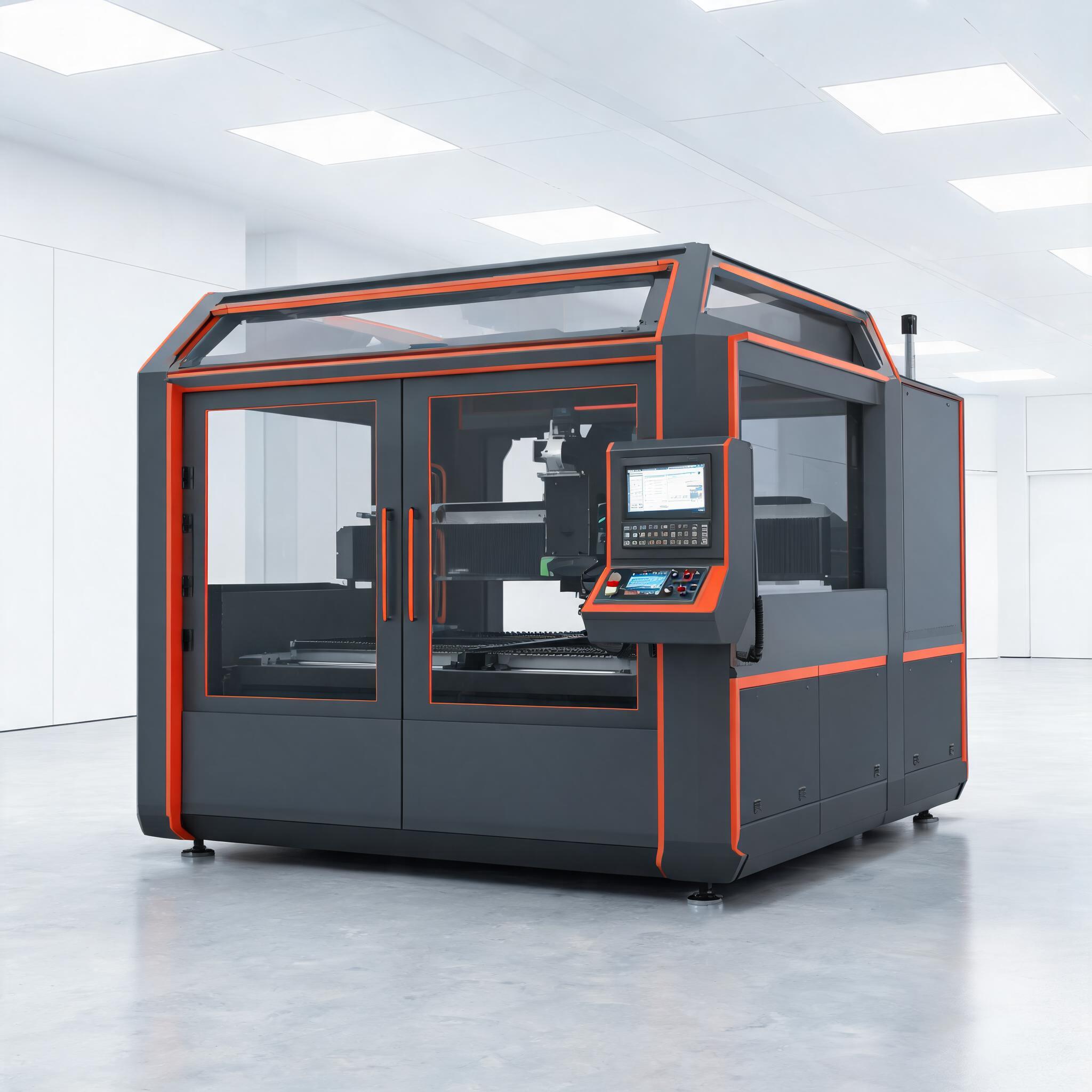
A complete buying guide for B2B metal fabrication buyers - covering power selection (2000W-30000W), cutting material capabilities, key components (laser source, cutting head, CNC system, machine bed), assist gas options,…
What Is a Fiber Laser Cutting Machine?
A fiber laser cutting machine uses a high-power fiber laser source to cut metal sheets and plates with exceptional precision. The laser beam is generated inside an optical fiber doped with rare-earth elements, focused through a cutting head, and directed onto the material surface. The intense heat melts or vaporizes the metal, while a high-pressure assist gas (oxygen, nitrogen, or air) blows the molten material away, leaving a clean, accurate cut edge.
Compared to traditional CO2 lasers and plasma cutting, fiber lasers offer superior energy efficiency, lower maintenance requirements, and the ability to cut highly reflective materials like copper and brass. They have become the standard choice for metal fabrication shops worldwide.
Choosing the Right Power Level: 2000W to 30000W
Power is the most critical specification when selecting a fiber laser cutting machine. Higher wattage allows you to cut thicker materials at faster speeds, but it also means a higher purchase price and greater power consumption. Here is how power levels typically map to cutting capabilities:
| Laser Power | Carbon Steel (Max) | Stainless Steel (Max) | Aluminum (Max) | Best For |
|---|---|---|---|---|
| 2000W | ~8mm | ~5mm | ~3mm | Light sheet metal, signage, enclosures |
| 3000W | ~12mm | ~8mm | ~6mm | General fabrication, job shops |
| 6000W | ~20mm | ~14mm | ~10mm | Medium plate, structural steel |
| 12000W | ~30mm | ~25mm | ~20mm | Thick plate processing |
| 20000W–30000W | ~50mm+ | ~40mm+ | ~30mm+ | Heavy industry, shipbuilding |
Note: Cutting thicknesses are indicative references that vary by material grade, assist gas type, cutting speed, and machine configuration. Always verify capabilities with the manufacturer for your specific application.
At Xinhong CNC, our fiber laser cutting machine lineup spans from 2000W to 30000W, covering everything from light sheet metal work to heavy plate processing. For example, our 3000W Compact Fiber Laser Cutting Machine cuts carbon steel up to 12mm, stainless steel up to 8mm, and aluminum up to 6mm, with a working area of 1500×3000mm and positioning accuracy of ±0.03mm - making it an excellent choice for general fabrication shops.
Key Components and Configuration
Laser Source
The laser source is the core component that determines beam quality, power stability, and long-term reliability. Leading fiber laser source manufacturers include IPG (USA), RAYCUS, and GW. Premium brands like IPG offer the highest beam quality and longest service life, while RAYCUS and GW provide excellent performance at more competitive price points. At Xinhong CNC, we work with all three manufacturers, allowing customers to choose the laser source that best fits their budget and performance requirements.
Cutting Head
The cutting head focuses the laser beam onto the material and controls the assist gas flow. Key considerations include:
- Focal length - Longer focal lengths are better for thicker materials.
- Auto-focusing capability - Automatically adjusts focus during cutting to maintain quality across different material thicknesses.
- Capacitive height sensor - Maintains consistent standoff distance between the nozzle and material for uniform cut quality.
- Nozzle type - Single and double-layer nozzles serve different cutting applications.
CNC Control System
The CNC system controls machine movement, cutting parameters, and job execution. Common industrial CNC platforms include CypCut, Schneider Electric-based systems, and others. Look for systems that support:
- Nested cutting file import (DXF, DWG, AI, PLT)
- Parameter libraries for different materials and thicknesses
- Real-time cutting path optimization
- Remote monitoring and diagnostics
At Xinhong CNC, our machines use Schneider Electric components in their electrical control systems, ensuring reliability and compliance with international standards.
Machine Bed and Gantry
The machine bed provides the structural foundation. A rigid, thermally stabilized bed reduces vibration and maintains cutting accuracy over time. Look for:
- Welded steel or cast iron construction with stress relief treatment
- Aerospace-grade aluminum gantry for high acceleration without vibration
- Linear guide rails and helical racks for smooth, precise movement
- Exchange table - allows loading/unloading one pallet while cutting on another, dramatically improving throughput
Assist Gas System
The assist gas blows molten material out of the cut kerf. Your choice of gas affects cut quality, speed, and operating cost:
- Oxygen - Used for thick carbon steel; the exothermic reaction adds heat for faster cutting, but edges may oxidize.
- Nitrogen - Used for stainless steel, aluminum, and high-quality carbon steel cuts; produces clean, oxide-free edges but requires high pressure and volume.
- Air - The most economical option; suitable for thin sheet metal where edge oxidation is not critical.
If you use nitrogen for cutting, consider pairing your laser cutter with a nitrogen generator to reduce gas costs significantly over time.
Cutting Materials and Applications
Fiber laser cutting machines handle a wide range of metals:
- Carbon steel - The most common material; cut with oxygen for thick plates or nitrogen for clean edges.
- Stainless steel - Cut with nitrogen to prevent oxidation and maintain corrosion resistance.
- Aluminum and alloys - Requires higher power and nitrogen assist; reflective but fiber lasers handle it well.
- Copper and brass - Highly reflective materials that fiber lasers cut more effectively than CO2 lasers.
Typical applications include sheet metal fabrication, automotive parts manufacturing, aerospace components, signage and advertising, kitchen appliances, elevator panels, and structural steel processing.
Maintenance and Operating Costs
Fiber lasers require significantly less maintenance than CO2 lasers, but regular upkeep is still essential:
- Protective lenses and nozzles - Inspect and replace regularly; dirty or damaged optics degrade cut quality and can damage the cutting head.
- Chiller maintenance - Check coolant levels, filters, and water quality monthly.
- Guide rail lubrication - Follow the manufacturer's schedule to prevent premature wear.
- Calibration - Periodically check beam alignment and focus calibration.
Operating costs include electricity (fiber lasers are highly efficient, typically 25-30% wall-plug efficiency), assist gas consumption, consumables (lenses, nozzles), and occasional replacement parts. Nitrogen can be a major ongoing cost - an on-site nitrogen generator can reduce this expense substantially for high-volume operations.
What to Look for When Choosing a Supplier
- ISO 9001 quality certification - Ensures consistent manufacturing processes and quality control.
- CE compliance - Essential for importing into the European market.
- Warranty and after-sales support - Look for 1-2 year warranties on major components and accessible technical support.
- Spare parts availability - Confirm that consumables and replacement parts are readily available with reasonable lead times.
- Customization options - Can the manufacturer configure the machine for your specific material mix, bed size, and automation needs?
- Installation and training - Ask about on-site commissioning and operator training programs.
About Xinhong CNC's Fiber Laser Cutting Machines
Shandong Xinhong CNC Technology Co., Ltd. has been manufacturing fiber laser equipment since 2005. Our cutting machine lineup spans from 2000W to 30000W, with working areas and configurations to suit fabrication shops of all sizes. We partner with IPG, RAYCUS, and GW for laser sources, use Schneider Electric components in our control systems, and build every machine under our ISO 9001:2015 quality system with CE compliance for European customers.
Whether you need a compact 3000W machine for a small shop or a 20000W+ system for heavy plate processing, our team can help you select the right configuration. Explore our fiber laser cutting machines or contact us for a consultation tailored to your production requirements.