
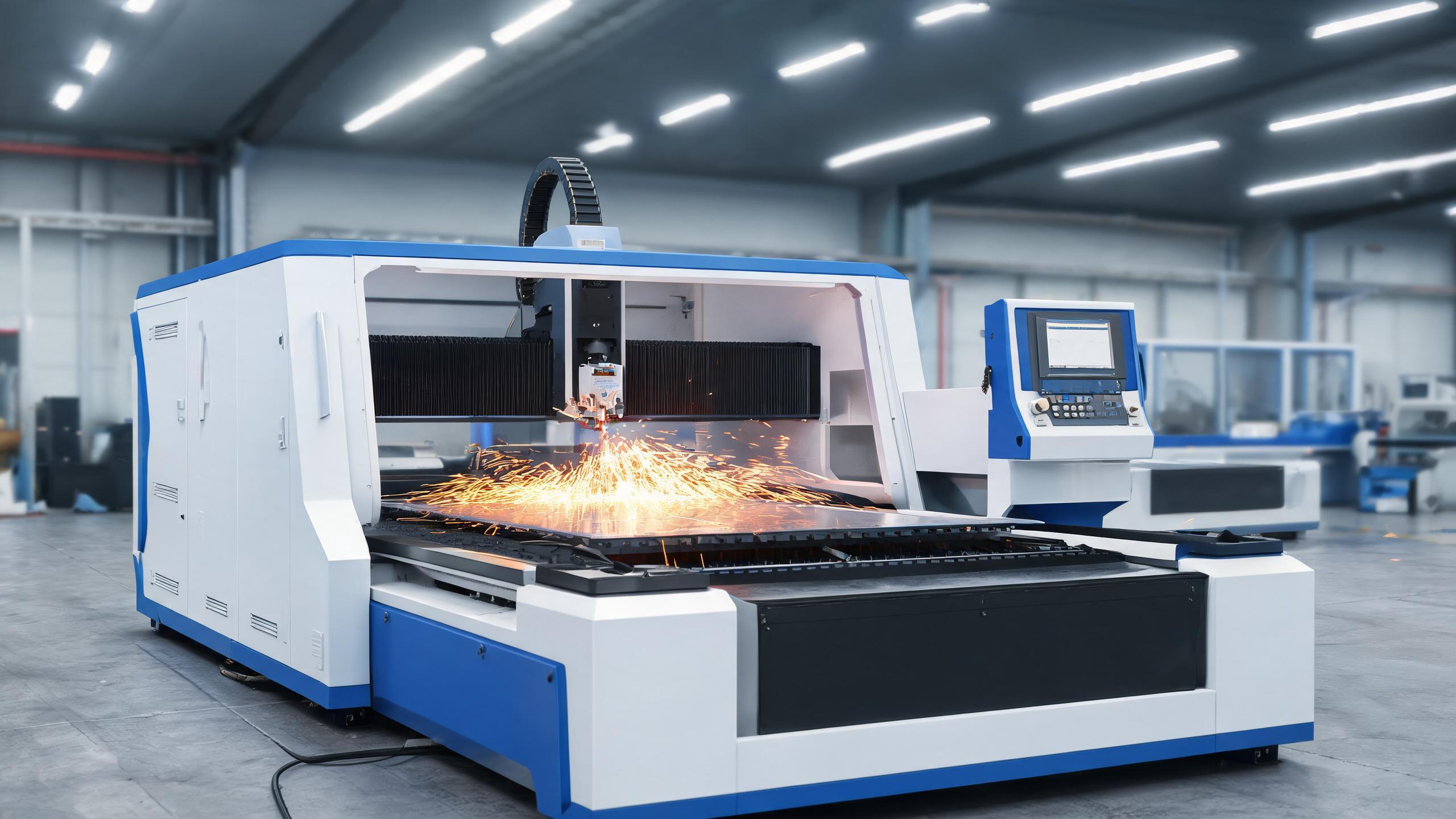
A practical guide to selecting fiber laser cutting machines by power range, material thickness, worktable size, and core components - grounded in real machine configurations from 500W to 30kW.
What Buyers Actually Need to Know About Fiber Laser Cutting Machines
If you're sourcing a fiber laser cutting machine, you've probably noticed the market is crowded with options ranging from entry-level 500W units to 30kW industrial systems. The question isn't which machine is "best" - it's which machine matches your material thickness, production volume, and floor space constraints without overpaying for capacity you'll never use.
This guide breaks down the practical selection criteria that matter: laser power vs. material thickness, worktable size, cutting precision, and the core components that determine long-term reliability. Everything here is grounded in real machine configurations, not spec-sheet marketing.
Matching Laser Power to Your Materials
Power is the single most important specification, and it directly determines what you can cut and how fast. Here's a practical reference based on real machine configurations:
| Power Range | Carbon Steel | Stainless Steel | Aluminum | Typical Use Case |
|---|---|---|---|---|
| 500W | Up to 3 mm | Up to 2 mm | Up to 1.5 mm | Thin-sheet job shops, signage, prototypes |
| 1,500W | Up to 6 mm | Up to 5 mm | Up to 4 mm | General fabrication, electrical enclosures |
| 3,000W | Up to 12 mm | Up to 8 mm | Up to 6 mm | Automotive parts, structural components |
| 6,000W–12,000W | Up to 25 mm+ | Up to 20 mm | Up to 12 mm | Heavy plate processing, thick structural |
| 20,000W–30,000W | Up to 40 mm+ | Up to 30 mm+ | Up to 20 mm+ | Shipbuilding, heavy industry |
Notice the jump from 500W to 3,000W isn't linear - a 3,000W machine handles four times the carbon steel thickness of a 500W unit. That's because cutting thickness scales with beam intensity, not just raw wattage. If your typical work involves 6–10 mm carbon steel plate, a 1,500W machine will struggle at the upper end, while a 3,000W system cuts through it cleanly at reasonable speed.
Rule of thumb: Pick a power level that comfortably handles 80% of your typical work. Don't buy a 12kW machine if your shop mostly processes 3 mm sheet - you're paying for capacity that sits idle, and the higher operating costs (electricity, gas consumption) eat into your margin every day.
Worktable Size and Material Handling
The cutting area determines what sheet sizes you can process without repositioning. Common configurations include:
- 1,300 × 900 mm - Compact format suited for small parts, prototypes, and shops with limited floor space. Typically pairs with lower-power lasers (500W–1,500W).
- 1,300 × 2,500 mm - Standard sheet format. Handles most commercial sheet metal sizes and is the most common choice for general fabrication shops.
- 1,500 × 3,000 mm - Full-plate processing. Preferred for automotive, structural, and heavy fabrication where full 5×10 ft sheets are the norm.
Beyond the table dimensions, consider whether you need an exchange table. On a 3,000W system with a 1,500 × 3,000 mm table, an exchange table lets one sheet load while another cuts - effectively doubling throughput for high-volume operations. For low-to-medium volume shops, the extra cost may not pay off.
Cutting Precision: What the Numbers Mean
Manufacturers quote positioning accuracy in the ±0.02–0.03 mm range. Here's what that means in practice:
- ±0.02 mm (typical for 500W compact machines) - Suitable for precision parts, electronics enclosures, and decorative work where edge quality matters.
- ±0.03 mm (standard for 3,000W+ machines) - The workhorse range for general fabrication. More than sufficient for structural steel, brackets, and automotive components.
Repeatability (the ability to return to the same position consistently) is equally important. Look for ±0.02 mm repeatability in any machine you're considering for production work.
Core Components That Determine Reliability
The laser source is the heart of the machine, but several other components determine long-term performance:
- Laser source - IPG (USA), RAYCUS, and GW are the three dominant fiber laser source brands. IPG commands a premium for beam quality and longevity; RAYCUS and GW offer excellent value for standard fabrication work.
- Cutting head - Precitec and Raytools are the most common brands. Look for auto-focusing capability and a protective lens system that's easy to replace.
- Servo motors and drives - Yaskawa, Fuji, and Delta are standard. Japanese servo systems (Yaskawa, Fuji) offer superior positioning accuracy and longevity.
- Controller - CypCut and LNC are the most widely used CNC controllers for fiber laser cutting. Both support standard DXF/DWG import and nesting optimization.
- Chiller - Often overlooked but critical. A properly sized chiller maintains laser source temperature stability, directly affecting beam quality and cutting consistency.
Gas Selection: Oxygen vs. Nitrogen
Your choice of assist gas affects both cut quality and operating cost:
- Oxygen - Used for carbon steel. The oxygen reacts with the metal exothermically, adding heat to the cut and enabling thicker cuts at lower power. Edge oxidation is a trade-off.
- Nitrogen - Used for stainless steel, aluminum, and when edge quality matters. Nitrogen prevents oxidation, producing clean, ready-to-weld edges. However, it consumes significantly more gas (higher pressure) and costs more.
For shops cutting a mix of carbon and stainless steel, a dual-gas system is essential. Many facilities also invest in a PSA nitrogen generator to reduce long-term gas costs.
Floor Space, Power Supply, and Installation
Before purchasing, verify your facility can support the machine:
- Electrical - A 3,000W machine typically requires a 380V three-phase supply with 50–80A dedicated service. High-power systems (12kW+) may require 200A+ service.
- Floor space - Include clearance for material loading/unloading, chiller placement, and operator access. A 1,500 × 3,000 mm machine needs roughly 4 × 6 m of floor space including clearance.
- Gas supply - Ensure adequate ventilation and gas storage. Bulk nitrogen requires external storage tanks and delivery contracts.
CE Compliance for European Buyers
If you're importing into the EU, CE marking under Directive 2006/42/EC is mandatory. Ensure your supplier provides:
- Declaration of Conformity with harmonized standards (EN 13849-1, EN 60825-1)
- Technical documentation including risk assessment
- Instruction manual in your local language
- Safety interlocks, beam enclosures, and emergency stop systems
Making the Decision: A Practical Checklist
Before placing an order, answer these questions:
- What is the maximum material thickness I need to cut daily?
- What sheet sizes do my suppliers provide?
- Do I need an exchange table for continuous production?
- What is my monthly gas consumption, and should I invest in a nitrogen generator?
- Does the machine come with CE documentation for my market?
- What warranty terms and after-sales support does the supplier offer?
By focusing on these practical criteria rather than marketing claims, you'll select a fiber laser cutting machine that fits your operation - not one that looks impressive on a spec sheet but underdelivers in daily production.
Need help selecting the right fiber laser cutting machine for your application? Contact our technical team for a personalized recommendation based on your material requirements and production volume.