
A comprehensive price guide for B2B buyers - covering what affects laser welding machine cost (power 1500W/2000W/3000W, handheld vs automatic, brand, configuration), price ranges by power tier, and budget planning advice…
Why Laser Welding Machine Prices Vary So Much
If you have been researching laser welding machines, you have probably noticed that prices range dramatically. A basic handheld fiber laser welder might cost a fraction of what a fully automated multi-kilowatt welding system commands. Understanding what drives these price differences is essential for making an informed purchasing decision and planning your equipment budget accurately.
This guide breaks down the key factors that affect laser welding machine prices in 2025, provides reference price ranges by power tier, and offers practical budgeting advice for B2B buyers.
Key Factors That Affect Laser Welding Machine Price
1. Laser Power (1500W / 2000W / 3000W and Above)
Power is the single most significant price driver. Higher wattage laser sources cost more to manufacture and require more robust cooling systems, optics, and power supplies. Common power levels for fiber laser welding machines include:
- 1500W - Entry-level industrial welding. Suitable for stainless steel, aluminum, and titanium alloys up to approximately 3mm penetration. This is the most affordable tier for professional-grade handheld welders.
- 2000W - Mid-range power for thicker materials and faster welding speeds. A step up in both capability and price.
- 3000W - High-power welding for thick plates and demanding industrial applications. Significantly more expensive than 1500W systems.
Each step up in power typically increases the machine price substantially, as the laser source, cooling system, and protective components must all be upgraded accordingly.
2. Handheld vs. Automatic
The welding configuration has a major impact on price:
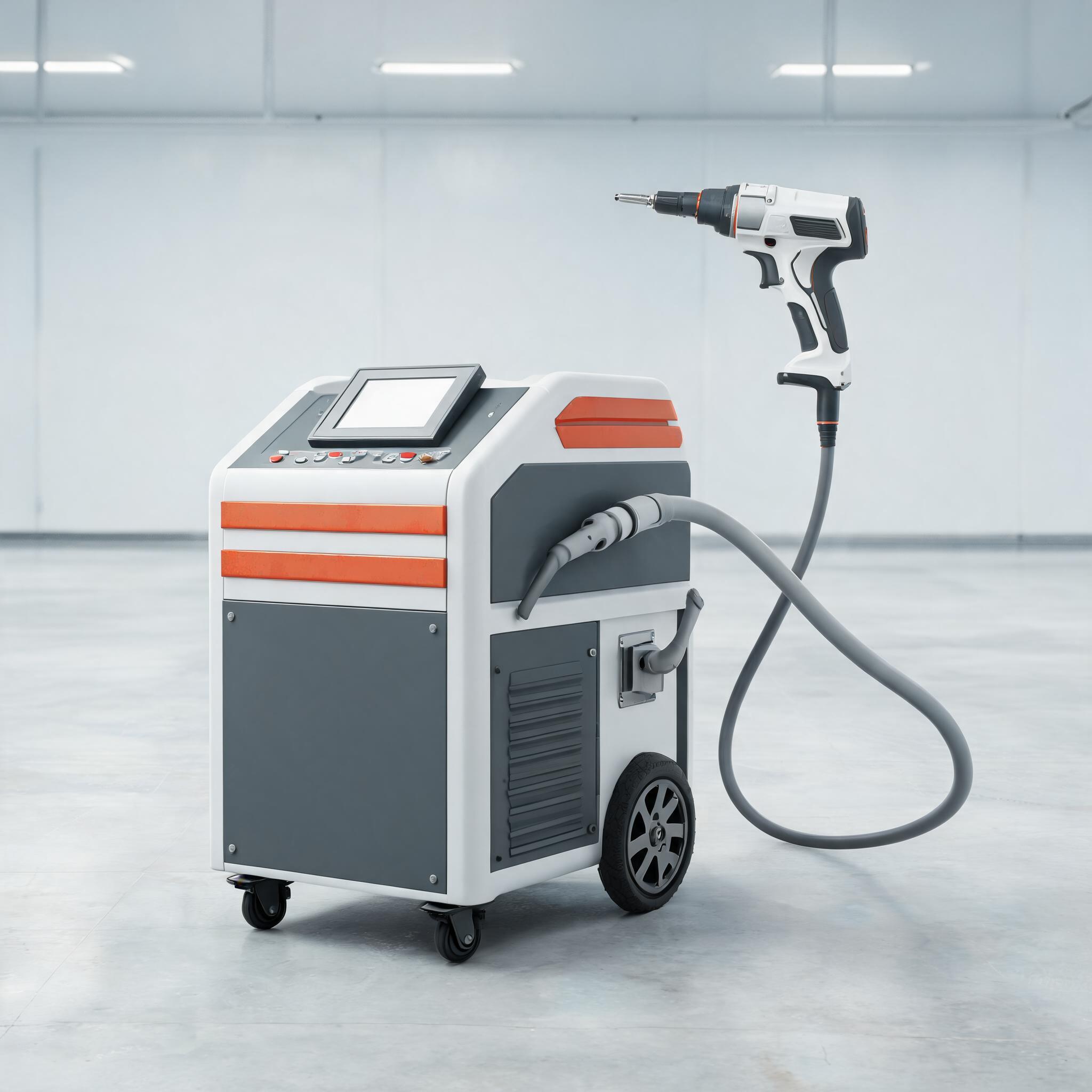
- Handheld laser welders - These are the most affordable option. The operator manually guides a welding gun connected to the main unit by a flexible hose. Handheld welders are versatile, easy to deploy, and ideal for small to medium fabrication shops, repair work, and non-standard joints. They typically include a mobile main unit on wheels, touchscreen controls, and preset welding profiles.
- Automated/fixed laser welding systems - These integrate the laser source with CNC-controlled motion systems, robotic arms, or custom fixtures. They are significantly more expensive due to the automation hardware, programming software, and integration engineering required. Automated systems are justified for high-volume production lines where repeatability and throughput are critical.
For most small to medium fabrication businesses, a handheld fiber laser welder offers the best balance of capability and cost.
3. Laser Source Brand
The laser source is the core component, and brand selection affects both price and performance. Leading laser source manufacturers include IPG (USA), RAYCUS, and GW. Premium brands like IPG command higher prices due to superior beam quality and longer service life, while RAYCUS and GW offer excellent performance at more competitive price points. The ability to choose between laser source brands allows buyers to balance performance requirements against budget constraints.
4. Configuration and Features
Beyond the laser source, several configuration choices affect the total price:
- Cooling system - Water circulation cooling systems for extended operation add cost but are essential for production environments.
- Welding head quality - Higher-quality scanning heads and optics improve beam precision and durability.
- Control system - Advanced touchscreen controllers with memory for multiple weld profiles add value.
- Safety features - Enclosures, interlocks, and fume extraction systems add cost but are often required for compliance.
- Wire feeder - Automated wire feeding capability increases price but enables filling gaps and building up material.
- Multiple guns/heads - Some systems support multiple welding heads for different applications.
5. Certifications and Compliance
For buyers importing into the European market, CE certification is essential. Machines built with CE-compliant components (such as Schneider Electric control systems) and proper safety documentation may cost slightly more but eliminate compliance risks and customs delays. RoHS compliance and ISO 9001:2015 quality certification of the manufacturer also indicate a higher-quality, more reliable product.
6. Shipping, Installation, and Training
The total cost of ownership includes more than the machine itself. Factor in:
- International shipping and insurance - Laser welding machines are heavy, precision equipment.
- Import duties and taxes - Vary by destination country.
- Installation and commissioning - Some manufacturers include on-site setup; others charge extra.
- Operator training - Proper training ensures safe operation and optimal weld quality.
Reference Price Ranges by Power Tier
While actual prices vary by manufacturer, configuration, and market conditions, the following ranges provide a general reference for B2B buyers budgeting for a fiber laser welding machine in 2025:
| Power Level | Configuration | Estimated Price Range (USD) |
|---|---|---|
| 1500W | Handheld | $4,000 - $8,000 |
| 2000W | Handheld | $5,500 - $10,000 |
| 3000W | Handheld | $8,000 - $15,000 |
| 2000W+ | Automated/CNC | $20,000 - $60,000+ |
Note: These are indicative ranges for reference only. Actual prices depend on laser source brand, configuration, features, certifications, and current market conditions. Always request a formal quotation from the manufacturer.
How to Budget for a Laser Welding Machine
- Define your application requirements - What materials will you weld? What thickness range? What production volume? This determines the minimum power and configuration you need.
- Start with the power tier - If you primarily weld thin stainless steel sheets (1-3mm), a 1500W handheld welder may be sufficient. For thicker materials, budget for 2000W or 3000W.
- Decide handheld vs. automated - If your welding tasks involve varied joints and small-batch work, a handheld system keeps costs down. For repetitive high-volume welding, invest in automation.
- Include total cost of ownership - Add shipping, duties, installation, training, consumables (protective lenses, nozzles), and maintenance to your budget.
- Request multiple quotations - Compare offerings from several manufacturers, but evaluate them on total value - not just price. Consider warranty, after-sales support, spare parts availability, and customization options.
- Plan for growth - If you anticipate needing more power or automation in the future, ask whether the manufacturer offers upgrade paths or trade-in programs.
Xinhong CNC's Laser Welding Machines
Shandong Xinhong CNC Technology Co., Ltd. manufactures a range of fiber laser welding machines designed for industrial fabrication. Our 1500W Handheld Fiber Laser Welder is CE and RoHS certified, offers 3mm maximum penetration in stainless steel and aluminum, ±0.1mm bead consistency, water circulation cooling for extended operation, and memory storage for 50+ weld profiles. We also offer higher-power welding systems for thicker materials and automated production lines.
Every machine is built under our ISO 9001:2015 quality system, with Schneider Electric components for reliability and European compliance. Explore our laser welding machines or contact our team for a quotation tailored to your requirements.