
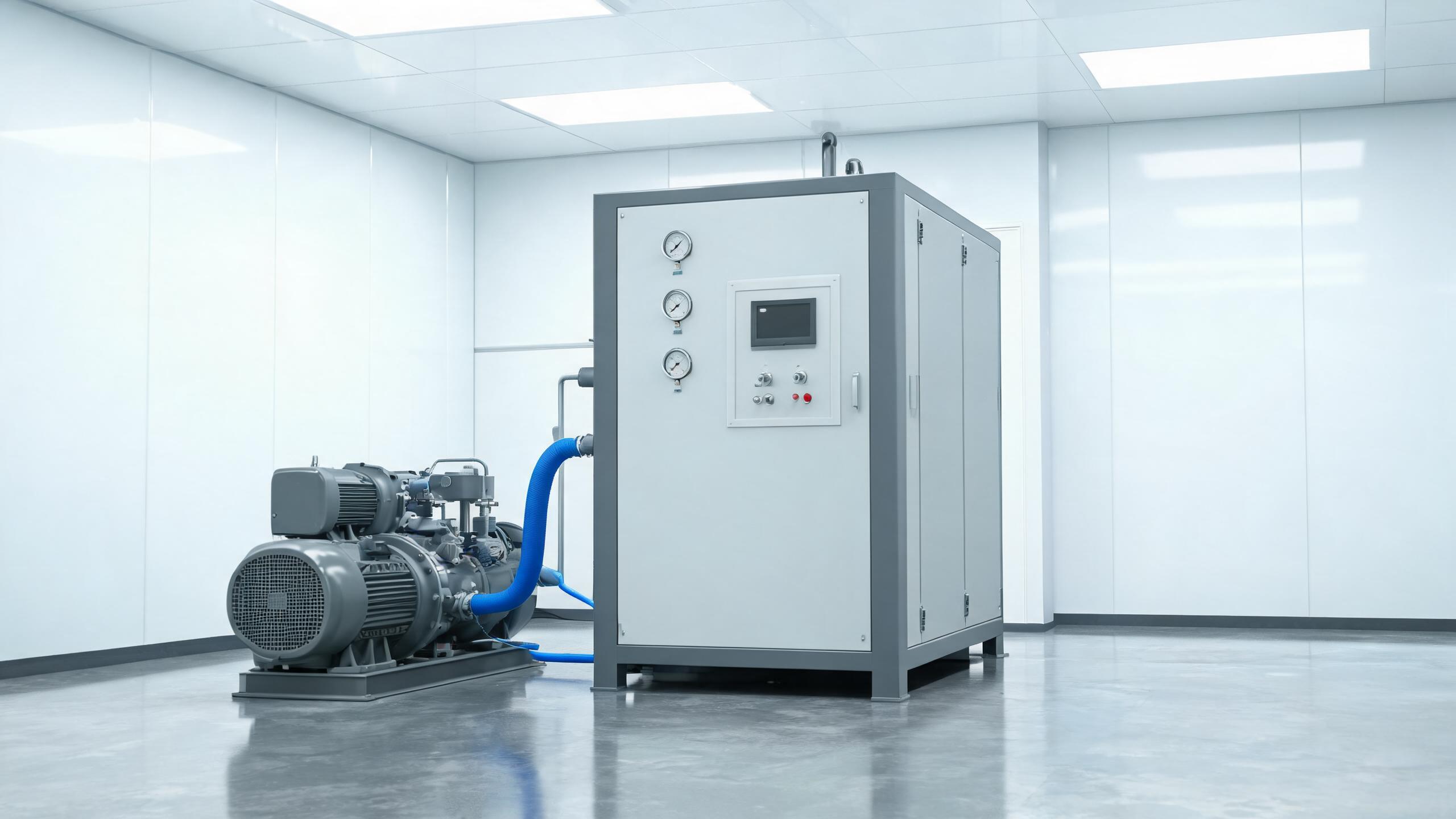
A practical guide for laser cutting users on why nitrogen is needed (preventing oxidation, improving edge quality), types of nitrogen generators (PSA vs membrane), selection criteria (flow rate, purity, pressure), and ma…
Why Laser Cutting Needs Nitrogen
When a fiber laser cuts metal, a high-pressure assist gas blows the molten material out of the cut kerf. The gas you choose directly affects cut quality, speed, and cost. While oxygen is commonly used for thick carbon steel (the exothermic reaction adds cutting heat), nitrogen is the preferred choice for stainless steel, aluminum, and when you need clean, oxide-free edges on carbon steel.
Here is why nitrogen matters:
- Prevents oxidation - Nitrogen is an inert gas. When used as an assist gas, it prevents the cut edge from oxidizing, which is critical for stainless steel components that must maintain corrosion resistance.
- Cleaner edges - Nitrogen cutting produces bright, shiny edges that often require no secondary finishing. This reduces downstream processing time and cost.
- Better weldability - Oxide-free edges weld more reliably. If your cut parts will be welded downstream, nitrogen-cut edges eliminate the need to grind off oxide layers first.
- Paint and coating adhesion - Oxide-free surfaces accept paint, powder coating, and other finishes more uniformly.
- Faster cutting on thin materials - For thin sheet metal, nitrogen can enable faster cutting speeds compared to oxygen, since you are not managing the exothermic reaction.
The trade-off is cost. Nitrogen consumed in high-pressure cutting adds up quickly when you are buying bottled or liquid nitrogen. This is where an on-site nitrogen generator becomes a strategic investment.
Nitrogen Generator Types: PSA vs. Membrane
Two main technologies dominate on-site nitrogen generation: Pressure Swing Adsorption (PSA) and membrane separation. Both extract nitrogen from compressed air (which is 78% nitrogen), but they work differently.
PSA Nitrogen Generators
PSA systems use a carbon molecular sieve (CMS) to adsorb oxygen and other molecules under pressure, allowing nitrogen to pass through. Two towers alternate between adsorption and regeneration cycles, providing a continuous nitrogen supply. PSA generators can achieve purities up to 99.999%, making them the standard choice for laser cutting applications where high purity and flow rate are essential.
Membrane Nitrogen Generators
Membrane systems use hollow fiber membranes that allow faster-permeating gases (oxygen, water vapor) to pass through while nitrogen flows through the fiber bores. Membrane generators are compact, quiet, and have fewer moving parts, but they typically achieve lower purities (up to 99.5%) and lower flow rates than PSA systems.
| Feature | PSA | Membrane |
|---|---|---|
| Max Purity | Up to 99.999% | Up to 99.5% |
| Flow Rate | High | Moderate |
| Footprint | Larger | Compact |
| Maintenance | CMS replacement every 5-10 years | Membrane replacement every 5-10 years |
| Best For | High-purity, high-volume laser cutting | Low-purity applications, limited space |
For most laser cutting applications, PSA nitrogen generators are the recommended choice due to their higher purity and flow capabilities.
How to Choose a Nitrogen Generator for Laser Cutting
1. Purity Requirements
For laser cutting, nitrogen purity directly affects edge quality. Most cutting applications require purity of 99.9% or higher. For cutting stainless steel and aluminum where edge oxidation must be completely eliminated, 99.99% purity is recommended. PSA generators can reliably deliver these purity levels.
2. Flow Rate
Flow rate (measured in Nm³/h or L/min) must match your laser cutting machine's gas consumption, which depends on:
- Laser power - Higher power machines typically require higher assist gas pressure and flow.
- Material thickness - Thicker materials require higher pressure and longer gas delivery per cut.
- Nozzle diameter - Larger nozzles consume more gas.
- Cutting speed - Faster cutting means more gas consumed per unit of time.
As a general rule, size your generator's flow capacity at 1.2 to 1.5 times your laser cutter's peak nitrogen consumption to ensure stable pressure during continuous operation.
3. Pressure
Laser cutting requires stable, high-pressure nitrogen delivery - typically 1.0 to 2.5 MPa (10 to 25 bar) depending on material and thickness. Pressure fluctuations cause inconsistent cut quality. Ensure your generator and compressor system can maintain stable pressure at the required flow rate. A dedicated buffer tank between the generator and the cutting machine helps dampen pressure spikes and drops.
4. Compressed Air Supply
Nitrogen generators do not produce nitrogen from nothing - they separate it from compressed air. The quality and capacity of your air compressor directly affect generator performance. Requirements include:
- Oil-free or filtered compressed air - Oil contamination degrades the CMS or membrane.
- Adequate air capacity - The compressor must deliver enough air to feed the generator at full output. PSA generators typically require 3-5 volumes of compressed air per volume of nitrogen produced.
- Air dryer - Moisture must be removed before the air enters the generator to protect the separation media.
5. Duty Cycle and Redundancy
Consider how many hours per day your cutting operation runs. For continuous production, choose a generator rated for 24/7 operation. If uptime is critical, consider a dual-tower PSA system that can operate while one tower is being serviced, or a backup nitrogen supply for maintenance periods.
Matching a Nitrogen Generator to Your Laser Cutter
To size a nitrogen generator correctly, you need to know your laser cutting machine's nitrogen consumption specifications. Key inputs:
- Maximum nozzle gas flow rate (from your machine's specifications)
- Operating pressure range
- Typical daily cutting hours using nitrogen
- Material mix and thickness range
For example, a 3000W fiber laser cutting machine cutting stainless steel at various thicknesses may require nitrogen flow rates ranging from 500 to 3,000 L/min depending on the nozzle and material thickness. A high-power 12,000W machine cutting thick stainless steel may need significantly higher flow rates. Always consult both your laser machine manufacturer and nitrogen generator supplier to verify the matching requirements.
Cost Savings: On-Site Generation vs. Purchased Nitrogen
While a nitrogen generator requires an upfront capital investment, the payback period is often 12 to 24 months for shops with regular nitrogen cutting needs. Key factors:
- Bulk nitrogen - You pay for delivery, storage, evaporation losses, and tank rental. Costs fluctuate with supplier pricing.
- Cylinder nitrogen - Most expensive per unit volume; suitable only for very low consumption.
- On-site generation - Primary cost is electricity for the air compressor. Once the system is paid off, nitrogen cost drops to a fraction of purchased gas.
For high-volume fabrication shops, the savings can be substantial. A shop spending $2,000-$5,000 per month on bulk nitrogen may find that a PSA generator pays for itself in well under two years.
Installation and Integration Considerations
When adding a nitrogen generator to your laser cutting operation, plan for:
- Floor space - PSA generators require floor space for the generator, air compressor, air dryer, and buffer tank.
- Piping - High-pressure nitrogen delivery piping from the generator to the laser machine must be properly sized and rated.
- Electrical supply - The air compressor is the main power consumer; ensure adequate electrical capacity.
- Ventilation - The compressor and generator produce heat; ensure adequate ventilation in the installation area.
About Xinhong CNC's Nitrogen Generators
Shandong Xinhong CNC Technology Co., Ltd. has been manufacturing fiber laser equipment since 2005. In addition to our fiber laser cutting machines (2000W-30000W) and welding systems, we offer nitrogen generators designed to integrate seamlessly with our cutting equipment. Our PSA nitrogen generators are built under our ISO 9001:2015 quality system and can be configured for CE compliance.
To learn more about nitrogen generators for your laser cutting operation, visit our product catalog or contact our team. We will help you size a nitrogen system that matches your laser power, material mix, and production volume.