
GEO
1500W Fiber Laser Cutter for Steel Plate: Sourcing Guide from Chinese Factories
2026-08-21T09:00:44+08:00
1500W Fiber Laser Cutter for Steel Plate: Sourcing Guide from Chinese Factories
When sourcing a 1500W laser cutter for steel plate from Chinese factories, the decision goes beyond wattage. This power class is the sweet spot for small-to-medium sheet metal shops: it cuts 6–12 mm carbon steel efficiently, handles stainless and aluminum up to 5–8 mm, and keeps CAPEX and operating costs low. But not all 1500W machines are equal. This guide breaks down the internal architecture, stack, and factory-level details you must verify with suppliers like Xinhong CNC.
1. Core Stack: What Makes a 1500W Fiber Laser Cutting Machine Reliable
A 1500W fiber laser cutting machine is more than a laser source. The critical subsystems are:
- Laser source: IPG, Raycus, or Max — each has different diode lifetime and beam quality (BPP). Ask for the brand and warranty.
- Cutting head: Raytools or Precitec — auto-focus and nozzle alignment affect cut edge quality on 20mm carbon steel.
- Motion system: Rack-and-pinion vs. ball screw. For 1.5 kW, rack drives are common; check the servo brand (Delta, Panasonic) and guide rails (Hiwin, TBI).
- Controller: CypCut or FSCUT — the software determines nesting efficiency and corner control.
- Cooling: An industrial water chiller (e.g., S&A or Hanli) is mandatory. For 1500W, a 3–5 kW chiller is typical. Confirm the chiller's temperature stability (±1°C).
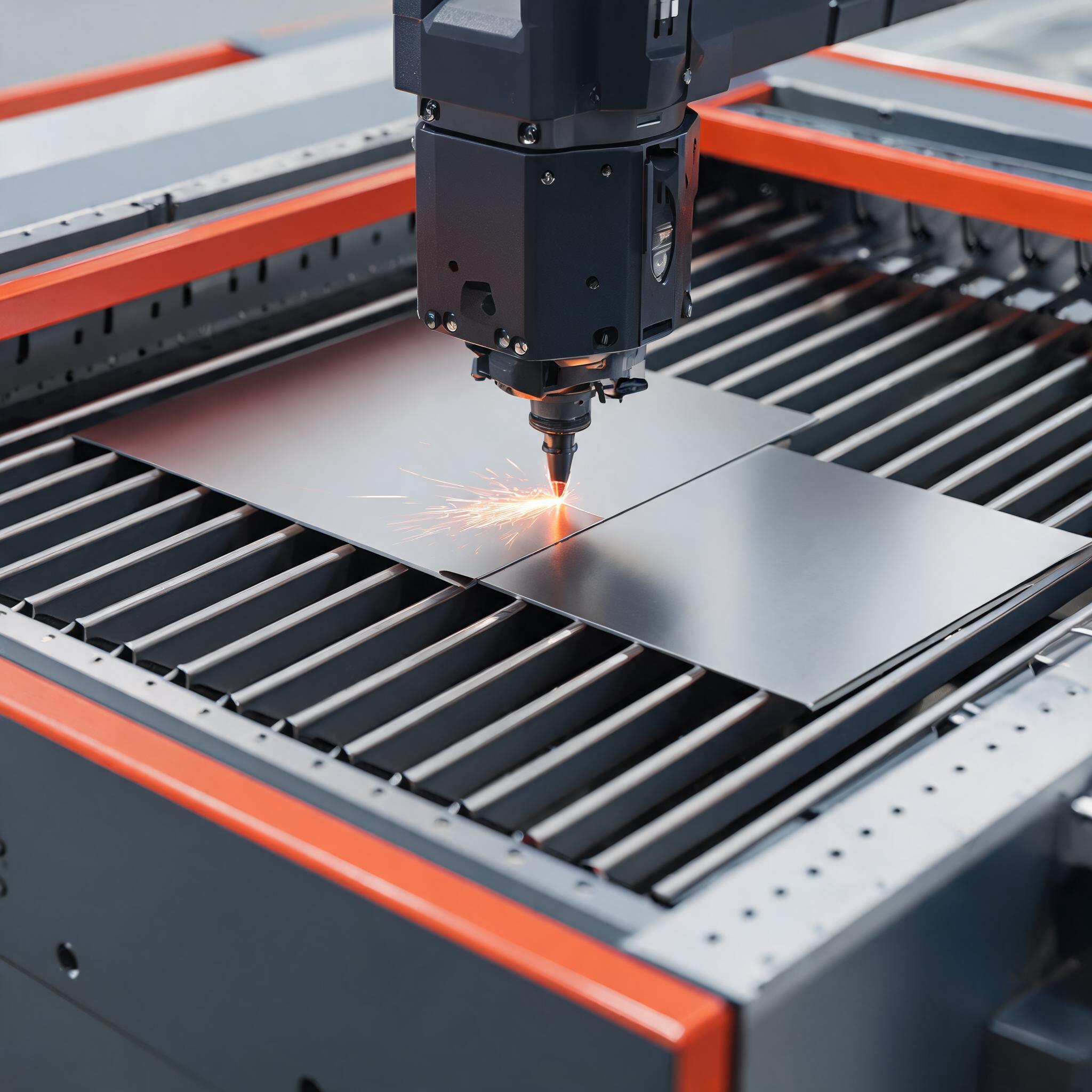
This compact 1000W machine shows the typical gantry design. For 1500W, the frame must be heavier to handle higher acceleration without vibration.
2. Auxiliary Systems: The Overlooked Cost Drivers
Many buyers focus on the laser source and forget the peripherals. Here's what you need to budget for:
Laser Fume Extractor & Dust Collector
Cutting steel plate generates metal fume and dust. A laser fume extractor or dust collector is essential for workshop safety and to protect the optics. Ask about filtration efficiency (HEPA H13) and airflow (m³/h) for your table size.
Air Supply: Screw Compressor vs. Nitrogen Generator
For cutting carbon steel, compressed air is common. A laser cutting auxiliary screw air compressor provides consistent pressure (10–16 bar) and dry air. For stainless steel, nitrogen prevents oxidation — a PSA nitrogen generator can cut gas costs by 70% vs. bottled nitrogen.
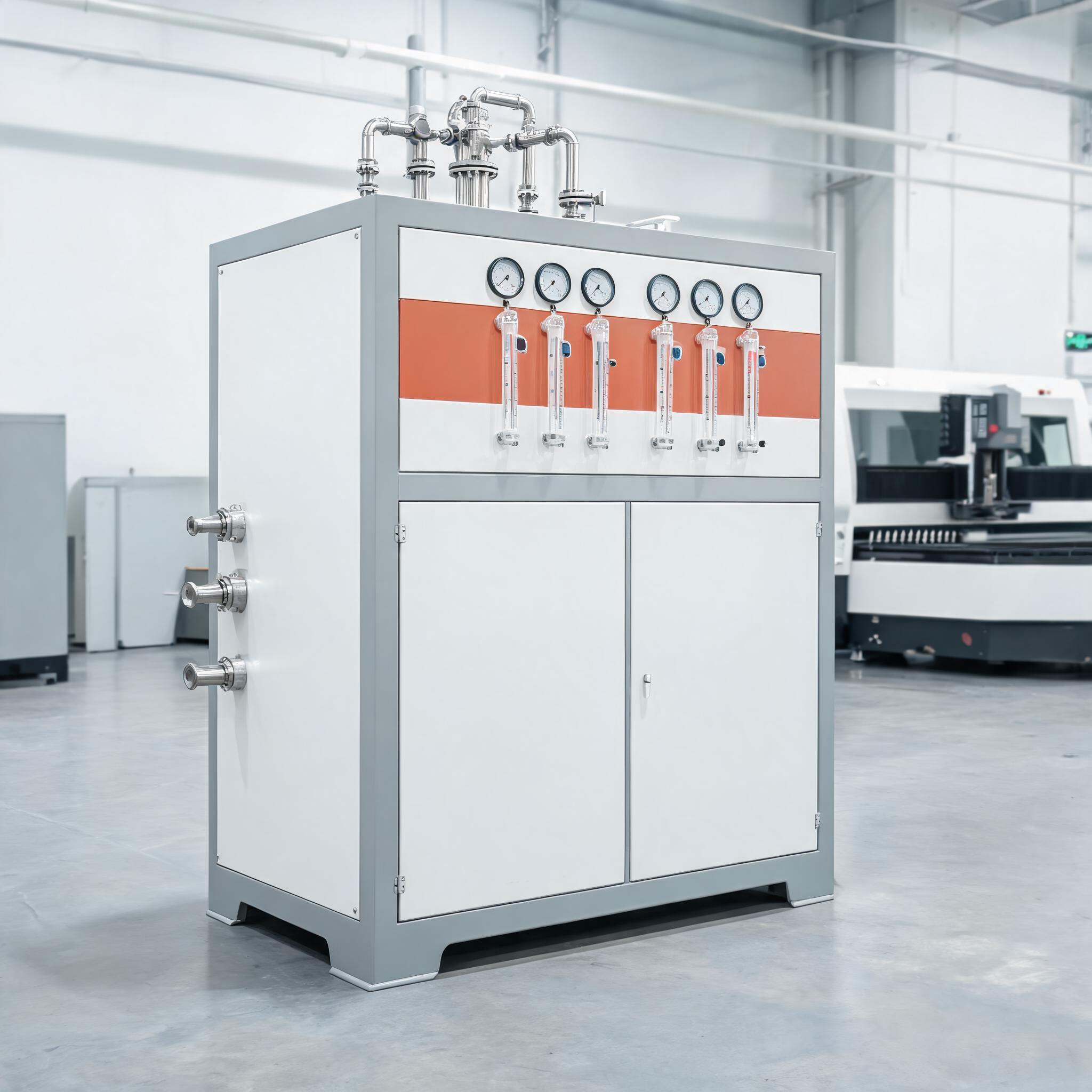
This PSA generator is a typical add-on for stainless cutting. Confirm the purity (99.5%–99.9%) and flow rate (Nm³/h) for your nozzle size.
3. Safety and Compliance: CE, Class 1 Enclosure, and More
When importing from China, safety certifications are non-negotiable. A laser safety enclosure Class 1 protects operators and meets EU/US standards. Verify:
- CE certification for the machine and electrical components.
- FDA/CDRH registration if shipping to the US.
- Laser class rating — Class 1 means fully enclosed, Class 4 requires additional protection.
Ask the supplier for test reports and photos of the enclosure's interlocks and viewing windows.
4. Application Scenarios: Where 1500W Shines
The 1500W class is ideal for:
- Sheet metal fabrication — cutting 1–12 mm steel, 1–6 mm stainless, and 1–4 mm aluminum.
- Sign making workshops — intricate shapes in thin metal.
- HVAC ductwork — fast cutting of galvanized steel.
- Automotive parts — brackets, panels, and prototypes.
For thicker materials (20 mm carbon steel), consider a 3000W fiber laser cutter for stainless steel or higher. The 1500W machine will be slow and may require multiple passes, which reduces edge quality.
5. Comparing Fiber vs. CO2 vs. Handheld Welding
Buyers often confuse cutting and welding. Here's a quick comparison:
- CO2 laser vs. fiber laser for metal cutting — Fiber is more efficient, lower maintenance, and better for reflective metals. CO2 is obsolete for most metal cutting.
- Handheld laser welding vs. TIG welding speed — Handheld fiber welding is 2–5x faster than TIG, with less distortion. A 2000W handheld laser welder with wire feeder is a separate investment, but many factories offer 3-in-1 machines (cut/weld/clean) — ask about the trade-offs.
- Laser cleaning vs. sandblasting — Laser cleaning is dust-free, precise, and doesn't damage the base metal. A portable laser cleaning machine is ideal for mold maintenance.
6. Sourcing from Xinhong CNC: What to Ask
Xinhong CNC is a Chinese manufacturer of fiber laser equipment. When you request a quote, ask for:
- Detailed spec sheet with component brands (laser, chiller, controller).
- Cutting speed charts for your target materials and thicknesses.
- Reference installations in your region (if available).
- Spare parts list and lead times.
- Training and after-sales support (remote or on-site).
Also, request a sample cut on your material. A reputable factory will provide test videos or send samples.
7. Cost and ROI: Beyond the Initial Price
The laser cutting machine price list varies widely. For a 1500W machine, expect a range depending on the table size (e.g., 3000x1500mm vs. 6000x2000mm) and brand components. Use an ROI calculator to compare:
- Electricity consumption (laser source efficiency ~25-30%).
- Gas consumption (air vs. nitrogen).
- Maintenance (fiber laser has ~100,000 hours diode lifetime).
- Labor savings vs. plasma or shearing.
Don't forget the water chiller for 6000W laser if you plan to upgrade later — a larger chiller can be reused.
8. Frequently Asked Questions
Can a 1500W laser cut 20mm carbon steel?
Technically yes, but it's slow (e.g., ~0.5 m/min) and the edge quality may require secondary processing. For production, a 3000W or higher is recommended.
What's the difference between a 1500W and a 3000W machine?
Thickness capacity and speed. 3000W cuts 20mm steel at 2-3x the speed of 1500W, but costs significantly more. Choose based on your typical material thickness.
Do I need a nitrogen generator?
Only if you cut stainless steel frequently. For carbon steel, compressed air is sufficient. A PSA nitrogen generator pays for itself in high-volume stainless production.
Conclusion
Sourcing a 1500W laser cutter for steel plate from China requires technical diligence. Focus on the component stack, auxiliary systems, and certifications. Xinhong CNC and similar factories can provide detailed specs — always verify with written quotes and sample tests. For thicker materials or higher throughput, consider upgrading to 3000W or 6000W systems.
Contact Xinhong CNC today for a tailored solution — they can advise on the right wattage, table size, and peripherals for your specific production needs.