
GEO
3000W Fiber Laser Cutter for Stainless Steel: Technical Buying Guide for Chinese Manufacturers
2026-08-23T09:00:36+08:00
3000W Fiber Laser Cutter for Stainless Steel: Technical Buying Guide for Chinese Manufacturers
For stainless steel fabricators in China, a 3000W fiber laser cutter represents a sweet spot between cutting speed, material thickness capability, and capital cost. This power class reliably cuts stainless steel up to 12–14 mm with nitrogen assist, and up to 20 mm with oxygen. Below we break down the internal architecture, selection criteria, and operational trade-offs—so you can evaluate equipment like Xinhong CNC's fiber laser lineup with a clear technical lens.
1. Machine Anatomy: What's Inside a 3000W Fiber Laser Cutter?
A typical 3000W system integrates five core subsystems: the fiber laser source (typically IPG, Raycus, or Max), a CNC motion controller (e.g., FSCUT or CypCut), a linear-motor or rack-and-pinion drive on a rigid gantry, an autofocus cutting head (e.g., Precitec or Raytools), and an auxiliary gas supply (nitrogen generator or cylinder manifold). The laser beam is delivered via a flexible fiber, so the resonator can be placed outside the machine frame—simplifying thermal management.
Key Components and Their Roles
- Laser source: 3000W single-mode or multi-mode fiber laser. Single-mode gives better edge quality on thin sheet (<3 mm); multi-mode improves thick-section cutting stability.
- Cutting head: Look for automatic focus adjustment and capacitive height sensing—essential for consistent focus across plate warpage.
- Motion system: Rack-and-pinion with servo drives is common; linear motors offer higher acceleration but at a premium. For most sheet metal work, rack-and-pinion is cost-effective.
- Chiller: A 3000W source rejects about 9–10 kW of heat. An industrial water chiller with ±1°C precision is mandatory. For 6000W systems, a dual-circuit chiller is required—confirm this with the supplier.
- Fume extraction: Laser cutting of stainless steel generates hexavalent chromium and fine particulates. A laser fume extractor with HEPA and activated carbon filters is not optional for workshop safety.
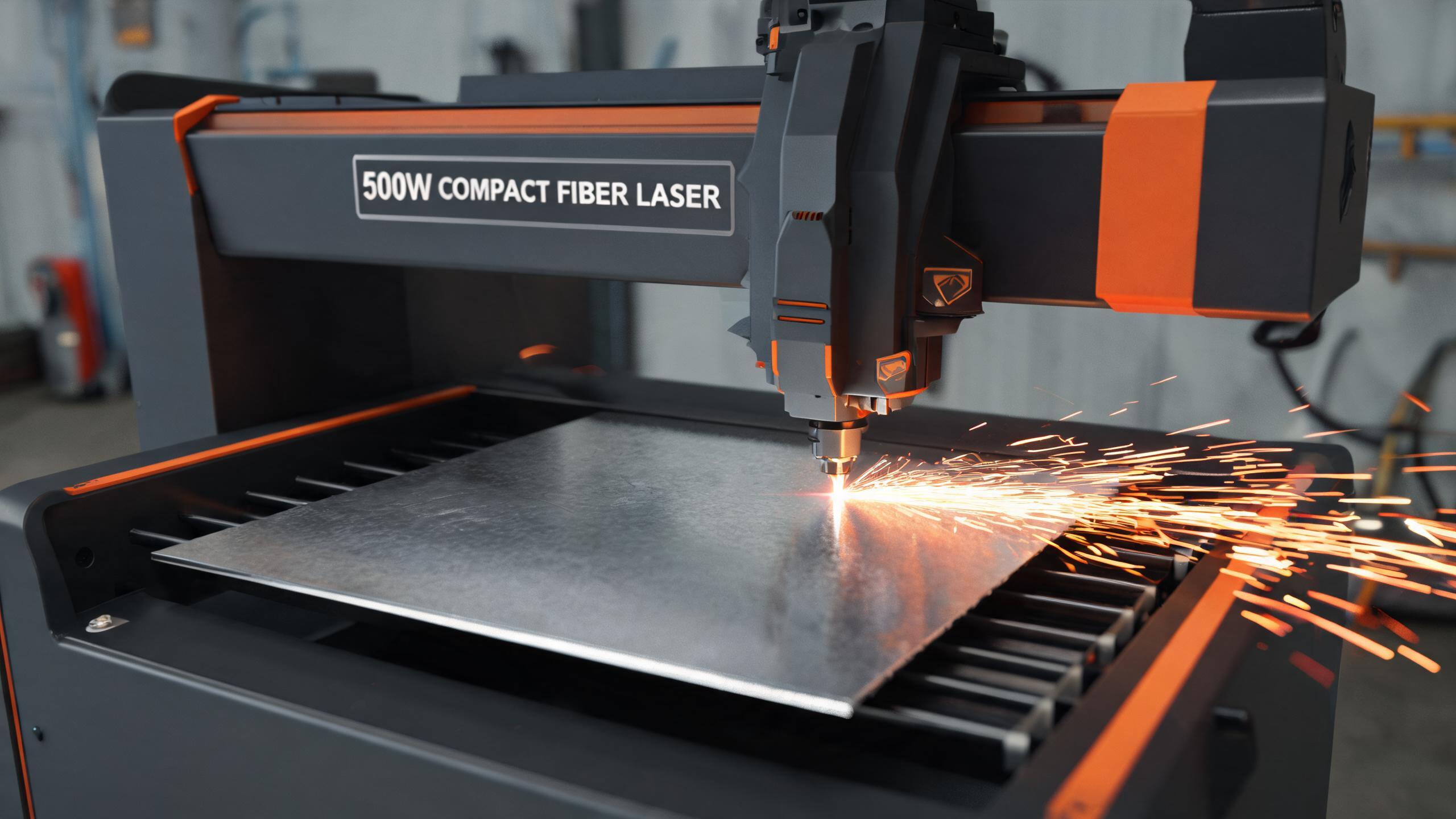
2. Cutting Performance: Thickness vs. Speed
With nitrogen assist (1.5–2.0 MPa), a 3000W cutter typically achieves:
• 2 mm stainless: ~8–10 m/min
• 5 mm stainless: ~3–4 m/min
• 10 mm stainless: ~1.5–2 m/min
• 14 mm stainless: ~0.8–1 m/min (edge quality may require secondary deburring)
Using oxygen (0.3–0.8 MPa) increases thickness capability to 20 mm, but the edge becomes oxidized and slightly rougher—acceptable for parts that will be welded or painted.
Nitrogen vs. Oxygen: Cost and Quality
Nitrogen prevents oxidation, yielding a bright, clean edge that is ready for welding. However, nitrogen consumption is high: a 3000W machine can use 20–40 m³/h at 10 mm thickness. A PSA nitrogen generator can reduce gas cost by 60–80% compared to cylinder supply. For shops cutting >100 tons per month, this is a decisive ROI factor.
3. Choosing the Right Auxiliary Equipment
Your laser cutter is only as good as its peripherals. Three pieces of equipment are often overlooked but critical:
Laser Fume Extractor
Stainless steel fumes are carcinogenic. A portable fume extractor with a 3-stage filtration (pre-filter, HEPA, activated carbon) and a capture arm rated for at least 800 m³/h is recommended for handheld welding or cleaning. For the cutting machine, an integrated downdraft table with a central dust collector is standard.
Industrial Water Chiller
For 3000W, a chiller with 10–15 kW cooling capacity is typical. Verify that the chiller has dual temperature control (for laser source and cutting head) and a flow/level alarm. For a 6000W laser, you'll need a 25–30 kW chiller—confirm this with the supplier before purchase.
Screw Air Compressor
If you use oxygen or air for cutting, a screw air compressor with a refrigerated dryer is required to supply clean, dry air. For nitrogen generation, the compressor feeds the PSA unit—sizing depends on your peak flow demand. Ask the supplier for a consumption table based on your typical material thickness.
4. Comparing 3000W with Other Power Classes
- 1500W: Best for thin sheet (<4 mm) and small workshops. Lower cost but limited to ~8 mm stainless with nitrogen.
- 3000W: The workhorse for general fabrication—handles 1–14 mm stainless efficiently. Most cost-effective for mixed production.
- 6000W: Cuts 20–25 mm stainless with nitrogen; faster on medium thickness. Higher capex and operating cost.
- 30000W: For heavy plate (>50 mm) and high-volume production. Only justified for specialized industries like shipbuilding or heavy machinery.
For most stainless steel manufacturers, 3000W offers the best balance. If you frequently cut >15 mm, consider 6000W—but calculate the ROI based on your actual thickness distribution.
5. Laser Cutting vs. Other Methods
Compared to CO2 lasers, fiber lasers have higher electrical efficiency (30% vs. 10%), lower maintenance (no mirrors or resonator cleaning), and better cutting speed on thin stainless. For handheld laser welding, a 2000W unit with wire feeder can replace TIG welding for stainless sheet—3–5x faster with less heat input. However, for very thick sections (>6 mm), traditional MIG/TIG may still be more economical. Laser cleaning is also a viable alternative to sandblasting for rust removal—no abrasive media, less waste, and it can be automated.
6. Safety and Compliance
A Class 1 laser safety enclosure is essential for a cutting machine—it prevents direct and reflected beam exposure. For handheld welders, you need protective eyewear and a fume extractor. In China, CE certification is often required for export; verify that the machine and its components (laser source, chiller) have CE marks. Also, check that the electrical cabinet meets IEC standards.
7. Cost and ROI Considerations
The price of a 3000W fiber laser cutter from a reliable Chinese manufacturer (like Xinhong CNC) typically ranges from $25,000 to $50,000 depending on table size, laser source brand, and automation level. Additional costs include installation, training, and auxiliary equipment (chiller, compressor, gas supply). A simple ROI calculation: if you cut 200 tons of stainless per year, the savings in outsourcing costs can pay back the machine in 12–18 months. For a more precise estimate, ask the supplier for a cutting speed and gas consumption table based on your typical material specs.
8. FAQ: Quick Answers for Buyers
Can a 3000W cutter handle 20mm carbon steel?
Yes, with oxygen assist. But for production, 3000W is more suited to 10–16 mm carbon steel. For 20 mm, consider 6000W.
Is a nitrogen generator worth it?
If you cut stainless steel with nitrogen daily, yes. The payback is typically 6–12 months depending on gas prices.
What's the difference between a handheld laser welder and a robotic laser welding system?
Handheld is manual, flexible, and low-cost; robotic systems offer higher repeatability and speed for mass production. For battery tab welding or automotive parts, robotic is preferred.
9. Next Steps: Get a Tailored Quote
Every workshop has unique requirements. Contact Xinhong CNC to discuss your material thickness, production volume, and budget. Our engineers can recommend the optimal power, table size, and auxiliary equipment (chiller, fume extractor, nitrogen generator) as a complete package. We also provide on-site training and after-sales support. Request a cutting sample with your own material to verify quality before purchase.
For a detailed price list and ROI calculation, please fill out the inquiry form or email us with your specifications. We typically respond within 24 hours.