
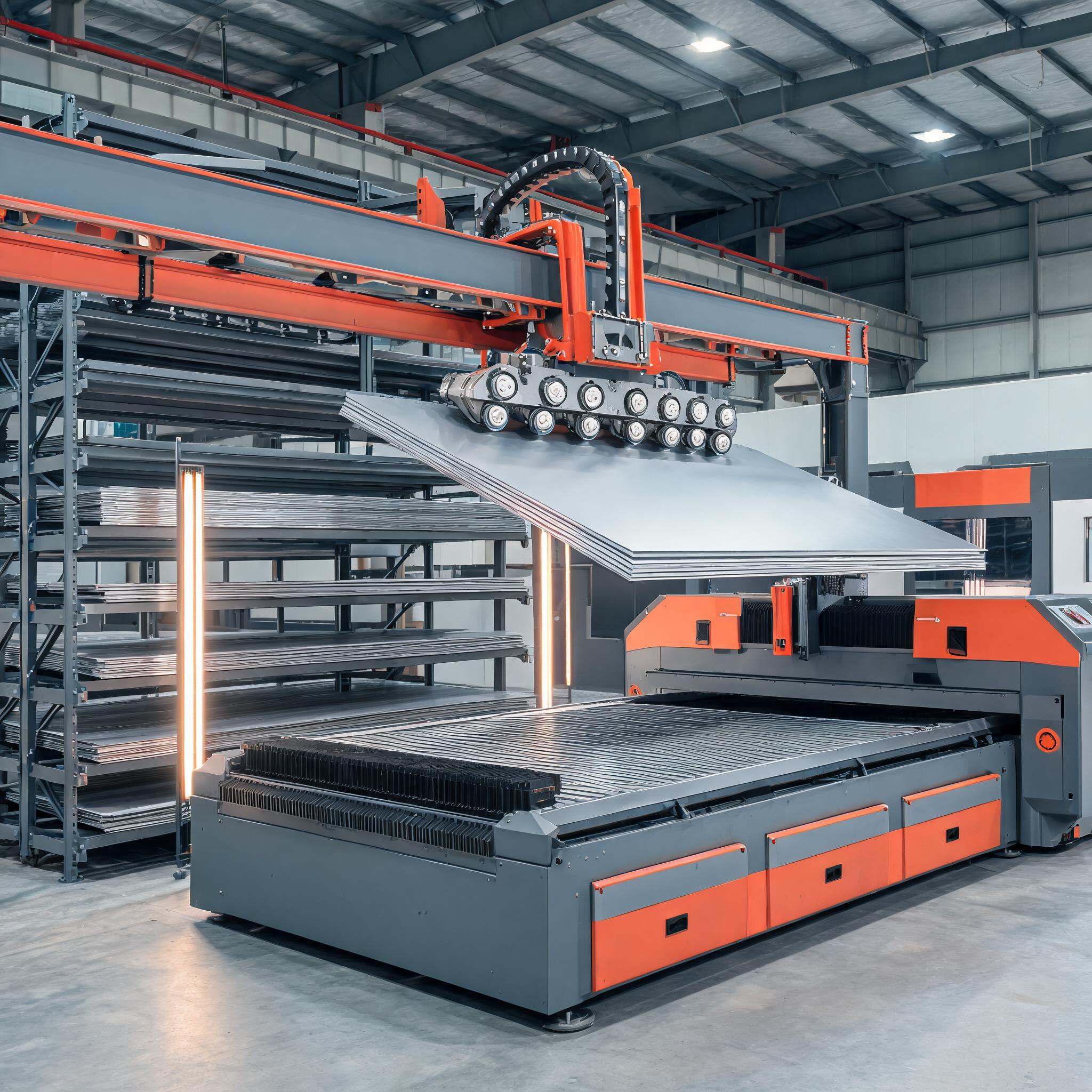
CNC machine prices vary widely by type and capability. This guide breaks down typical price ranges for CNC mills, lathes, routers, and fiber laser cutting machines, with a focus on what drives fiber laser costs and what buyers should consider beyond the sticker price.
BUYER GUIDE
If you’re searching “how much does a CNC machine cost,” you’ve probably already discovered that prices range from a few thousand dollars to well over half a million. That’s not a useless answer—it’s the reality of a market where a desktop router and a 12kW fiber laser are both called “CNC machines.”
This guide breaks down typical price ranges by machine type, with a closer look at fiber laser cutting machines—what drives their cost, what you’re actually paying for, and how to budget beyond the initial purchase price.
- CNC machine prices span roughly $5,000 to $500,000+, depending on type, size, and configuration.
- Fiber laser cutting machines typically start around $20,000 for entry-level models and exceed $200,000 for high-power industrial systems.
- Laser power, working area, and brand are the three biggest cost drivers.
- Total cost of ownership includes installation, tooling, maintenance, and operator training—often 20–30% above the purchase price in the first year.
CNC Machine Price Ranges by Type
Before diving into fiber lasers, it helps to see the full landscape. The table below gives realistic ballpark figures for common CNC machine types. These are global averages for new equipment from mid-range manufacturers; prices vary by region, options, and supplier.
| Machine Type | Typical Price Range (USD) | Best For |
|---|---|---|
| Desktop CNC router | $1,000 – $5,000 | Hobbyists, small prototypes, soft materials |
| Benchtop CNC mill | $5,000 – $20,000 | Small parts, aluminum, toolrooms |
| Industrial CNC router | $20,000 – $80,000 | Wood, plastics, non-ferrous metals |
| CNC lathe (production) | $30,000 – $120,000 | Turning parts, high-volume production |
| VMC (Vertical Machining Center) | $50,000 – $150,000 | Precision metal parts, molds |
| Fiber laser cutting machine | $20,000 – $200,000+ | Sheet metal cutting, high-speed, high-precision |
These ranges assume standard configurations. Add automation, higher precision, larger working areas, or premium brands, and you’ll move toward the upper end—or beyond.
Fiber Laser Cutting Machine Cost: What Really Drives the Price
Fiber laser cutting machines have become the go-to for sheet metal fabricators because of their speed, precision, and low operating cost. But the price tag can vary by a factor of ten. Here’s what separates a $25,000 machine from a $150,000 one.
1. Laser Power (kW)
The laser source is the heart of the machine and the single biggest cost driver. Power determines what materials and thicknesses you can cut efficiently.
- 1–2 kW: Entry-level, cuts up to about 6–8 mm mild steel. Good for thin sheet, small shops.
- 3–4 kW: The sweet spot for many job shops—cuts up to 12–16 mm mild steel.
- 6–8 kW: Heavy-duty, cuts up to 20–25 mm, faster on thick plate.
- 10–12 kW+: Industrial production, maximum speed and thickness (30 mm+).
Each step up in power adds significantly to the machine price—often $10,000–$30,000 per kW tier.
2. Working Area (Table Size)
Standard fiber laser tables range from 1500×3000 mm (5×10 ft) to 2000×6000 mm (6×20 ft). Larger tables cost more due to heavier frames, longer rails, and more powerful drives. If you only cut standard 4×8 ft sheets, a 1500×3000 mm table is usually sufficient and much more affordable.
3. Laser Source Brand
The laser generator is a major component. Well-known brands (e.g., IPG, Raycus, nLIGHT) command a premium but offer proven reliability and support. Some buyers prefer a specific brand for warranty or resale value. Budget machines often use lesser-known sources—saving money upfront but potentially costing more in downtime.
4. Machine Build Quality & Components
Look beyond the laser. The gantry structure, linear guides, servo motors, and control system determine precision and longevity. A rigid, well-built frame reduces vibration and maintains cutting accuracy over years. Cheaper machines may use lighter materials and generic electronics, which can lead to drift and more frequent repairs.
5. Additional Options
- Exchange tables (dual pallets) for faster loading/unloading
- Auto-focus cutting heads
- Chiller units for cooling
- Fume extraction systems
- Nesting software
- Rotary axis for tube cutting
Each option adds cost but can improve productivity or safety. Don’t skip the chiller or fume extractor—they’re essential for safe, consistent operation.
Fiber Laser vs. Other CNC Machines: Cost per Performance
When comparing a fiber laser to a CNC plasma or waterjet, the laser often has a higher upfront cost but lower operating costs per part. Here’s a quick comparison:
| Criteria | Fiber Laser | CNC Plasma | Waterjet |
|---|---|---|---|
| Initial cost (mid-size) | $50k–$120k | $30k–$80k | $80k–$200k+ |
| Cut quality (edge) | Excellent, clean | Good, some dross | Excellent, no heat-affected zone |
| Speed on thin steel | Very fast | Moderate | Slow |
| Operating cost | Low (low consumables) | Moderate (consumables, gas) | High (abrasive, water) |
| Thickness capability | Up to ~30 mm | Up to 50 mm+ | Up to 200 mm+ |
For most sheet metal shops cutting under 20 mm, a fiber laser offers the best balance of speed, precision, and operating cost—even if the initial investment is higher than plasma.
Hidden Costs: Budget Beyond the Purchase Price
The sticker price is just the beginning. Buyers often overlook these costs:
- Installation & commissioning: Shipping, rigging, leveling, and setup can add $2,000–$10,000 depending on location.
- Training: Operator training is essential for safety and efficiency. Some suppliers include it; others charge separately.
- Tooling & consumables: Nozzles, lenses, protective windows, and assist gas (nitrogen or oxygen) are ongoing costs.
- Maintenance: Regular cleaning, alignment checks, and replacement of worn parts. Budget 2–5% of the machine cost per year.
- Software: CAD/CAM nesting software can cost $5,000–$20,000, sometimes sold separately.
- Downtime: A cheap machine that breaks down frequently can cost more in lost production than the price difference.
Ask your supplier for a full cost breakdown, including installation and training, before comparing quotes.
How to Choose the Right Machine for Your Budget
- Define your materials and thicknesses. This determines the required laser power.
- Measure your typical sheet size. Don’t oversize the table if you don’t need it.
- Set a realistic budget including installation and first-year operating costs.
- Compare at least three suppliers. Look at machine specs, not just price.
- Ask for references. Talk to existing users about reliability and support.
- Check warranty and after-sales service. How quickly can they respond if something breaks?
If you’re new to fiber lasers, consider starting with a 1–2 kW machine on a standard table. It’s a lower-risk entry point that still delivers the speed and quality benefits.
Frequently Asked Questions
What is the average price of a fiber laser cutting machine?
For a standard 1500×3000 mm table with 1–3 kW power, expect to pay between $30,000 and $80,000. Higher power and larger tables push the price above $150,000.
Can I buy a used fiber laser to save money?
Yes, used machines can cost 30–50% less than new, but you take on more risk. Have the machine inspected by a qualified technician, and check the laser source’s operating hours and service history.
How long does a fiber laser source last?
Most fiber laser sources are rated for 100,000 operating hours—that’s over a decade of single-shift use. However, the diode pump modules may degrade over time and eventually need replacement, which is a significant cost.
Do I need a chiller for a fiber laser?
Yes. Fiber lasers generate heat that must be dissipated to maintain stable output. A chiller is standard equipment, not an option.
Final Thoughts
“How much does a CNC machine cost” is a question with many answers. The key is to match the machine to your actual production needs, not just the lowest price. A fiber laser cutting machine is a significant investment, but for many fabricators it pays for itself through speed, precision, and low running costs.
When you’re ready to compare options, ask suppliers for detailed quotes that include installation, training, and a clear list of what’s included. If you’re evaluating specific machines, we’re happy to discuss your requirements and provide more information—contact us with your material types, thicknesses, and production volume, and we’ll help you narrow down the right configuration.