
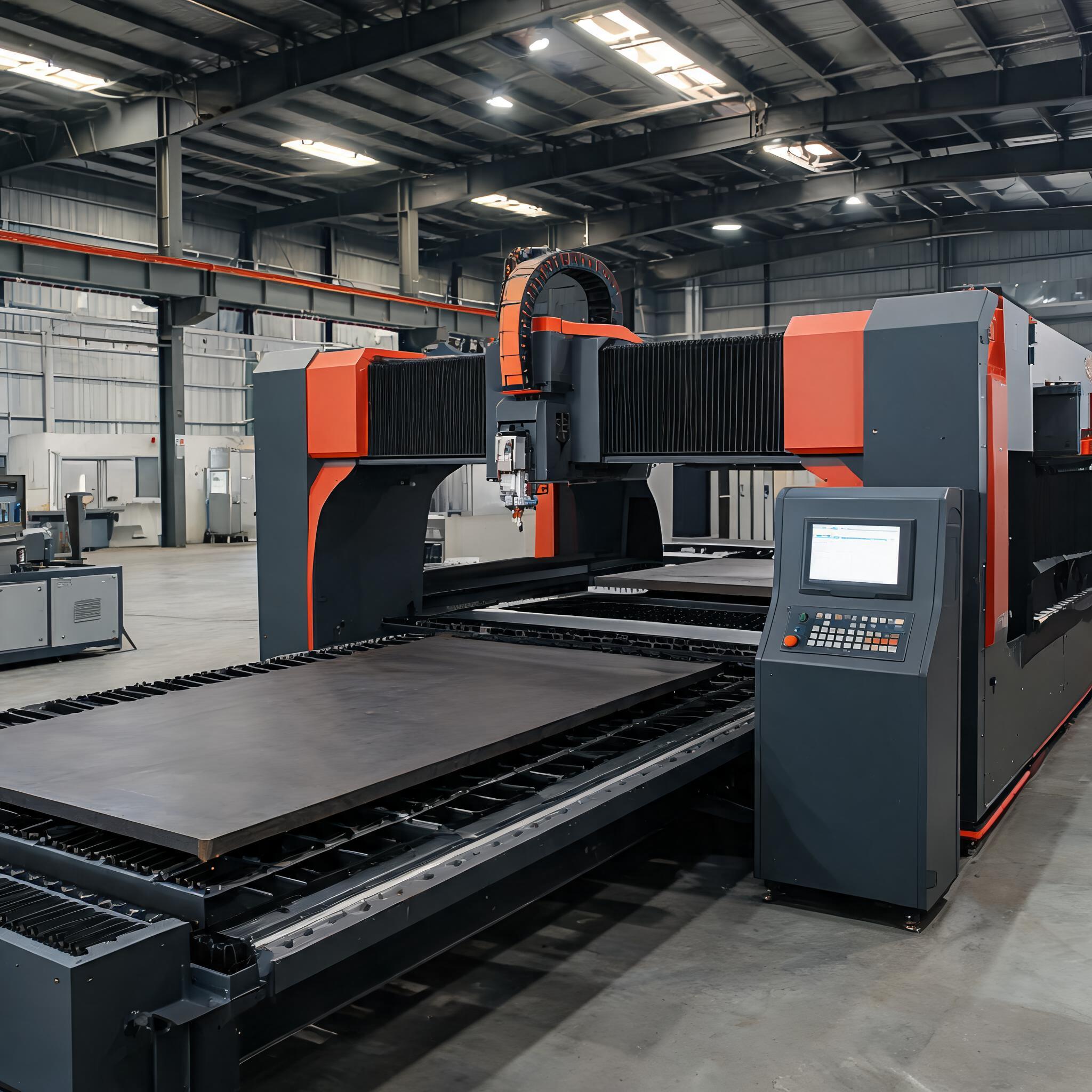
Fiber lasers cut metals, not wood or acrylic. This guide explains which materials work, how thickness capacity scales with power, and where brass fits in — with reference charts and buying advice.
Laser Cutting Guide
What Can a Fiber Laser Cut? Materials and Thickness Charts by Power
If you are sourcing a fiber laser cutting machine, the first question is usually: what materials can it cut, and how thick? The answer depends on the laser power, the material, and the required cut quality. This guide explains the practical limits, the materials that work well, and where brass fits in — so you can match a machine to your production needs.
Key Takeaways
- Fiber lasers cut metals; they are not designed for wood, acrylic, or glass.
- Maximum thickness scales with laser power, but cut speed and edge quality drop as thickness increases.
- Brass and copper reflect infrared light, so they require higher power and specific assist gases.
- Use the charts below as a starting point, then confirm with your material supplier and machine builder.
In this article
1. Materials a Fiber Laser Can Cut
Fiber lasers operate at a wavelength of about 1 µm, which is readily absorbed by most metals. This makes them highly efficient for cutting a wide range of metallic materials, but ineffective for non-metals like wood, acrylic, or glass.
What is laser cutting used for?
Across industries, fiber laser cutting is used wherever metal sheet, plate, or tube needs fast, repeatable profiling. Typical applications include:
- Sheet-metal fabrication: brackets, panels, enclosures, and custom parts for machinery and equipment.
- Kitchen and appliance manufacturing: stainless counters, sink panels, and equipment housings.
- Signage and decorative work: metal letters, logos, screens, and architectural panels, often in stainless or brass.
- Structural and tube cutting: frames, handrails, and furniture profiles cut from tube and open profiles.
- Electrical and automotive components: contact parts, chassis elements, and battery-related hardware.
The material you cut most determines the machine configuration: power level, assist gas, and table size all follow from your application mix.
Metals commonly cut with fiber lasers
- Mild steel (carbon steel): The most common material. Cuts cleanly with oxygen or nitrogen assist gas. Thickness capacity depends on power.
- Stainless steel: Requires nitrogen for clean edges. Power needs are higher than mild steel for the same thickness.
- Aluminum: Highly reflective and conductive. Requires higher power and nitrogen assist gas. Thickness capacity is generally lower than mild steel.
- Brass and copper: Highly reflective to infrared light. Cutting requires high power — roughly 1000 W as a practical minimum for thin brass, with higher power recommended for production work — and specific parameters. See section 3.
- Galvanized steel: Similar to mild steel but may produce zinc fumes; proper ventilation is essential.
- Titanium: Cut with inert gas to prevent oxidation. Used in aerospace and medical applications.
Materials not suitable for fiber lasers
- Wood, MDF, plywood
- Acrylic, PMMA, polycarbonate
- Glass
- Textiles, leather (unless specially coated)
- Ceramics
These materials are typically processed with CO2 lasers, CNC routers, or other technologies. A fiber laser will either reflect the beam (causing damage) or fail to cut.
2. Thickness Charts by Laser Power
The tables below give typical maximum thickness for common metals at different power levels. All values assume cutting through the material — at acceptable industrial edge quality, using standard material grades and the correct assist gas. They are not production-speed ratings, and they are not a substitute for a supplier cutting chart: always request cutting data for your specific material grade, thickness, and edge-quality requirement.
Mild Steel (Carbon Steel) – Maximum Thickness (mm)
| Laser Power | Typical Max Thickness (mm) | Notes |
|---|---|---|
| 500 W | 6 | Oxygen assist; slower on thicker sections |
| 1000 W | 10 | Good balance for general fabrication |
| 2000 W | 16 | Common choice for job shops |
| 3000 W | 20 | Higher speed on thin to medium |
| 4000 W | 22 | Requires robust chiller and optics |
| 6000 W | 25 | Industrial production; nitrogen possible for thinner |
| 8000 W+ | 30+ | Specialized applications; confirm with builder |
Values are indicative cut-through limits, not production ratings. For thickness above 20 mm, oxygen assist and edge quality trade-offs apply.
Stainless Steel – Maximum Thickness (mm)
| Laser Power | Typical Max Thickness (mm) | Notes |
|---|---|---|
| 500 W | 3 | Nitrogen assist for clean edge |
| 1000 W | 5 | Common for thin-gauge work |
| 2000 W | 8 | Good for kitchen equipment, enclosures |
| 3000 W | 12 | Higher power improves speed |
| 4000 W | 16 | Requires high-pressure nitrogen |
| 6000 W | 20 | Industrial scale; edge quality may vary |
These values assume nitrogen assist, because stainless edges discolor with oxygen. At maximum thickness, both cut speed and edge quality drop — for production-quality edges, plan for a lower working thickness than the table maximum. Compared with aluminum, stainless steel's lower thermal conductivity allows thicker cuts at the same power.
Aluminum – Maximum Thickness (mm)
| Laser Power | Typical Max Thickness (mm) | Notes |
|---|---|---|
| 1000 W | 3 | Nitrogen assist; reflective risk |
| 2000 W | 6 | Common for automotive and electronics |
| 3000 W | 8 | Requires careful parameter control |
| 4000 W | 12 | Higher power needed for thick sections |
| 6000 W | 16 | Industrial applications; confirm with supplier |
Aluminum's high reflectivity and thermal conductivity limit thickness compared to steel.
Brass – Maximum Thickness (mm)
| Laser Power | Typical Max Thickness (mm) | Notes |
|---|---|---|
| 1000 W | 2 | Practical minimum for thin brass; high peak power and nitrogen |
| 2000 W | 4 | Recommended entry point for production; slower speed |
| 3000 W | 6 | For thicker brass, consider higher power |
| 4000 W | 8 | Industrial brass cutting; confirm with machine builder |
Brass cutting is challenging due to reflectivity. A dedicated brass laser cutting machine with appropriate power and assist gas is recommended.
3. Brass Laser Cutting: What You Need to Know
Brass (an alloy of copper and zinc) is valued for its corrosion resistance, machinability, and aesthetic appeal. It is common in decorative hardware, electrical connectors, plumbing fittings, and musical instruments. However, laser cutting brass presents specific challenges:
- High reflectivity: Brass reflects a significant portion of the infrared laser beam, which can damage the optics or the laser source if not properly managed. Machines designed for brass use protective features and specific parameter sets.
- High thermal conductivity: Heat dissipates quickly, requiring higher power density to achieve a clean cut.
- Zinc fumes: Cutting brass can produce zinc oxide fumes. Adequate ventilation and filtration are essential for operator safety.
For these reasons, a standard fiber laser may not be optimized for brass. A brass laser cutting machine intended for production cutting of brass sheet and tube is typically equipped with 2000 W or more — above the roughly 1000 W practical minimum needed simply to cut thin brass — plus specialized optics and nitrogen assist gas.
Typical applications for brass laser cutting
- Decorative panels and architectural hardware
- Electrical contacts and terminals
- Instrument parts and fittings
- Jewelry and fashion accessories (thin gauge)
4. Cut Quality and Speed: Beyond Maximum Thickness
Maximum thickness is only one factor. As thickness increases, cut speed decreases and edge quality may suffer. Key quality indicators include:
- Kerf width: The width of the cut. Narrower kerf means less material waste but may require slower speeds.
- Surface roughness: Affected by assist gas, focus position, and power. Nitrogen typically gives smoother edges on stainless and aluminum.
- Dross: Recast material on the underside. Minimized by proper gas pressure and focal length.
- Heat-affected zone (HAZ): Smaller with higher speed and nitrogen assist.
When evaluating a machine, request cut samples on your actual material and thickness. The samples should be inspected for these quality parameters, not just whether the laser can cut through.
5. How to Choose the Right Power for Your Application
Selecting laser power is a balance between thickness requirements, production volume, and budget. Consider these steps:
- Identify your thickest common material. If you regularly cut 10 mm mild steel, a 2000 W machine is a reasonable starting point. For 20 mm, look at 4000 W or higher. Note how these recommendations compare with the tables in section 2: the tables show the maximum thickness each power level can cut through, while regular production at a given thickness needs headroom to maintain cutting speed and edge quality. That is why a machine that can just barely cut through your thickness is rarely the right production choice.
- Consider cut quality needs. If you need polished edges on stainless, nitrogen assist and higher power may be necessary to maintain speed.
- Evaluate throughput. Higher power allows faster cutting on thin materials, which can increase productivity even if you don't need the maximum thickness.
- Check material variety. If you cut brass or copper, ensure the machine is rated for reflective materials and has the necessary safety features.
- Plan for future growth. A machine with some headroom can handle new projects without early replacement.
Always confirm specifications with the machine builder. They can provide cutting data for your specific materials and recommend the appropriate configuration.
6. Frequently Asked Questions
Can a fiber laser cut brass?
Yes. Around 1000 W is a practical minimum for cutting thin brass, and 2000 W or more is recommended for production work, with nitrogen as the usual assist gas. Due to brass's reflectivity, a machine designed for reflective materials is recommended. Consult the machine builder for specific parameters.
What is the maximum thickness for a 1000 W fiber laser?
For mild steel, up to 10 mm; stainless steel up to 5 mm; aluminum up to 3 mm; brass up to 2 mm. These are typical cut-through values; actual performance depends on material grade and cut quality requirements.
Can I cut wood with a fiber laser?
No. Fiber lasers are designed for metals. Wood, acrylic, and other non-metals are better suited to CO2 lasers or other cutting methods.
What assist gas should I use?
Oxygen is common for mild steel (faster cutting, thicker sections). Nitrogen is used for stainless steel, aluminum, and brass to achieve clean, oxide-free edges. Compressed air is sometimes used for thin mild steel.
How do I know if a machine can cut my material?
Request a cutting test or sample from the supplier using your exact material and thickness. They should provide cut samples and parameter recommendations.
Ready to match a fiber laser to your production? Contact our team with your material, thickness, and quality requirements. We can help you select the right power and configuration for your shop.
Request a quote