
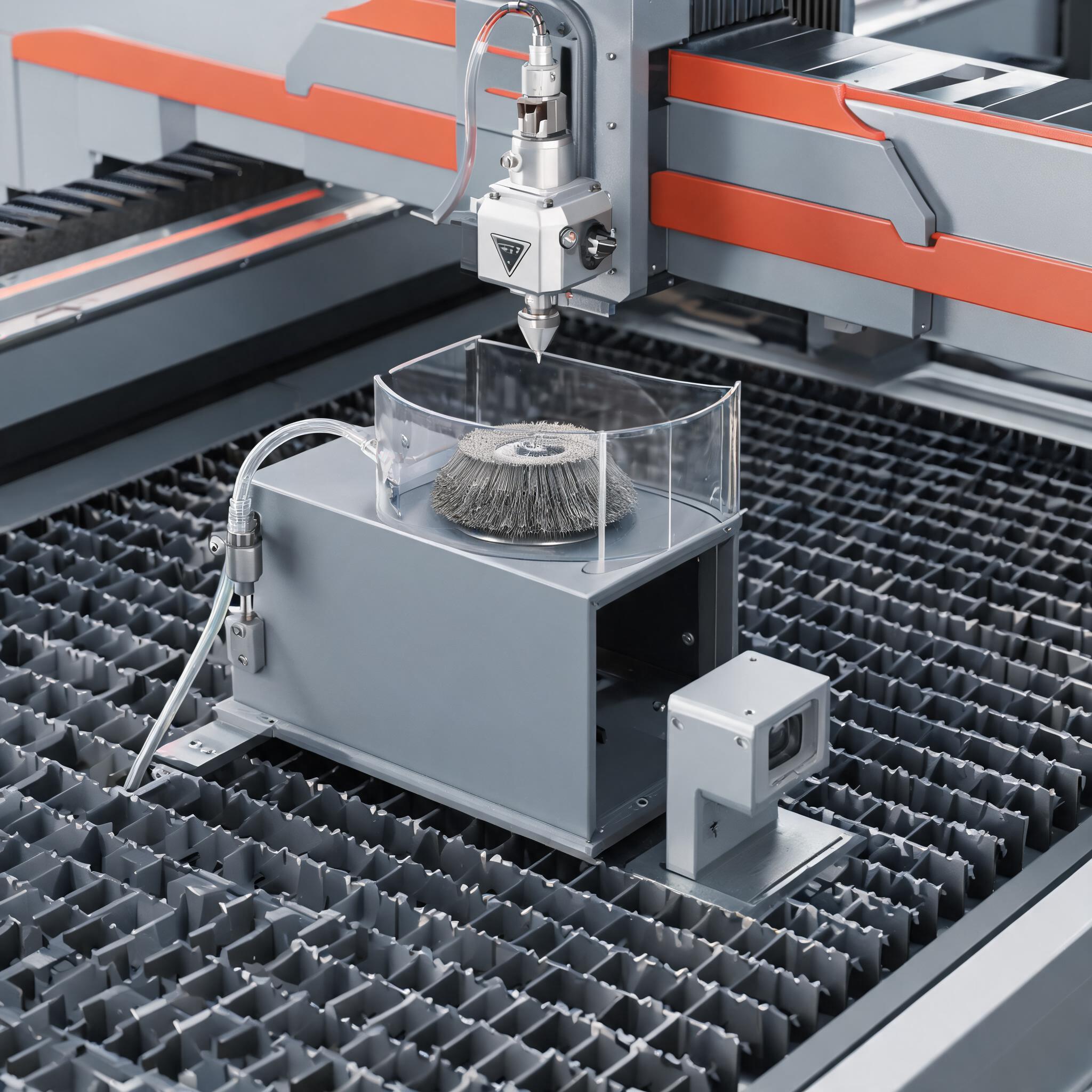
A practical guide to CNC machines for B2B buyers: what they are, how they work, the key components, and how CNC laser cutting machines compare with other CNC processes—plus what to check before you buy.
BUYER GUIDE
If you are sourcing machined parts, sheet metal components, or custom fabrication, you have probably seen the term “CNC machine” on supplier profiles, quotes, and spec sheets. But what does it actually mean, and how do you know which type of CNC process fits your project?
This article explains the CNC machine definition, how CNC systems work, and where CNC laser cutting machines fit compared with other CNC processes. We also give you a practical checklist to use when evaluating suppliers, so you can ask the right questions before you commit to an order.
- CNC stands for Computer Numerical Control—machines that follow programmed instructions to move cutting tools with high repeatability.
- All CNC machines share the same core components: a controller, motors, a tool, and a worktable. The difference is the cutting method.
- CNC laser cutting machines use a focused laser beam to melt and vaporize material, offering narrow kerf, minimal heat-affected zone, and high precision on sheet metal.
- Laser cutting is ideal for thin to medium sheet metal, complex contours, and fast turnaround—but it is not the best choice for thick plates or 3D machining.
- When choosing a supplier, verify the machine type, working area, maximum material thickness, and tolerance before you send drawings.
CNC machine definition: what it actually is
CNC stands for Computer Numerical Control. A CNC machine is a manufacturing system that uses pre-programmed computer software to control the movement of cutting tools, spindles, lasers, or other tooling. Instead of a human operator guiding the tool by hand, the machine follows a digital file—usually G-code—that tells it exactly where to move, how fast, and how deep to cut.
This matters for buyers because CNC removes most of the variability of manual machining. Once the program is set, the machine can produce the same part thousands of times with the same dimensions. That is why CNC is the standard for anything that requires repeatability: automotive parts, electronics housings, medical device components, and industrial equipment.
How a CNC machine works: the basic process
Every CNC machine, regardless of type, works in the same four-step sequence:
- Design the part – The part is drawn in CAD software (e.g., SolidWorks, AutoCAD). This file contains the geometry, dimensions, and tolerances.
- Convert to machine code – CAM software translates the CAD model into G-code, the language the CNC controller understands. The G-code specifies tool paths, spindle speed, feed rate, and depth of cut.
- Set up the machine – The operator mounts the raw material on the worktable, installs the correct tool (or sets the laser parameters), and loads the program.
- Machining runs – The controller reads the G-code and moves the tool or laser along the programmed paths. Sensors and feedback loops keep the motion accurate.
The key difference between CNC machines is how they remove material. A CNC milling machine uses a rotating cutter; a CNC lathe spins the workpiece against a fixed tool; a CNC plasma cutter uses an electrically conductive gas jet; and a CNC laser cutting machine uses a focused beam of light.
What is a CNC laser cutting machine?
A CNC laser cutting machine is a type of CNC machine that uses a high-power laser beam to cut or engrave materials. The laser is directed through optics and a focusing lens, producing a concentrated spot of heat that melts, burns, or vaporizes the material. A gas jet (typically oxygen or nitrogen) blows the molten material away, leaving a clean edge.
Because the laser never physically touches the workpiece, there is no tool wear in the traditional sense. This gives laser cutting several advantages over mechanical cutting:
- Narrow kerf – The cut width is typically 0.1–0.3 mm, which means less material waste and the ability to cut very fine details.
- Minimal heat-affected zone (HAZ) – The focused beam limits the area that gets hot, so the edges stay cleaner and distortion is lower than with plasma or oxy-fuel cutting.
- High precision – Modern fiber lasers can hold positional tolerances of ±0.05 mm or better on thin sheet metal.
- Complex contours – Laser cutting can produce sharp corners, small holes, and intricate shapes that are difficult or impossible with mechanical tools.
- Fast setup – Because there is no physical tool to change, switching from one design to another only requires loading a new file. This makes laser cutting ideal for prototyping and small to medium batch production.
Types of CNC laser cutting machines
There are three main types of laser sources used in CNC laser cutting machines. Each has different capabilities and cost profiles.
| Type | Typical power range | Best for | Limitations |
|---|---|---|---|
| CO2 laser | 1–6 kW | Wood, acrylic, plastics, non-metals; also mild steel and stainless up to ~20 mm | Slower on reflective metals; higher running cost |
| Fiber laser | 1–12 kW (or higher) | Stainless steel, mild steel, aluminum, brass, copper | Higher initial cost; not ideal for wood or acrylic |
| Diode laser | 0.5–2 kW (desktop units lower) | Thin sheet metal, engraving, hobby/light industrial | Lower power; limited thickness range |
For most metal fabrication buyers, fiber laser cutting is the technology of choice because it handles reflective metals efficiently and has lower operating costs per part. CO2 lasers are still common for non-metal materials. Diode lasers are mainly for desktop or entry-level applications.
How CNC laser cutting compares with other CNC processes
When you are sourcing parts, you need to know which process will give you the best balance of cost, speed, and quality for your specific part. Here is a quick comparison:
| Process | Material thickness (typical) | Edge quality | Speed | Best use case |
|---|---|---|---|---|
| CNC laser cutting | 0.5–25 mm (metal) | High, clean, no burr | Fast on thin sheet | Sheet metal parts, complex contours, small holes |
| CNC plasma cutting | 6–50 mm | Moderate, some dross | Fast on thick plate | Thick steel plate, structural steel |
| CNC milling | All (depends on machine) | High, but tool marks possible | Slower | 3D features, pockets, threads, precision machining |
| CNC punching | Up to ~6 mm | Good, but limited to round or shaped punches | Very fast for repetitive holes | High-volume parts with standard hole patterns |
Laser cutting is not the right choice for everything. If your part is thicker than 25 mm, plasma or oxy-fuel may be more economical. If you need 3D milling features, you need a CNC machining center. But for the majority of sheet metal parts—enclosures, brackets, panels, chassis—laser cutting is often the fastest and most cost-effective option.
What to check before you send your drawings to a CNC supplier
As a buyer, you want to avoid costly revisions and delays. Here is a checklist to go through before you request a quote:
- Machine type and capability – Ask the supplier what type of CNC laser cutting machine they operate (fiber, CO2) and what the maximum working area is. If your part is larger than 1.5 m × 3 m, you need a machine with a bigger bed.
- Maximum material thickness – Confirm the laser power and the thickness they can cut for your material. A 3 kW fiber laser may cut 12 mm mild steel, but a 6 kW machine will handle 20 mm more efficiently.
- Tolerance and edge quality – Ask what tolerances they can hold. Standard laser cutting is typically ±0.1 mm; if you need tighter, confirm it is achievable without secondary machining.
- Material availability – Check if the supplier stocks the material grade you need (e.g., 304 stainless, 6061 aluminum) or if you need to supply it.
- Finishing options – Laser-cut edges may have a slight oxide layer (especially on mild steel). Ask if they offer deburring, powder coating, or anodizing as part of the service.
- File format – Most suppliers accept DXF, DWG, or STEP files. Make sure your drawing is to scale and includes all necessary dimensions.
Frequently asked questions
What is the difference between CNC and laser cutting?
CNC is the umbrella term for computer-controlled machines. Laser cutting is one specific type of CNC machine that uses a laser beam to cut. So all laser cutting machines are CNC machines, but not all CNC machines are laser cutters.
Can a CNC laser cutting machine cut any material?
No. Laser cutting works best on flat sheet materials—metals like steel and aluminum, and some non-metals like acrylic and wood. It is not suitable for thick blocks, 3D shapes, or materials that burn or produce toxic fumes (e.g., PVC).
Is laser cutting expensive?
The cost per part depends on material, thickness, cutting time, and quantity. Laser cutting is often cheaper than milling for sheet metal parts because there is no tooling cost and setup is fast. For high volumes, punching or stamping may be cheaper, but for prototypes and small batches, laser is usually the most economical.
How accurate is a CNC laser cutting machine?
Modern fiber laser machines can achieve positional accuracy of ±0.05 mm on thin sheet. Actual tolerance depends on material, thickness, and machine calibration. Always confirm the supplier's tolerance capability with your part.
Final thoughts
Understanding what a CNC machine is and how it works helps you make better sourcing decisions. When you know the difference between laser cutting, plasma, and milling, you can choose the right process for your part and ask suppliers the right questions.
If you are sourcing sheet metal components, a CNC laser cutting machine is often the most efficient starting point. It gives you precision, speed, and flexibility—especially for complex designs and short lead times.
Before you send your next RFQ, use the checklist above to evaluate your supplier's capabilities. And if you need a quote, send your drawings with material, thickness, and quantity—the more details you provide, the faster you will get an accurate answer.