
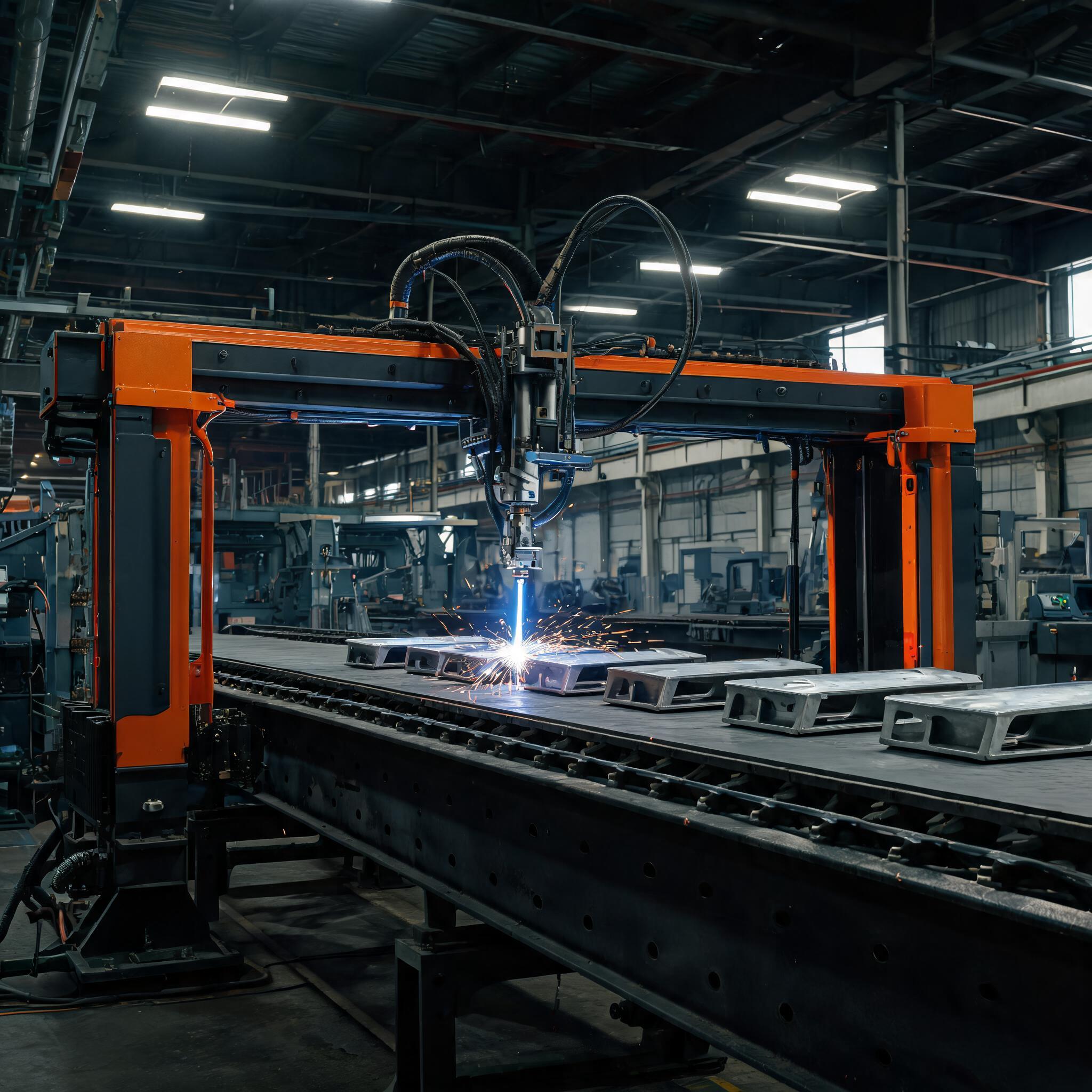
Understand the CNC machine operator role, essential skills, and how operators run laser cutting machines—key for B2B buyers evaluating supplier capabilities.
BUYER GUIDE
If you are sourcing sheet metal parts, enclosures, brackets, or precision-cut components, you will likely ask a supplier: “Who runs your laser cutting machines?” The answer matters more than you might think. A CNC machine operator is the person who turns a CAD drawing into a finished, measurable part. Their skill level directly affects tolerances, surface quality, cycle time, and scrap rate.
This article explains what a CNC machine operator does, what skills the role requires, and how operators run laser cutting machines in a production environment. It is written for B2B buyers and engineers who want to evaluate a supplier’s production capability—not just read a job description.
- Operator skill is a direct factor in part quality, tolerances, and scrap rate.
- Laser cutting operators must read blueprints, set up machines, and adjust process parameters—not just press “start.”
- When auditing a supplier, ask about operator training, certification, and how they handle setup and first-piece inspection.
What Is a CNC Machine Operator?
A CNC (Computer Numerical Control) machine operator is the person who runs a CNC machine—such as a laser cutter, plasma cutter, router, or mill—to produce parts from raw material. The operator’s job is not simply loading material and pressing a button. It involves:
- Reading and interpreting engineering drawings and CAD files
- Selecting the correct tooling or nozzle, and setting up the machine
- Loading the NC program and setting work offsets
- Running a test cut or first-piece inspection
- Monitoring the machine during production for errors or quality drift
- Performing basic maintenance and troubleshooting
In a job shop, the operator is often also responsible for quality checks, such as measuring critical dimensions with calipers or micrometers. In larger facilities, the operator may work alongside a separate programmer and a quality inspector, but the operator remains the last line of defense before a part moves to the next step.
CNC Operator Job: What Does It Involve Day-to-Day?
The CNC operator job varies by shop, but the core responsibilities are consistent. Here is a typical workflow for a laser cutting operator:
- Review the job order – Check the material type, thickness, and quantity against the drawing.
- Set up the machine – Load the sheet or coil, align it on the cutting table, and install the correct nozzle and lens.
- Load the program – Transfer the NC file from the CAM system to the machine control.
- Set parameters – Adjust laser power, cutting speed, focal position, and assist gas pressure based on material and thickness.
- Run a test cut – Cut a small sample or a single part to verify edge quality and dimensions.
- Inspect the first piece – Measure key features and compare to the drawing tolerance.
- Run production – Monitor the machine, watch for errors, and remove finished parts.
- Document results – Record batch numbers, inspection results, and any issues.
In many shops, the operator also performs routine maintenance such as cleaning the lens, checking the focus, and replacing worn nozzles. This preventive care extends the life of the machine and keeps cut quality consistent.
Skills Every CNC Operator Needs
Not all operators are equal. The difference between a skilled operator and a button-pusher is often visible in the scrap bin. Here are the core skills that matter in a production environment:
1. Blueprint Reading and GD&T
An operator must be able to read a technical drawing and understand symbols for tolerances, surface finish, and material specifications. Without this, they cannot verify that the part meets the print.
2. CNC Programming Basics
While many shops have separate programmers, the operator should understand G-code at a basic level. They need to know what the machine is doing at each step, so they can spot errors or make small adjustments.
3. Machine Setup and Tooling
For laser cutting, this means knowing how to choose the right nozzle diameter, lens focal length, and assist gas (oxygen, nitrogen, or air) for a given material and thickness. A wrong choice can cause dross, rough edges, or even damage the lens.
4. Measurement and Inspection
Operators use calipers, micrometers, and sometimes CMM or laser scanners. They need to know how to measure accurately and record results.
5. Problem-Solving and Troubleshooting
When a cut edge starts to show burrs or the machine alarms, the operator must diagnose the cause—is it a dull lens, wrong focus, or material variation? Quick, accurate fixes keep production on schedule.
6. Safety Awareness
Laser cutters involve high-power beams, high voltage, and assist gases. Operators must follow lockout/tagout, wear proper PPE, and know how to handle emergencies.
How Operators Run Laser Cutting Machines
Laser cutting is one of the most common CNC applications in sheet metal fabrication. The operator’s role is critical because the laser’s performance depends on many variables that must be set correctly for each job.
Key Parameters an Operator Controls
| Parameter | What It Affects | Typical Range (Example) |
|---|---|---|
| Laser power (W) | Cutting speed, thickness capability | 1,000–6,000 W for fiber lasers |
| Cutting speed (m/min) | Cycle time, heat input | 0.5–20 m/min depending on thickness |
| Focal position | Edge quality, kerf width | 0 to -3 mm below surface |
| Assist gas pressure | Dross removal, oxidation | Nitrogen 10–20 bar for stainless |
| Nozzle diameter | Gas flow, cut width | 1.5–3.0 mm |
The operator sets these parameters based on the material type (mild steel, stainless, aluminum, etc.) and thickness. They may refer to a cutting parameter table provided by the machine manufacturer or developed in-house through trial cuts. The operator then runs a test piece and adjusts until the edge is clean and the dimensions are within tolerance.
First-Piece Inspection: The Critical Step
Before running a full batch, the operator must inspect the first part. This is not optional. They measure critical holes, slots, and overall dimensions. If the part is out of tolerance, they adjust the program or parameters and cut another test piece. Only when the first piece passes does production begin.
Monitoring During Production
During long runs, the operator watches for signs of trouble: sparks flying unevenly, a change in cut sound, or a sudden increase in dross. They also check parts periodically to ensure the machine hasn’t drifted. Modern machines have sensors that can alert the operator, but human oversight is still essential.
Why Operator Skill Matters for Buyers
When you order parts from a supplier, you are not just buying machine time—you are buying the operator’s judgment. A skilled operator can:
- Reduce scrap and rework, which lowers cost and lead time
- Hold tighter tolerances, which can eliminate secondary machining
- Optimize nesting to reduce material waste
- Detect material defects early, preventing bad batches
Conversely, an inexperienced operator may produce parts that look fine at first but fail on critical dimensions. That is why buyers should ask about operator training and experience when evaluating a supplier.
How to Evaluate a Supplier’s CNC Capability
When you visit a supplier or audit their facility, here are practical questions to ask:
- What CNC machines do you operate (fiber laser, CO2, plasma)? What power and bed size?
- How many years of experience do your operators have?
- Do operators receive formal training or certifications (e.g., from the machine manufacturer)?
- How do you handle first-piece inspection and in-process quality checks?
- Can you provide process capability data (e.g., Cpk) for critical dimensions?
- What is your scrap rate and how do you track it?
If a supplier cannot answer these clearly, it may be a sign that their process control is weak. A reliable supplier will welcome these questions.
Common Mistakes Operators Make (and How to Avoid Them)
- Incorrect focus height – Leads to rough edges or increased kerf. Always verify focus before cutting.
- Wrong assist gas pressure – Too low causes dross; too high can cause turbulent flow and poor edge quality.
- Skipping test cuts – Saves time but risks scrapping an entire sheet. Always test first.
- Ignoring material variation – Different batches of steel may require slight parameter adjustments.
- Poor nesting – Increases waste and cycle time. Good operators know how to optimize part layout.
FAQ: CNC Operator and Laser Cutting
Is a CNC operator the same as a CNC programmer?
No. A programmer creates the toolpaths and writes the G-code, usually in a CAM software. The operator runs the machine and may make small adjustments, but they do not typically write complex programs. In smaller shops, one person may do both.
Do laser cutting operators need certification?
Not always, but formal training from the machine manufacturer or a technical school is a plus. Certification such as NIMS (National Institute for Metalworking Skills) can indicate a certain level of competence, but practical experience is often more important.
Can a CNC operator run both laser and plasma cutters?
Yes, many operators are trained on multiple machines. The principles are similar, but the parameters and safety requirements differ. Cross-training is common in job shops.
What is the difference between a CNC operator and a machinist?
A machinist typically has broader skills, including manual machining, setup, and problem-solving. A CNC operator may focus more on running the machine. In practice, the terms overlap, especially in smaller shops.
Final Thoughts for Buyers
The CNC machine operator is the human link between your design and the finished part. Their skills directly impact quality, cost, and delivery. When you source parts, do not just look at the machine specs—ask about the people who run them. A supplier with experienced, well-trained operators is more likely to deliver parts that meet your specifications consistently.
If you are evaluating a supplier and want to understand their process control, ask for a sample run or a process capability report. Most reputable shops will provide one. And if you have specific tolerance or material requirements, discuss them with the operator during the quoting stage—they often have valuable input on design for manufacturability.
Ready to discuss your next project? Contact us to talk about your material, tolerances, and volume requirements. Our team can advise on the best cutting process and provide a quote based on your drawings.