
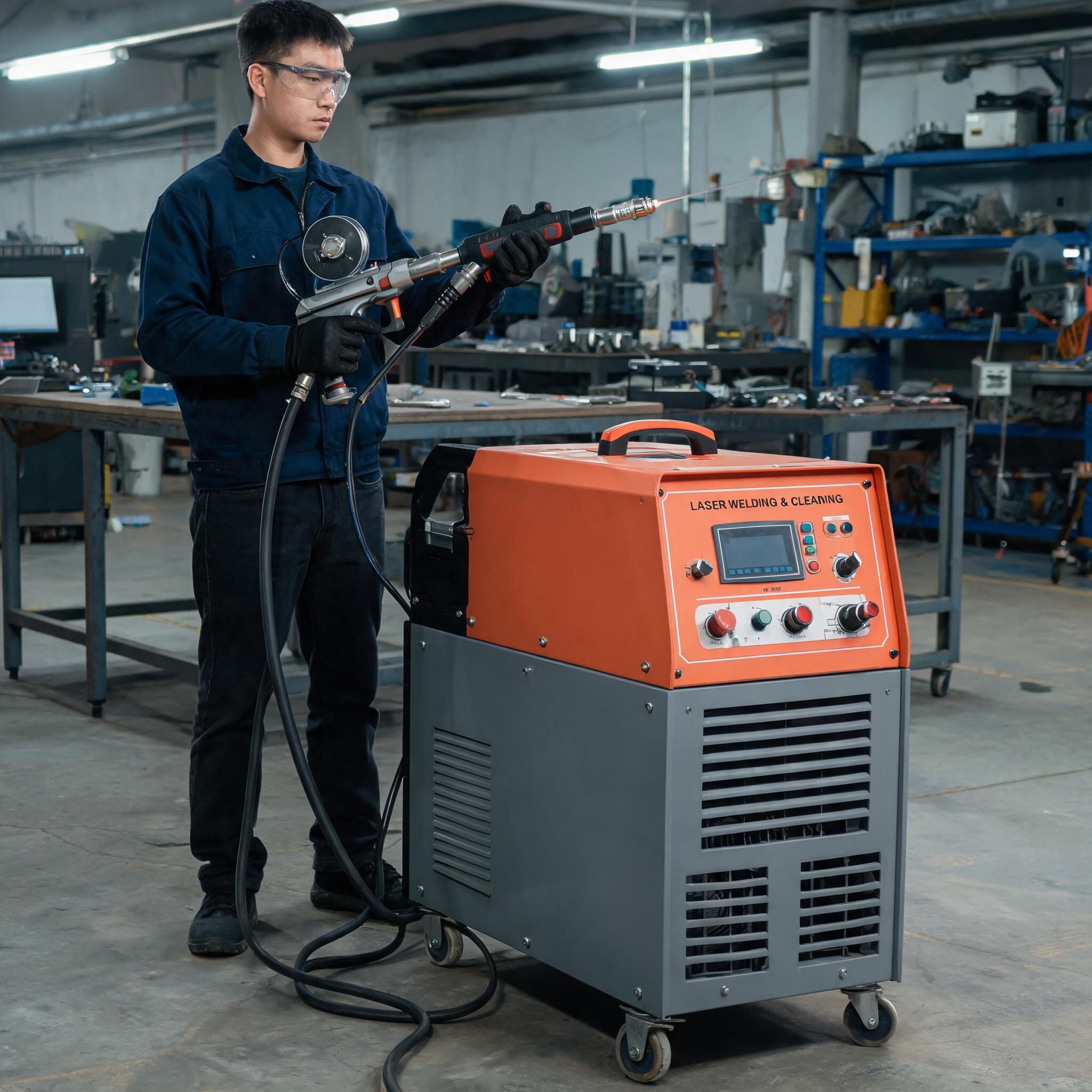
CNC machines automate machining, cutting, and forming processes across industries. This guide explains what CNC machines are used for, compares CNC machining vs. laser cutting, and helps buyers evaluate suppliers.
BUYER GUIDE
If you are sourcing machined parts, sheet metal components, or custom prototypes, you have likely asked: what is a CNC machine used for? The short answer is that CNC (Computer Numerical Control) machines automate the movement of cutting tools, lasers, or other tooling to remove material or shape it into precise parts. They are the backbone of modern manufacturing across automotive, aerospace, medical, electronics, and countless other industries.
This guide explains the core applications of CNC machines, compares CNC machining with laser cutting, and gives you practical criteria for evaluating suppliers—so you can make a confident sourcing decision.
- CNC machines produce high-precision parts with repeatable tolerances, often within ±0.01 mm.
- CNC milling, turning, and laser cutting serve different geometries and material types—choose the right process for your part.
- Laser cutting excels at thin sheet metal and intricate profiles, while CNC machining is better for 3D shapes and thicker materials.
- When evaluating suppliers, ask about tolerance capabilities, material range, and quality inspection processes.
What Is a CNC Machine Used For? Core Functions
CNC machines remove material from a workpiece based on a digital design (CAD model). The machine reads a program (G-code) that controls the movement of the spindle, table, or laser head. This automation allows for:
- High repeatability: Once programmed, the machine produces identical parts with minimal variation.
- Complex geometries: CNC can create shapes that are difficult or impossible to produce manually.
- Multi-axis operation: Modern CNC machines can move in 3, 4, or 5 axes, enabling undercuts and angled features.
- Material versatility: CNC works with metals, plastics, wood, composites, and more.
In practice, CNC machines are used for prototyping, production runs, and even one-off custom parts. The key advantage is that once the program is set, the machine can run with minimal human intervention, reducing labor costs and errors.
CNC Machine Applications by Industry
CNC machines are used in virtually every sector that requires precision components. Here are the most common industries and what they use CNC for:
| Industry | Typical CNC Applications | Common Materials |
|---|---|---|
| Aerospace | Turbine blades, structural brackets, housings, landing gear parts | Titanium, aluminum, Inconel |
| Automotive | Engine blocks, transmission parts, custom brackets, prototypes | Cast iron, aluminum, steel |
| Medical | Surgical instruments, implants, orthopedic devices | Stainless steel, PEEK, titanium |
| Electronics | Heat sinks, enclosures, connectors, PCB drilling | Aluminum, copper, plastics |
| Energy & Oil/Gas | Valve bodies, pump components, drilling tools | Stainless steel, alloy steel |
| Construction & Architecture | Custom metal panels, structural steel, decorative elements | Steel, aluminum, wood |
| Marine | Propellers, shafts, deck fittings | Bronze, stainless steel |
Within each industry, CNC machines are used for both prototyping and production. For example, an automotive supplier might use CNC milling to machine a prototype cylinder head, then switch to CNC turning for mass-producing small shafts. The flexibility is one reason CNC is so widely adopted.
CNC Machining vs. Laser Cutting: Which Process to Choose?
When buyers ask “what is a CNC machine used for,” they often specifically need to know the difference between CNC machining and CNC laser cutting. Both are subtractive processes, but they work differently and suit different parts.
CNC Machining (Milling, Turning, Drilling)
CNC machining uses rotating cutting tools to physically remove material. It can produce 3D shapes with internal cavities, threads, and precise tolerances. It works on thick materials and creates strong, functional parts.
- Best for: 3D parts, thick plates, components requiring tight tolerances (e.g., ±0.01 mm).
- Materials: Almost all metals (steel, aluminum, titanium, brass), plastics, wood.
- Limitations: Slower for large flat sheets; tool wear; requires coolant for some materials.
Laser Cutting
Laser cutting uses a focused high-power laser beam to melt, burn, or vaporize material. It is a thermal process, so it is ideal for cutting flat sheets with high speed and precision. It produces a clean edge with a small heat-affected zone (HAZ).
- Best for: 2D profiles in sheet metal, thin materials, intricate patterns, and rapid prototyping of flat parts.
- Materials: Mild steel, stainless steel, aluminum, copper, brass, plastics, wood.
- Limitations: Not suitable for thick materials (typically >20 mm for steel); no internal 3D features; thermal distortion on thin parts.
In many manufacturing plants, both CNC machining and laser cutting are used together. For example, a sheet metal enclosure might be laser-cut to shape, then CNC-machined to add holes, threads, or pockets.
Laser Cutting Applications in Detail
Laser cutting is one of the most popular CNC applications because of its speed and precision. Here are the main uses:
- Sheet metal fabrication: Cutting parts for enclosures, brackets, chassis, and panels.
- Automotive: Exhaust gaskets, body panels, interior trim.
- Electronics: Cutting thin metal for heat sinks, shielding, and connectors.
- Signage and decorative: Creating letters, logos, and intricate patterns in metal or acrylic.
- Medical devices: Cutting stents, surgical tools, and implant components from thin materials.
Fiber lasers are now the industry standard for metal cutting due to their efficiency and ability to cut reflective materials like copper and brass. CO2 lasers are still used for non-metal materials like wood, acrylic, and plastics.
How to Choose a CNC Machining or Laser Cutting Supplier
When you are sourcing CNC services, the machine type is only part of the equation. The supplier’s capabilities, quality control, and communication matter just as much. Here is a checklist to evaluate potential partners:
- Tolerance capabilities: Ask for the minimum achievable tolerance (e.g., ±0.01 mm for machining, ±0.1 mm for laser cutting).
- Material range: Confirm they can handle the specific material you need (e.g., aluminum 6061, stainless 304, PEEK).
- Equipment list: Request details on machine types, axis count, and laser power (e.g., 2 kW fiber laser).
- Quality inspection: Ask about CMM (coordinate measuring machine) reports, ISO 9001 certification, and inspection processes.
- Lead times: Get realistic production and shipping timelines, and ask how they handle rush orders.
- Surface finish: Specify required finishes (e.g., anodizing, powder coating, bead blasting) and confirm they offer them.
Always request a sample or a small trial order before committing to large volumes. This lets you verify the quality and communication firsthand.
Common Mistakes to Avoid When Sourcing CNC Parts
Even experienced buyers make errors that cost time and money. Here are the most common pitfalls:
- Not providing a detailed drawing: A 3D model (STEP/IGES) plus a 2D drawing with tolerances is essential. Without it, the supplier may guess, leading to costly errors.
- Ignoring material availability: Some exotic alloys have long lead times. Check with the supplier early.
- Choosing the wrong process: Using laser cutting for thick steel (e.g., 25 mm) is inefficient; CNC plasma or waterjet might be better. Conversely, using CNC milling for a flat sheet profile is wasteful.
- Over-specifying tolerances: Tight tolerances increase cost. Only specify what your assembly actually needs.
FAQ: CNC Machine Applications
Q: Can CNC machines work with any material?
A: No. CNC machining works with most metals, plastics, and woods, but some materials (e.g., hardened tool steel) require special tooling and slower speeds. Laser cutting is limited to materials that can be cut by the laser wavelength.
Q: What is the difference between CNC milling and CNC turning?
A: In milling, the workpiece is stationary and the cutting tool rotates; it is used for flat or 3D shapes. In turning, the workpiece rotates against a fixed cutting tool; it is used for cylindrical parts like shafts and bushings.
Q: Is laser cutting cheaper than CNC machining?
A: For thin sheet metal parts, laser cutting is often faster and cheaper because it requires no tooling. For 3D parts or thicker materials, CNC machining is usually the only option.
Q: How do I get a quote for CNC parts?
A: Send your CAD files (STEP, IGES, or PDF drawings) to the supplier with material, quantity, and tolerance requirements. Most suppliers respond within 24–48 hours.
Final Thoughts
Understanding what a CNC machine is used for helps you choose the right process and supplier for your project. Whether you need precision-machined components or laser-cut sheet metal, the key is to match the process to your part geometry, material, and volume.
If you are evaluating suppliers, ask for their equipment list, tolerance capabilities, and quality certifications. A reliable partner will be transparent about their capabilities and limitations.
Have a part to produce? Contact us with your drawings or CAD files to discuss your requirements and get a tailored quote.