
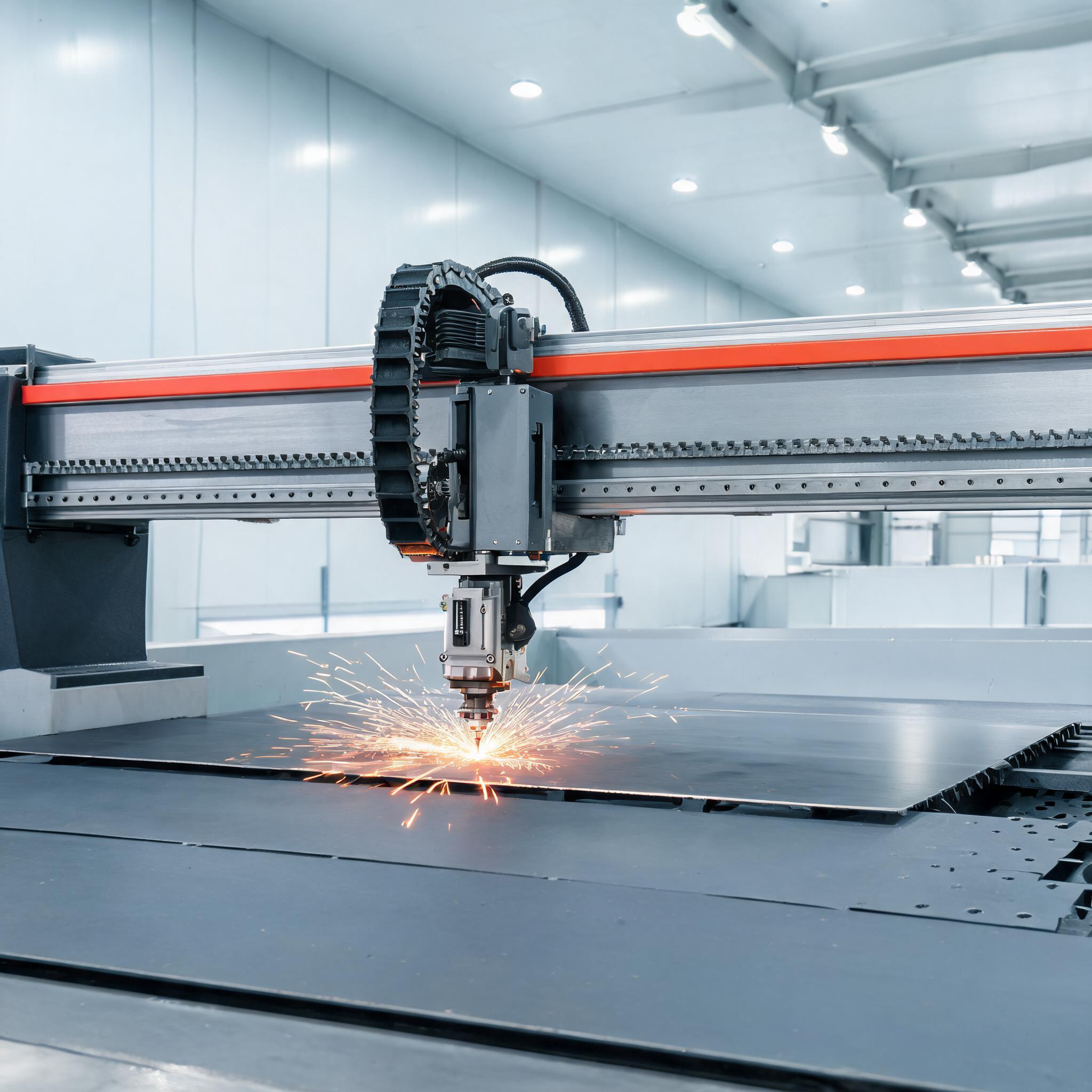
A practical guide to calculating CNC machine running cost and laser machine operating cost per hour, covering energy, tooling, maintenance, labor, depreciation, and overhead, with a sample cost table and tips for buyers.
BUYER'S COST GUIDE
When you are evaluating a CNC machining or laser cutting supplier, one of the first questions that comes up is: how much does it cost to run a CNC machine per hour? The answer matters because it directly affects your part price, lead time, and whether a supplier's quote is realistic.
This guide breaks down the main components of CNC machine running cost and laser machine operating cost, gives you a sample calculation, and explains what to ask a supplier before you commit.
- Hourly CNC cost is not a single number—it is the sum of energy, tooling, maintenance, labor, depreciation, and overhead.
- Laser cutting typically has higher energy and consumable costs but lower tooling wear than mechanical machining.
- Machine size, spindle power, and local electricity rates are the biggest variables in energy cost.
- Ask suppliers for a cost breakdown or at least confirm which cost elements are included in their hourly rate.
What Is Included in CNC Machine Running Cost?
The hourly operating cost of a CNC machine is usually calculated by adding up six main cost categories. Each one varies with machine type, age, and usage pattern.
1. Energy Consumption
CNC machines draw significant power. A typical 3-axis vertical machining center with a 15 kW spindle motor can consume between 5 and 15 kWh per hour during actual cutting, depending on load. Larger machines, like 5-axis or gantry mills, can draw 20–40 kWh.
To calculate energy cost:
- Find the machine's average power draw in kW (check the nameplate or use a power meter).
- Multiply by your local electricity rate per kWh.
- Add a factor for auxiliary systems (coolant pumps, chip conveyors, lighting) which can add 10–20%.
For example, at $0.12/kWh, a machine drawing 10 kW costs $1.20 per hour just for electricity. In regions with higher rates, this can easily double.
2. Tooling and Consumables
Cutting tools, inserts, drills, and end mills wear out and need replacement. This cost is often expressed per hour of cutting time. For mechanical machining, tooling can range from $2 to $15 per hour depending on material hardness and tool quality.
For laser cutting, the main consumables are:
- Laser gas (e.g., nitrogen, oxygen, or compressed air)
- Focusing lenses and nozzles
- Ceramic rings and protective windows
Laser consumables are generally lower than mechanical tooling, but the gas cost can be significant, especially when cutting stainless steel with nitrogen.
3. Maintenance and Repairs
Preventive maintenance, replacement of worn parts, and unexpected repairs all add to the hourly cost. A common rule of thumb is to budget 5–10% of the machine's purchase price per year for maintenance. For a $100,000 machine running 2,000 hours per year, that is $2.50–$5.00 per hour.
Laser machines often require more frequent maintenance of optics and gas delivery systems, which can push this number higher.
4. Labor and Operator Cost
Even with automation, a skilled operator or technician is needed for setup, monitoring, and quality checks. Operator wages vary widely by region. In many countries, a CNC operator earns $15–$35 per hour including benefits. If one operator runs two machines, the labor cost per machine hour is halved.
5. Depreciation and Capital Cost
The machine itself loses value over time. A common accounting approach is to depreciate the machine over 5–10 years. For a $150,000 machine with a 7-year life and 2,000 operating hours per year, depreciation alone is about $10.70 per hour.
Some suppliers also include interest on the capital tied up in the machine, which adds another 2–5% of the purchase price per year.
6. Overhead and Facility Costs
Floor space, heating, cooling, insurance, and administrative support all contribute. Overhead is usually allocated per machine hour, often $3–$10 per hour depending on the facility size and location.
Sample Hourly Cost Calculation
To give you a concrete example, here is a typical cost breakdown for a mid-size CNC milling machine (3-axis, 15 kW spindle) running 2,000 hours per year in a facility with moderate overhead.
| Cost Component | Assumption | Cost per Hour |
|---|---|---|
| Energy | 10 kW average draw × $0.12/kWh | $1.20 |
| Tooling & consumables | Inserts, end mills, coolant | $4.00 |
| Maintenance | 5% of $100k machine per year | $2.50 |
| Labor | $25/hr operator, 1 operator per machine | $25.00 |
| Depreciation | $100k over 7 years, 2,000 hrs/yr | $7.14 |
| Overhead | Floor space, admin, insurance | $5.00 |
| Total | $44.84 |
This is a simplified example. Actual numbers vary by machine, region, and shop efficiency. But it shows that labor and depreciation are often the largest components, not electricity.
Laser Machine Operating Cost: How It Differs
Laser cutting machines have a different cost profile. Here are the main differences:
- Energy consumption is higher. A 6 kW fiber laser can draw 20–40 kWh depending on cutting speed and assist gas. Energy cost can be $3–$8 per hour.
- Consumables are different. Instead of tool wear, you have laser gas, lenses, nozzles, and protective windows. These can cost $2–$10 per hour.
- Maintenance is more specialized. Optics alignment, gas purity, and resonator maintenance (for CO2 lasers) require trained technicians. Annual maintenance contracts can be 3–8% of machine cost.
- Labor may be lower per part. Laser cutting is often faster and can be more automated, reducing labor cost per part, but the hourly operator cost remains similar.
For a fiber laser cutting machine, a typical hourly operating cost might be $30–$60, excluding material. The exact number depends on the laser power, cutting speed, and material type.
Why Hourly Cost Matters for Buyers
When you receive a quote from a CNC or laser cutting supplier, the hourly rate is often baked into the part price. If you understand the cost components, you can:
- Compare quotes more intelligently—a low hourly rate might mean cheaper tooling or less skilled labor, which could affect quality.
- Negotiate better by asking which cost elements are included (e.g., setup time, programming, finishing).
- Evaluate whether a supplier's machine is efficient enough for your production volume.
How to Reduce CNC Machine Running Cost
Suppliers can lower their hourly cost—and your part price—by:
- Optimizing cutting parameters to reduce cycle time and energy use.
- Using high-quality tooling that lasts longer and cuts faster.
- Investing in automation (e.g., pallet changers, robotic loading) to reduce labor cost per part.
- Maintaining machines regularly to avoid costly breakdowns.
- Choosing the right machine for the job—a laser might be more efficient than milling for thin sheet metal, and vice versa.
Questions to Ask Your Supplier
Before you place an order, ask the supplier these questions to understand their cost structure:
- What is your machine's average power consumption?
- Do you include tooling and consumables in the hourly rate, or are they extra?
- How many hours per day do you run the machine?
- Do you charge for setup time separately?
- Can you provide a sample cost breakdown for my part?
These questions help you avoid surprises and ensure the quoted price is fair and realistic.
Conclusion
Knowing how much it costs to run a CNC machine per hour is essential for both suppliers and buyers. The cost is not just electricity—it includes tooling, maintenance, labor, depreciation, and overhead. Laser machines have their own cost structure, often with higher energy and consumable costs but different advantages.
When evaluating a supplier, ask for a transparent breakdown or at least confirm which cost elements are included. This will help you make an informed decision and avoid unexpected costs down the line.
If you are looking for a reliable CNC machining or laser cutting partner, contact us to discuss your project. We can provide a detailed cost estimate based on your specific requirements.