
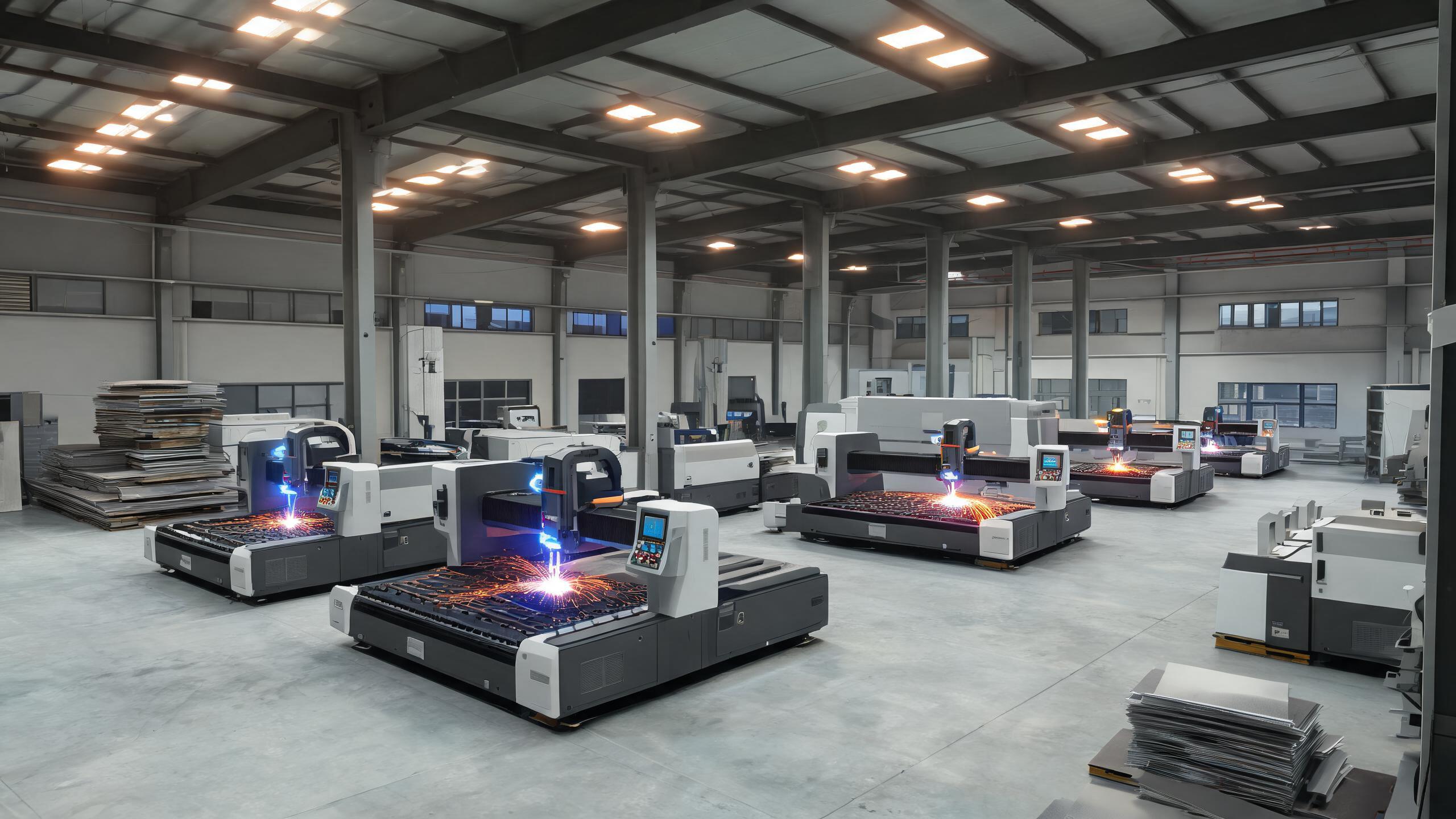
Learn what a nitrogen generator is, how PSA and membrane systems produce nitrogen on-site from compressed air, and why laser cutting and other industries use them.
A nitrogen generator is a system that produces nitrogen gas on-site from compressed air, eliminating the need to buy bottled or bulk liquid nitrogen. Instead of transporting high-pressure cylinders, you generate the gas exactly when you need it, at the purity your process requires.
This article explains what a nitrogen generator is, how the two main technologies work, and where they are used, with a closer look at laser cutting.
How a Nitrogen Generator Works
Ambient air is about 78% nitrogen and 21% oxygen. A nitrogen generator separates those gases, delivering a stream that is mostly nitrogen while venting the oxygen and other trace gases.
All on-site nitrogen generators start with a compressed air supply. The air must be clean, dry, and oil-free, so a typical setup includes an air compressor, filters, and a dryer before the generator itself.
Two technologies dominate the market: Pressure Swing Adsorption (PSA) and membrane separation. Both produce nitrogen on-site, but they work differently and suit different needs.
PSA Nitrogen Generators
PSA stands for Pressure Swing Adsorption. The system uses two vessels filled with carbon molecular sieve (CMS). Compressed air is passed through one vessel under pressure. The CMS preferentially adsorbs oxygen molecules, allowing nitrogen to pass through. When the first vessel becomes saturated with oxygen, the system switches to the second vessel while the first depressurizes and releases the captured oxygen, regenerating the sieve.
This cycling gives PSA generators a key advantage: they can produce nitrogen at high purity, typically up to 99.9% or higher, depending on the model and settings. They are a common choice for laser cutting, electronics manufacturing, and other applications that need consistent, high-purity nitrogen.
PSA Nitrogen Generator for Laser Cutting
For laser cutting, PSA generators are widely used. For example, Shandong Xinhong CNC Technology Co., Ltd, founded in 2005, offers a PSA nitrogen generator specifically for laser cutting. The unit delivers 99.9% purity nitrogen with a flow rate of 10–80 m³/h and requires an inlet pressure of 0.6–0.8 MPa. It includes dual filtration and membrane separation, and it is CE certified. The system operates at a low noise level below 75 dB, and the filter cartridges are replaced monthly as routine maintenance.
If you are evaluating such a system, the key specs to compare are purity, flow rate, and inlet pressure—these determine whether the generator can keep up with your cutting demand.
Membrane Nitrogen Generators
Membrane generators use hollow-fiber membranes that separate gases based on molecular size and speed. Compressed air passes through the fibers; oxygen and water vapor permeate the membrane wall faster than nitrogen, so nitrogen continues down the tube and exits as the product gas.
Membrane systems are simpler, with no moving parts in the separation element. They are compact, light, and can start producing nitrogen almost immediately. However, they typically achieve lower purity than PSA systems—often in the 95% to 99.5% range—which is adequate for applications like inerting storage tanks, blanketing, or food packaging where moderate purity is acceptable.
| Feature | PSA | Membrane |
|---|---|---|
| Purity | Up to 99.9% or higher | Typically 95–99.5% |
| Flow rate | Wide range, can be high | Lower to moderate |
| Start-up time | Minutes | Seconds |
| Moving parts | Valves, controls | Minimal |
| Best for | Laser cutting, electronics | Food packaging, inerting |
Common Applications of Nitrogen Generators
Nitrogen is used across many industries because it is inert, meaning it does not readily react with other substances. That property makes it valuable for processes that need to exclude oxygen, prevent oxidation, or create a protective atmosphere.
- Laser cutting: Nitrogen is used as an assist gas to blow molten metal away from the cut and prevent oxidation, producing a clean, oxide-free edge.
- Food packaging: Nitrogen displaces oxygen in packaging to slow spoilage and preserve freshness.
- Electronics manufacturing: Nitrogen creates an oxygen-free environment for soldering and component assembly to prevent oxidation.
- Chemical and pharmaceutical: Nitrogen is used for blanketing tanks and lines to avoid unwanted reactions.
- Metal heat treatment: Nitrogen atmospheres prevent scaling during annealing and other processes.
Why Laser Cutting Often Uses Nitrogen
In laser cutting, the assist gas does two jobs: it shields the lens and blows away molten material. When you cut stainless steel or aluminum, using oxygen can cause oxidation at the cut edge, leaving a dark, rough finish that may need extra cleaning. Nitrogen, being inert, prevents that oxidation. The result is a bright, clean edge that often requires no secondary processing.
This is why many fabricators switch from bottled nitrogen to an on-site generator. With a generator, you never run out of gas mid-job, and you avoid the logistics of cylinder delivery.
On-Site Generation vs. Bottled Nitrogen
The main alternative to a nitrogen generator is buying nitrogen in cylinders or as bulk liquid. Each approach has trade-offs.
| Factor | On-site generator | Bottled nitrogen |
|---|---|---|
| Supply continuity | Continuous, on demand | Depends on delivery schedule |
| Handling | No cylinders to move | Heavy cylinders, safety risk |
| Cost per unit | Lower over time | Higher due to delivery and rental |
| Space | Equipment footprint | Storage area for cylinders |
For a shop that uses nitrogen continuously, the generator typically pays for itself. For example, Shandong Xinhong notes that their PSA nitrogen generator for laser cutting offers a 6–12 month ROI compared to bottled nitrogen. That estimate depends on your usage volume and local gas prices, but it illustrates the potential savings.
Choosing the Right Nitrogen Generator
Before you buy, you need to know three things about your operation:
- Required purity: Laser cutting often needs 99.9% or higher. Food packaging may accept 99%.
- Required flow rate: How much nitrogen do you use per hour? Match this to the generator's output.
- Available inlet air: Do you have a compressor that can supply the required pressure and volume?
If you are considering a PSA system for laser cutting, look for a unit with specifications similar to the Shandong Xinhong model: 99.9% purity, 10–80 m³/h flow, and 0.6–0.8 MPa inlet pressure. Also check the noise level—theirs is below 75 dB—and the maintenance schedule. Simple, predictable maintenance (like monthly filter changes) makes ownership easier.
It is also wise to ask the supplier about certifications. Shandong Xinhong's generator is CE certified, and the company holds ISO 9001:2015 certification, which indicates a quality management system. They serve Europe and global markets, so they are used to export requirements.
Frequently Asked Questions
What is the difference between a nitrogen generator and a nitrogen purifier?
A nitrogen generator produces nitrogen from ambient air. A purifier takes nitrogen that already exists and removes remaining impurities. The terms are sometimes used loosely, but in most industrial contexts, "nitrogen generator" means a system that separates nitrogen from air.
How much maintenance does a nitrogen generator need?
Maintenance is generally simple. For PSA systems, the main consumables are filter cartridges. For example, the Shandong Xinhong PSA generator requires monthly filter cartridge replacement. The carbon molecular sieve itself lasts for years under normal use.
Can I use a nitrogen generator for my laser cutter?
Yes, if you choose a model with sufficient purity and flow. Laser cutting typically requires 99.9% purity or higher, so a PSA generator is the standard choice. Check the flow rate against your cutting nozzle consumption.
What is the payback period for an on-site nitrogen generator?
It varies with usage. Shandong Xinhong estimates 6–12 months for their laser cutting model when compared to bottled nitrogen, assuming continuous use. Your savings will depend on your current nitrogen costs and volume.
Next Steps
If you are considering switching to on-site nitrogen generation, start by calculating your current nitrogen usage and cost. Then compare that to the capital cost of a generator and its operating expenses. For laser cutting applications, a PSA nitrogen generator is the proven choice.
For more details, you can explore the PSA Nitrogen Generator for Laser Cutting from Shandong Xinhong CNC Technology Co., Ltd, which offers 99.9% purity, 10–80 m³/h flow, and CE certification.