
Fiber laser welding and TIG both produce high-quality joints, but they solve different problems. This comparison covers precision, repeatability, heat input, skill requirements and cost structure so fabricators can match the process to the work.
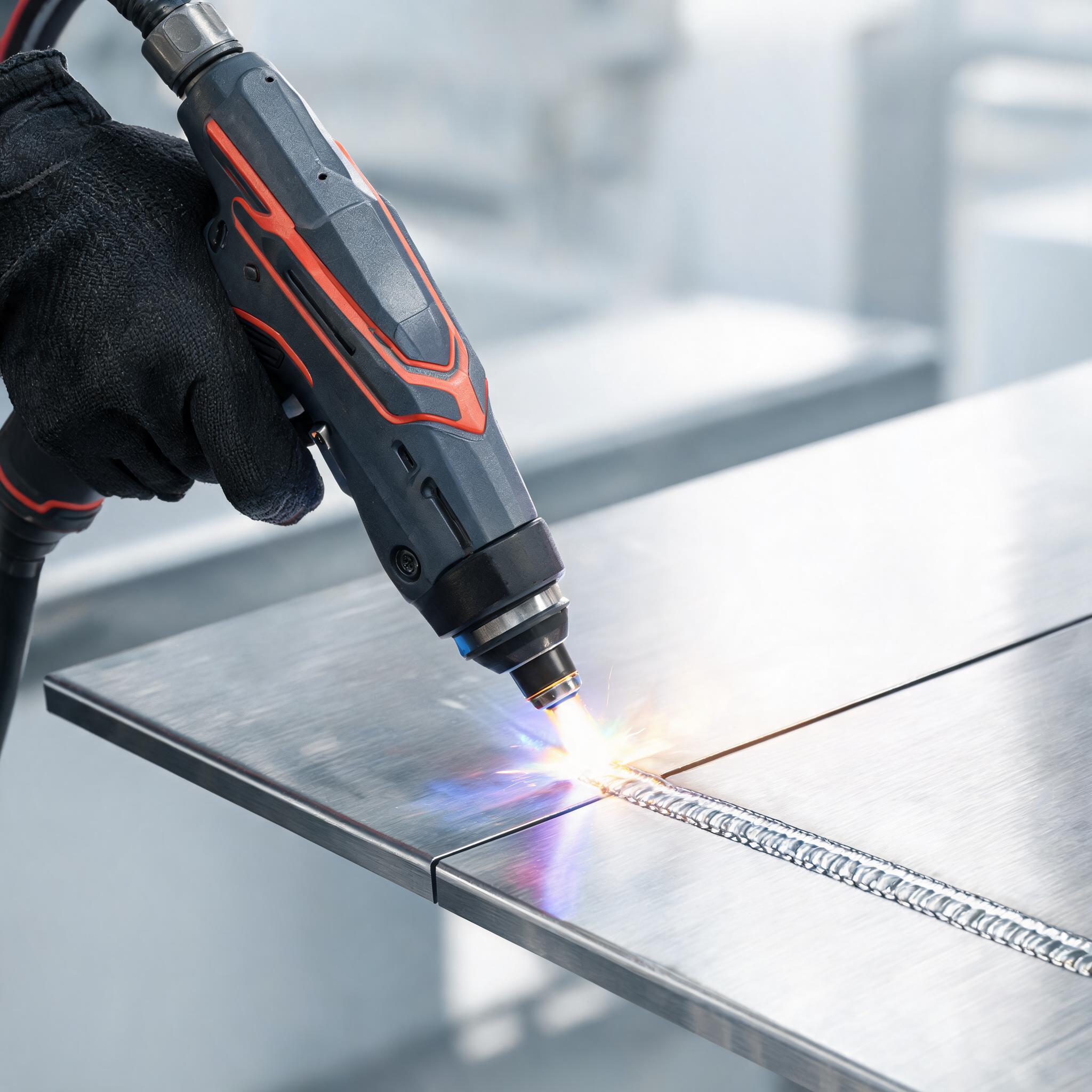
Fabrication shops evaluating a process upgrade usually arrive at the same fork: stay with TIG, or add fiber laser welding. Both processes produce sound, high-quality joints. The difference is in how they behave part after part, how much heat they put into the workpiece, and what kind of operator and fit-up they demand. This article compares the two on the criteria that matter for precision work, using the actual characteristics of Xinhong CNC fiber laser welding machines as reference points.
How the Two Processes Put Heat Into Metal
The core mechanical difference: a fiber laser concentrates energy into a spot measured in fractions of a millimeter, delivered as continuous wave or controlled pulses. TIG uses an electric arc with a broader heat spread, and the operator feeds filler wire by hand. Everything else — distortion, speed, repeatability, skill — follows from that difference.
A wider heat spread means more metal is brought to temperature for longer. A concentrated spot means the fusion zone is small and cools quickly, so surrounding material stays closer to its original state. Neither is universally better; the right choice depends on the part.
Precision and Repeatability
TIG, in skilled hands, produces excellent welds. But the quality lives in the operator's hands, eyes and rhythm. Bead width, penetration and filler placement vary slightly between operators and across a shift. For cosmetic or structural welds that variation is acceptable. For production runs where every joint must match — medical components, architectural stainless, food-grade tubing — it becomes a QA burden.
Laser welding attacks this differently. A handheld fiber laser welder executes a stored parameter set the same way every time. The Xinhong CNC 1500W handheld fiber laser welder stores more than 50 weld profiles and holds plus/minus 0.1mm bead consistency, so the tenth joint looks like the first. Operators change material or thickness by recalling a saved profile rather than re-tuning by feel.
For tool repair, precision is even tighter. The precision mold repair fiber laser welding machine uses 50x microscope guidance with an adjustable pulse energy range of 0.1–50J and a heat-affected zone of about 0.2mm. That combination lets you rebuild edges on injection molds, stamping dies and hardened tool steel without softening the surrounding hardened surface — something an arc process cannot do at that scale.
Speed on Thin Material
On thin-gauge stainless, aluminum and titanium, the energy density advantage translates directly into travel speed. A laser can complete a joint in a fraction of the arc-on time TIG requires, because the energy is deposited exactly where it is needed instead of heating a wider band. On the 1500W handheld unit, full-penetration welds reach about 3mm in a single pass — covering the majority of thin-sheet fabrication work in typical job shops.
TIG is not slow in absolute terms, but each weld requires setup, arc starting, and a hand-feed rhythm the operator must sustain. For short welds on many small parts, laser welding's cycle-time advantage compounds. For long structural seams on thicker plate, the comparison changes — but that is not the work this article addresses.
Heat Input and Distortion on Sensitive Parts
Distortion is where the two processes diverge most sharply. Thin panels, enclosures, instrument housings and finished machined parts warp when heated unevenly. A TIG arc heats a band of metal; the panel pulls as it cools, and straightening adds labor that is easy to underestimate.
A pulsed fiber laser deposits energy in controlled packets. Total heat input is low and localized, so sensitive parts hold geometry far better. This is the same mechanism that makes the 0.2mm heat-affected zone of the mold repair system viable on hardened steel: minimal energy outside the intended fusion zone means minimal collateral change. Fabricators working on cosmetic stainless, thin aluminum or pre-finished assemblies should weight this criterion heavily.
Fit-Up Sensitivity: Where TIG Holds an Edge
A balanced comparison must credit TIG honestly. Laser welding needs consistent joint fit-up. Because the spot is small, a gap that TIG would bridge with hand-fed filler can leave a laser weld underfilled or with a void. Laser welding tolerates some gap with wire feed options, but it rewards shops that control cutting and fit-up tolerances.
TIG, by contrast, works with poor fit-up. The operator reads the gap, adjusts filler volume, and walks the bead through — irregularities included. Repair work on worn, distorted or unknown-geometry parts often favors TIG for exactly this reason. If your work is dominated by one-off repairs on parts you cannot re-machine, TIG's tolerance of imperfect joints remains a genuine advantage.
Skill Requirements and Labor
Certified TIG welders are scarce, expensive, and take years to develop. Turnover on a TIG bench is a capability loss, not just a staffing event.
A handheld laser welder is fundamentally easier to operate well. The machine controls energy and bead geometry from stored profiles; the operator's job is positioning, trigger control and visual inspection. A competent fabricator can reach consistent production quality on a laser in weeks rather than years. That does not make the process foolproof — laser welding has its own hazards and requires disciplined safety practice, including radiation and fume controls. Shops adopting it should review guidance on laser welding safety, radiation, fume and PPE for handheld fiber laser welders before putting a machine on the floor.
Mold and Tool Repair Suitability
For injection molds, stamping dies and hardened tooling, the comparison is largely settled. Rebuilding a damaged edge or filling a worn radius on hardened steel requires energy precise enough to avoid annealing the surrounding material. Pulsed laser welding under magnification delivers that. A 1500W handheld fiber laser welder handles general fabrication, but dedicated mold repair needs microscope guidance and fine pulse control of the kind built into Xinhong's precision mold repair fiber laser welding machine.
TIG remains useful for large, low-precision tool repairs where bulk filler is needed and post-weld re-machining will follow. But for finishing work on a finished, hardened cavity, laser is the appropriate tool.
Cost Structure
The purchase price of a fiber laser welding machine is typically higher than a comparable TIG setup. Judging the decision on capex alone misreads the economics:
- Labor: lower skill ceiling and faster onboarding reduce wage and training costs per weld.
- Throughput: shorter arc-on time per joint increases output per shift on thin material.
- Rework and straightening: lower heat input means less distortion correction downstream.
- Consumables: TIG consumes tungsten, gas and filler continuously; laser welding consumes shielding gas and little else on autogenous joints.
TIG's cost structure favors shops with low volumes, irregular parts, or heavy repair work where the machine sits idle between jobs. High-volume thin-gauge production shifts the math decisively toward laser.
Frequently Asked Questions
Is laser welding stronger than TIG?
For properly executed welds on suitable joints, both processes produce full-strength fusion welds. The difference is consistency: a laser repeats its parameters joint after joint, while TIG quality varies with operator skill. Strength depends more on joint design and fit-up than on the energy source.
What thickness can a 1500W handheld laser welder handle?
The Xinhong CNC 1500W handheld fiber laser welder achieves about 3mm penetration in a single pass on stainless steel, aluminum and titanium alloys. This covers most thin-gauge fabrication work; thicker plate still calls for multi-pass arc processes.
Can laser welding fill gaps like TIG?
Not as forgivingly. TIG with hand-fed filler bridges irregular gaps well. Laser welding needs consistent fit-up; small gaps can be managed with wire feed, but larger gaps lead to underfill. Shops with tight cutting and fit-up tolerances get the best laser results.
Do I still need certified welders for a laser welding cell?
Operator training is shorter and simpler for handheld laser welding because parameters come from stored profiles and the machine controls energy delivery. However, the cell must meet laser safety requirements — radiation controls, fume extraction and PPE — and someone must own that responsibility.
Choosing Your Machine with Xinhong CNC
The decision usually resolves cleanly: TIG for irregular one-off repairs and poor fit-up tolerance; fiber laser for repeatable thin-gauge production, low-distortion work on sensitive parts, and precision mold and die repair. For a complete overview of handheld fiber laser welding power classes and configurations, start with our handheld fiber laser welding machine buyer's guide. If you send us your materials, thickness range and typical application, Xinhong CNC can recommend whether the precision mold repair fiber laser welding machine, the 1500W handheld unit, or another configuration fits your shop — and which weld profiles to prepare for your work.