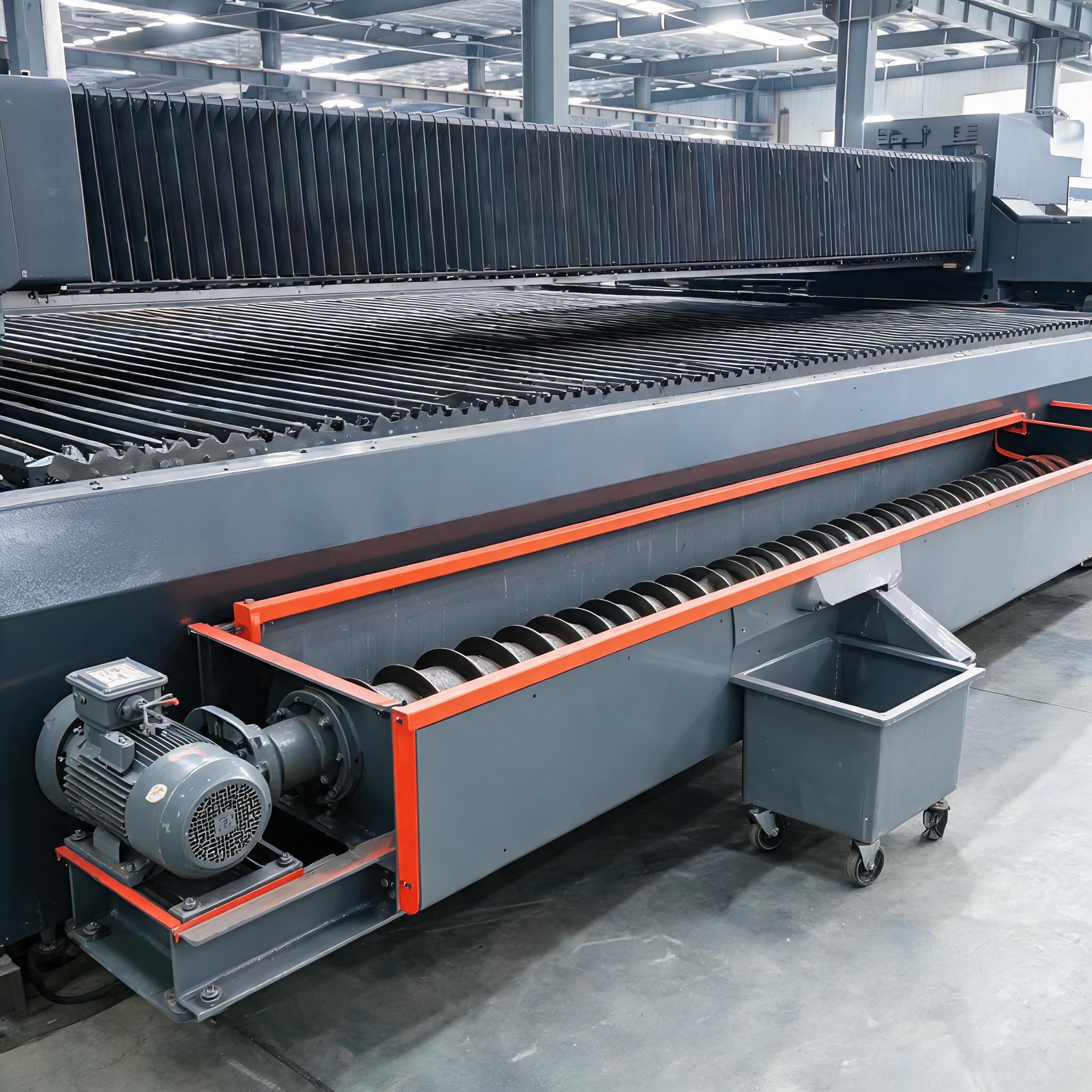
Laser Cutting Slag Removal System
Automated slag removal system for fiber laser cutting machines. Auger conveyor, 200kg/h capacity, PLC-triggered operation, fill-level sensor, water quench option for high-power machines. Reduces manual cleaning downtime.
Get a QuoteProduct Detail
Laser Cutting Slag Removal System
The Problem with Slag Accumulation
During fiber laser cutting, molten metal and dross drop through the slats of the cutting bed and accumulate underneath. On a high-power machine cutting thick plate, this slag buildup can reach 50–100 kg per shift. If left unmanaged, accumulated slag reduces cutting bed clearance, interferes with the exchange table mechanism, creates fire hazards from hot metal accumulation, and requires time-consuming manual cleaning that takes the machine out of production for 30–60 minutes per day.
Product Overview
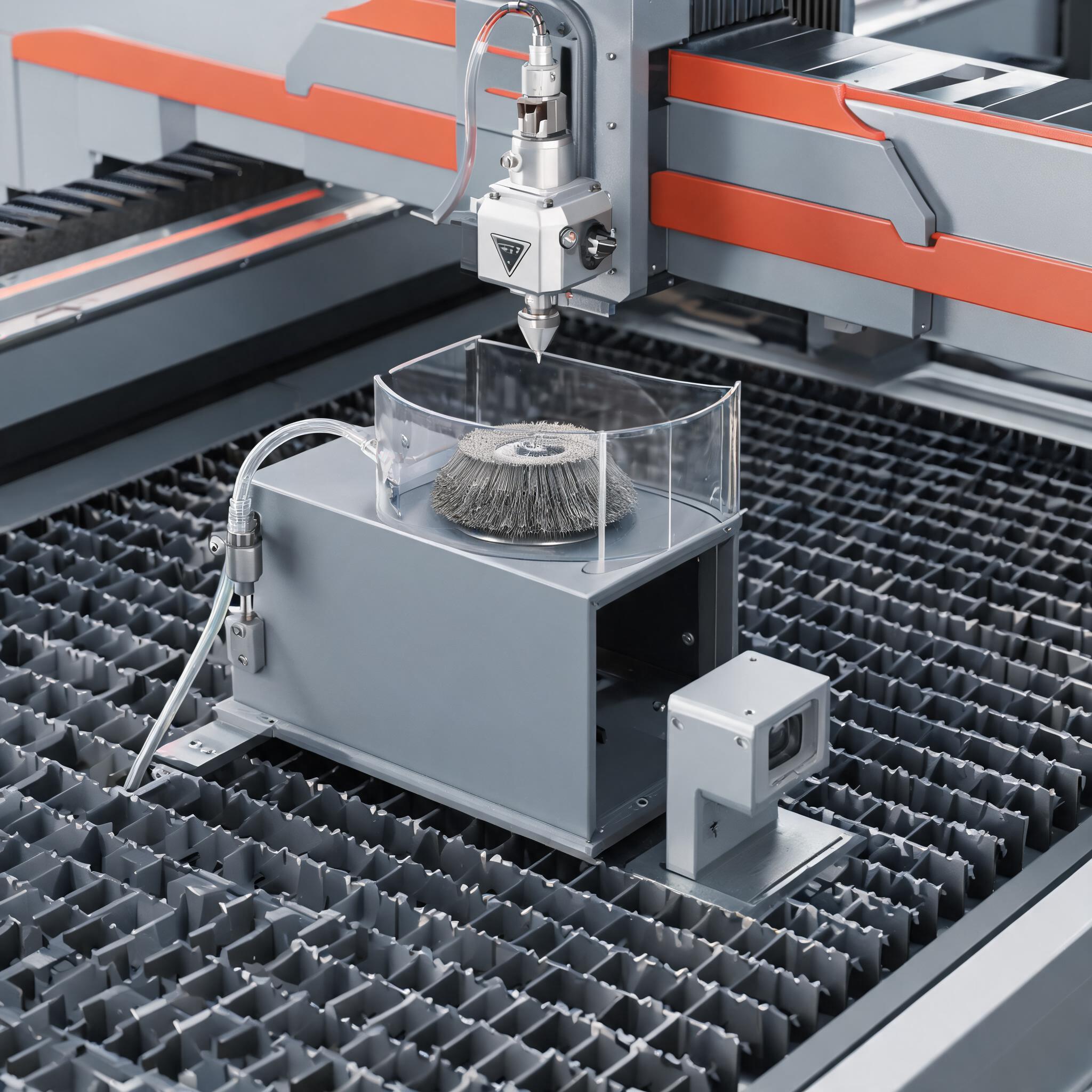
This laser cutting slag removal system is installed underneath the cutting bed of fiber laser cutting machines. A heavy-duty auger conveyor or scraper chain runs along the full length of the bed, continuously or periodically transporting slag, dross, and small offcuts from beneath the cutting slats to a collection bin at the end of the conveyor. The system operates automatically, triggered by the cutting machine's PLC based on cutting time or material consumption, and can run during cutting without operator intervention.
Core Features & Advantages
Technical Specifications
| Parameter | Value |
|---|---|
| Slag Processing Capacity | 200 kg/h (continuous operation) |
| Conveyor Length | 3,000–6,000 mm (bed length dependent) |
| Conveyor Type | Screw auger or scraper chain (model-dependent) |
| Auger/Chain Motor Power | 1.5–4.0 kW (model-dependent) |
| Conveyor Speed | Adjustable, 0.5–3 m/min |
| Collection Bin Capacity | 150–300 liters (model-dependent) |
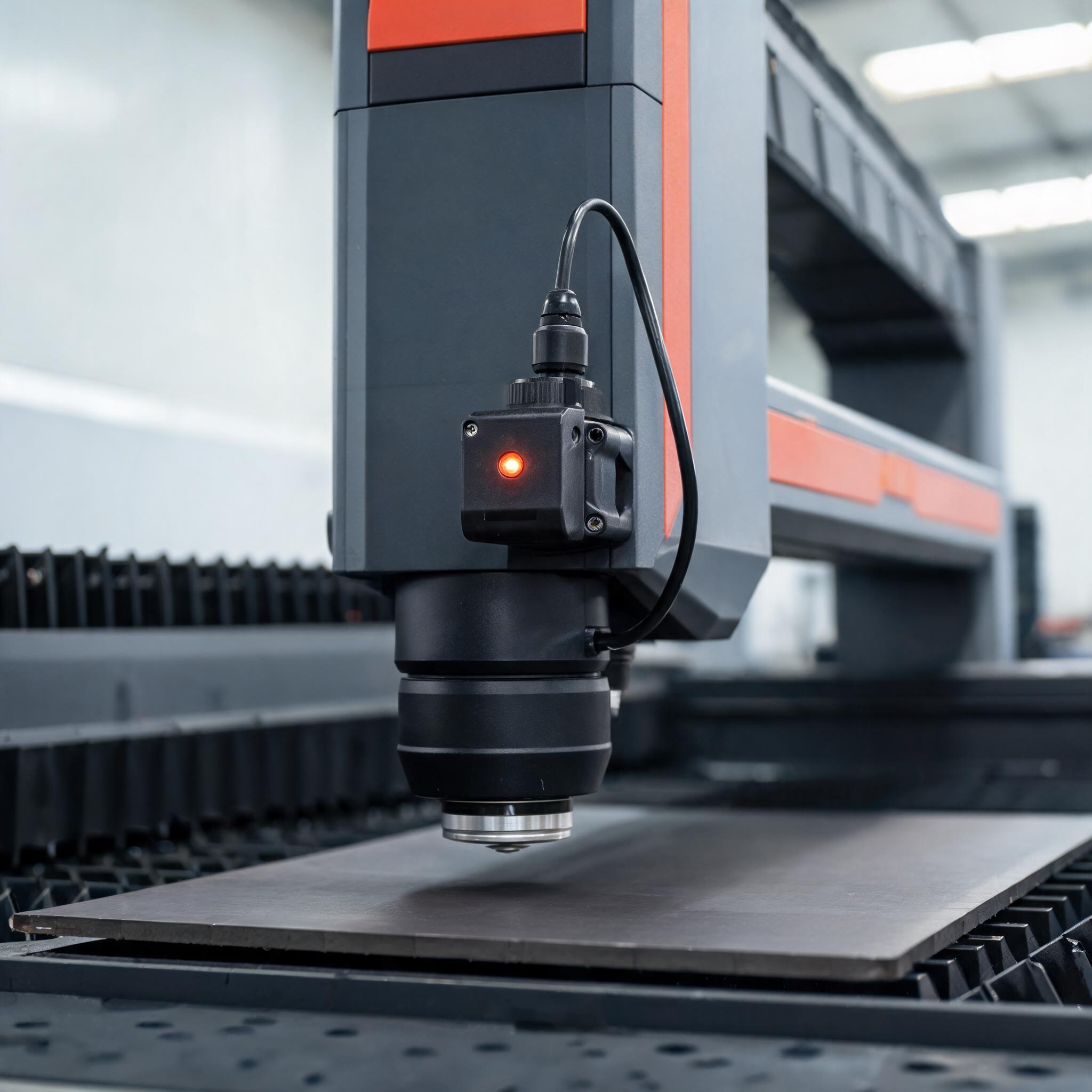
| Fill-Level Sensor | Ultrasonic, 80% alarm threshold |
| Operation Mode | Continuous / timed interval / PLC-triggered |
| Control System | Schneider Electric PLC, interlocked with laser machine |
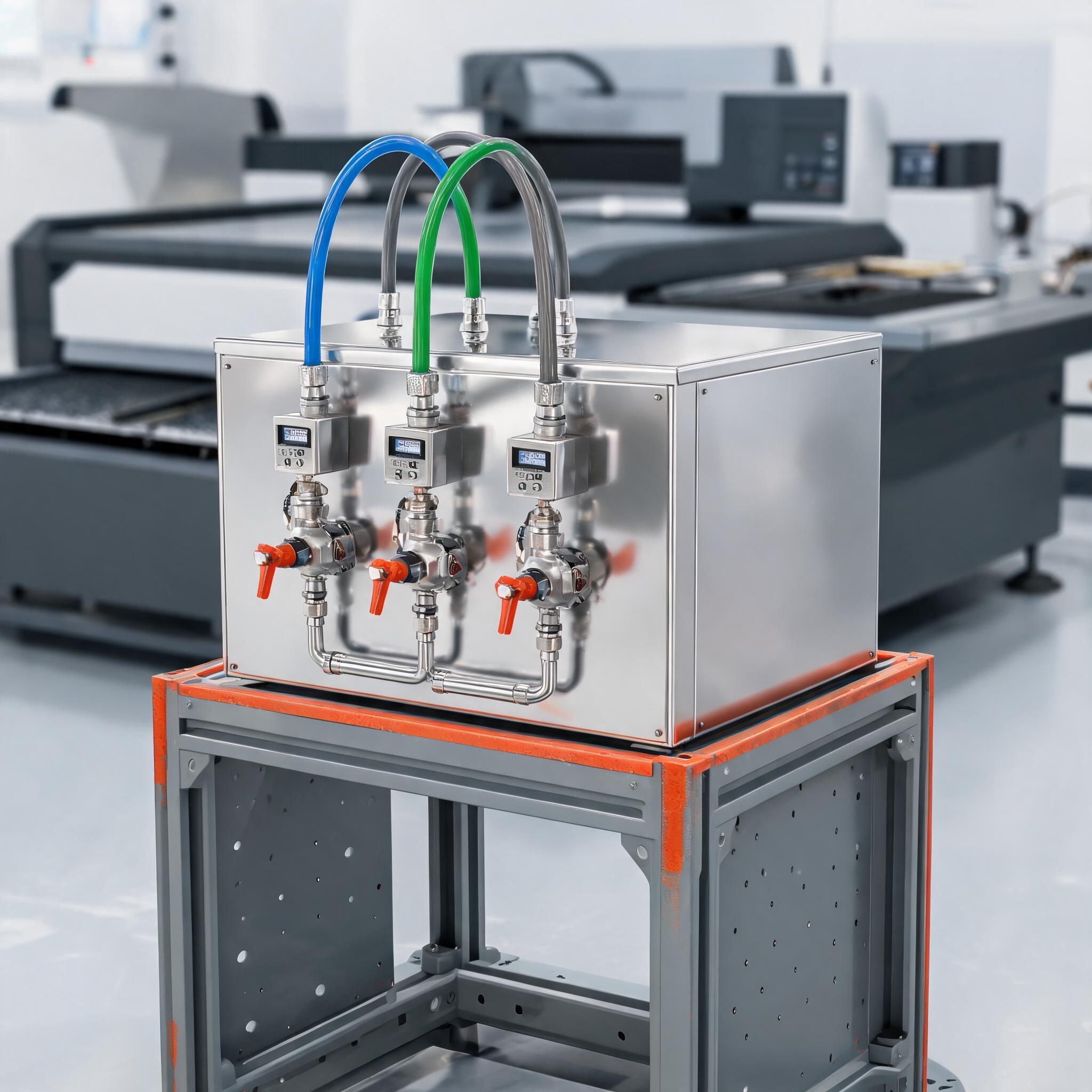
| Water Quench Option | Available for high-power machines (8,000W+) |
| Dust Extraction Port | Standard DN150 flange for facility dust collection |
| Noise Level | ≤ 65 dB(A) at 1 m |
| Power Supply | 380V, 3-phase, 50/60Hz |
| Compatible Machines | Xinhong 2,000W–30,000W fiber laser cutting machines |
Application Industries
This slag removal system is essential for fabrication environments with high cutting volume or thick-plate cutting:
- Thick plate cutting operations – Carbon steel cutting from 10–30mm where dross generation is significant
- High-power cutting (8,000W–30,000W) – High-speed cutting produces large volumes of molten material requiring continuous removal
- Multi-shift production lines – Continuous operation where daily manual cleaning would consume significant production time
- Automated cutting cells – Lights-out or unattended operation where manual slag clearing is not possible
Why Choose Xinhong
- Engineered for Xinhong laser machines – Because Xinhong manufactures fiber laser cutting machines from 2,000W to 30,000W, the slag removal system is designed to match the bed dimensions, exchange table clearance, and PLC interface of each machine model exactly.
- Hardened conveyor components – Auger flighting and scraper chain components use hardened steel to withstand abrasive slag wear, extending service intervals and reducing maintenance costs.
- Schneider Electric control components – Consistent with the Xinhong product line, the PLC and motor controls use Schneider Electric components for CE/UL compliance.
- Established manufacturer since 2005 – Shandong Xinhong CNC Technology Co., Ltd. operates under ISO 9001:2015 quality management certification.
FAQ
Can the slag removal system be installed on an existing Xinhong laser cutting machine?
Yes, the system can be retrofitted to most Xinhong fiber laser cutting machines. The conveyor is designed to fit within the existing machine base footprint. Share your machine model and bed size, and we will confirm the installation requirements.
How often does the collection bin need to be emptied?
Bin capacity ranges from 150–300 liters depending on the model. For a 6,000W machine cutting 8mm carbon steel in a two-shift operation, the bin typically needs emptying once per shift. The fill-level sensor alerts the operator at 80% capacity, and the PLC can optionally pause cutting if the bin is full.
Is the water quench option necessary for my machine?
The water quench option is recommended for machines of 8,000W and above cutting thick plate (10mm+), where molten dross may arrive at the conveyor still hot enough to damage components. For lower-power machines cutting thin sheet, the standard conveyor without quench is typically sufficient.
Does the slag removal system require connection to the machine's dust collection?
The system has a DN150 dust extraction port that can connect to the facility dust collection system or the laser machine's fume extraction unit. While the system is dust-sealed, connecting the extraction port provides additional air quality protection, especially when cutting galvanized or painted materials.
How does the system coordinate with the exchange table?
The slag removal PLC is interlocked with the exchange table mechanism. The conveyor pauses during table exchange to prevent mechanical interference, and resumes after the exchange is complete and cutting resumes. This coordination is automatic and requires no operator input.
Eliminate Slag Buildup and Downtime
Tell us your laser machine model, cutting power, typical material and thickness, and bed size - we'll configure the right slag removal system for your production environment.
Request a Quote