
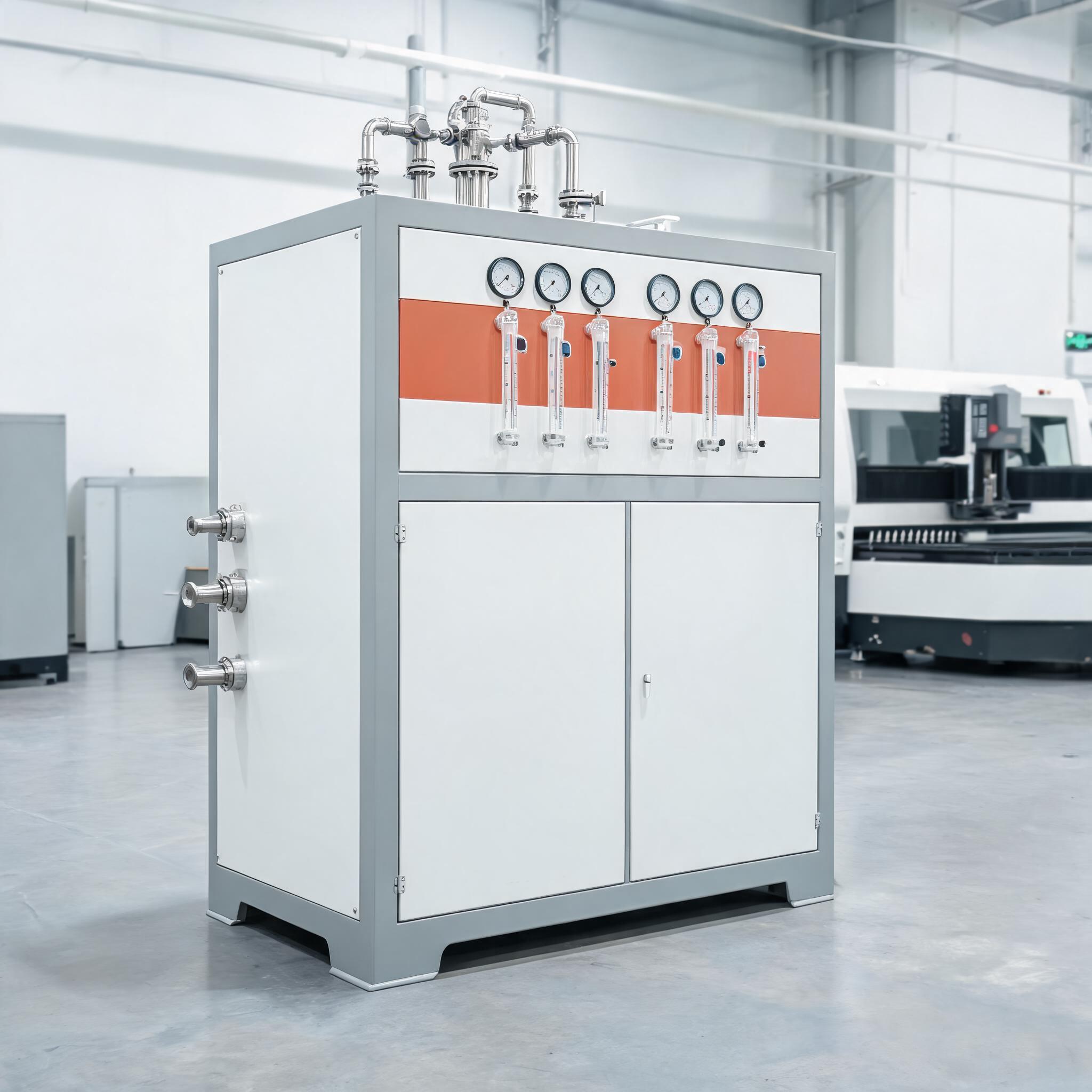
The carbon molecular sieve (CMS) is the component that determines long-term nitrogen purity in a PSA generator. This article explains how CMS separates oxygen from compressed air, why output purity drops as the sieve ages, the warning signs to watch, and how to treat CMS replacement as a long-term operating-cost item when comparing generator suppliers.
Key Takeaways
- Carbon molecular sieve (CMS) is the adsorbent that separates nitrogen from oxygen in a PSA generator, and its condition is a major factor in the long-term purity of the nitrogen you produce, together with upstream air treatment and bed design.
- CMS beds typically last 5+ years under normal operating conditions, but output purity degrades gradually as the sieve ages.
- Watch for falling purity, increased cycle frequency, and higher oxygen levels in the product gas as signs that CMS replacement may be due.
- CMS replacement is a long-term operating-cost item; compare generator suppliers on CMS quality and replacement practicality, not just upfront price.
Contents
The Role of Carbon Molecular Sieve
In a pressure swing adsorption (PSA) nitrogen generator, carbon molecular sieve is the working material that makes nitrogen production possible. CMS is a porous carbon material with a precisely controlled pore structure. Its pores are sized so that oxygen molecules diffuse into the carbon matrix faster than nitrogen molecules. When compressed air passes through a bed of CMS under pressure, oxygen is preferentially adsorbed onto the sieve, while nitrogen passes through and is collected as product gas.
The quality and consistency of the CMS directly affect how well this separation works. A high-quality CMS with uniform pore size and good mechanical strength will adsorb oxygen efficiently and maintain capacity over a long service life. Lower-grade CMS may have inconsistent pore structure, higher attrition rates, or reduced adsorption capacity, all of which can lead to lower nitrogen purity or more frequent replacement.
For buyers comparing PSA nitrogen generators, the carbon molecular sieve is the component with the greatest influence on long-term purity, working together with upstream air treatment and bed design. A generator built around premium CMS and a well-designed bed will hold its rated purity far longer than a system using inferior sieve material.
How PSA Separation Works
PSA nitrogen generation relies on two alternating beds of carbon molecular sieve. While one bed is online producing nitrogen under pressure, the other bed is regenerated by venting to atmosphere. This pressure swing—adsorption at high pressure, desorption at low pressure—allows the CMS to be reused indefinitely until it gradually degrades.
The basic cycle has two phases:
- Adsorption (production): Compressed air enters the online bed. Oxygen is adsorbed by the CMS, and nitrogen-rich gas exits the bed as product. The generator typically produces nitrogen at 99.9% purity for standard configurations.
- Desorption (regeneration): The pressure in the saturated bed is released, causing the adsorbed oxygen to desorb and be vented off. The bed is then repressurized and brought back online.
Two beds operate out of phase so that one is always producing while the other regenerates, ensuring a continuous supply of nitrogen. The switching is controlled by valves and a programmable logic controller (PLC) that manages cycle timing and purity monitoring.
This design has no moving parts inside the sieve beds other than the valves, and monthly maintenance is typically limited to filter cartridge replacement. Under normal operating conditions — clean, dry, oil-free inlet air and maintenance per the manufacturer's schedule — the carbon molecular sieve beds have a long service life, typically 5+ years; actual life varies with air quality and cycle frequency.
Why Output Purity Drops as CMS Ages
Carbon molecular sieve does not fail suddenly; it degrades gradually. Over thousands of cycles, the sieve material is exposed to moisture, trace contaminants, and mechanical stress from pressure swings. These factors cause a slow loss of adsorption capacity and, in some cases, physical breakdown of the carbon granules.
The result is a gradual decline in nitrogen purity. As the CMS loses capacity, it adsorbs less oxygen during the adsorption phase, so more oxygen slips through into the product gas. The generator may still meet its purity specification for years, but the margin narrows. Eventually, the purity falls below the required level for the application, triggering the need for CMS replacement.
Several factors can accelerate CMS degradation:
- Moisture ingress: Water vapor can poison the CMS. Proper air drying and filtration upstream of the sieve beds are critical.
- Oil and particulate contamination: Compressor oil carryover or particulate matter can coat the CMS surface and block pores.
- High cycle frequency: More frequent cycling increases mechanical stress on the sieve material.
- Poor-quality CMS: Lower-grade sieve may degrade faster and have a shorter useful life.
It is important to note that the rate of purity decline depends on operating conditions, maintenance practices, and the quality of the CMS. A generator that is well-maintained and uses high-quality carbon molecular sieve will typically hold its purity longer.
Warning Signs to Watch
Because purity decline is gradual, operators may not notice until the nitrogen quality affects their process. Buyers should establish a baseline and monitor key indicators regularly. The following warning signs suggest that the CMS may be nearing the end of its useful life:
| Indicator | What to Watch For |
|---|---|
| Nitrogen purity | Gradual drop in measured purity; oxygen level rising above the specified limit even after recalibration. |
| Cycle frequency | Generator cycles more frequently to maintain output, indicating reduced adsorption capacity. |
| Product flow | Lower nitrogen flow at the same purity setpoint, or inability to reach rated flow. |
| Pressure drop | Increased pressure drop across the sieve beds due to compaction or fines migration. |
| Visible fines | Carbon dust or fines in downstream filters, suggesting CMS breakdown. |
If any of these signs appear, it is time to investigate. Start by checking upstream filtration and drying, as contamination issues can mimic CMS failure. If the CMS is confirmed as the cause, plan for replacement.
CMS Replacement as an Operating-Cost Item
When comparing PSA nitrogen generator suppliers, buyers often focus on upfront price. However, the carbon molecular sieve is a consumable that will need replacement after its service life, typically 5+ years. The cost of replacement—including the CMS material, labor, and downtime—should be factored into the total cost of ownership.
Generators designed with easily accessible sieve beds and standardized CMS will be cheaper and faster to service. Systems that use proprietary sieve configurations or require specialized labor may have significantly higher replacement costs. In some cases, the replacement cost can be a substantial fraction of the original generator price.
Buyers should ask suppliers about:
- The expected service life of the CMS under their specific operating conditions.
- The replacement procedure and whether it can be done on-site.
- The availability and cost of replacement CMS kits.
- Whether the CMS is a standard grade or a proprietary formulation.
For applications requiring ultra-high purity, some suppliers offer configurations with additional purification stages. These may have different CMS requirements and replacement intervals. Buyers should confirm the long-term operating cost implications with the supplier.
Comparing Generator Suppliers
Not all PSA nitrogen generators are built with the same carbon molecular sieve. When evaluating suppliers, look beyond the headline purity specification and consider the following:
- CMS quality: Does the supplier disclose the CMS brand or grade? Ask which measurable indicators they will disclose — for example bulk density, crush strength and adsorption capacity retention — and whether replacement CMS is a standard grade. Premium CMS from reputable manufacturers typically offers better capacity retention and longer life.
- Bed design: A well-designed bed with proper flow distribution and compaction control will protect the CMS and maintain performance.
- Upstream air treatment: Effective dryers and filters are essential to prevent contamination and maximize CMS life.
- Serviceability: Easy access to sieve beds and clear replacement procedures reduce downtime and cost.
- Track record: Ask for references or case studies from similar applications, if available.
A generator that costs more upfront but uses high-quality CMS and is designed for easy maintenance may be the more economical choice over its service life.
For more information on PSA nitrogen generator systems, including configurations with carbon molecular sieve and ultra-high purity options, visit our product page.
Need Help Selecting a PSA Nitrogen Generator?
Our team can help you evaluate CMS options, replacement planning, and total cost of ownership for your application. Contact us to discuss your requirements.
Request product detailsFAQ
How often does carbon molecular sieve need to be replaced?
Under normal operating conditions, carbon molecular sieve beds have a service life of 5+ years. Actual replacement timing depends on operating conditions, maintenance, and the quality of the CMS.
Can I replace the CMS myself?
Replacement procedures vary by generator design. Some systems are designed for on-site replacement, while others may require specialized service. Consult your supplier for guidance.
What causes carbon molecular sieve to degrade?
Moisture, oil contamination, particulate matter, and mechanical stress from pressure cycling all contribute to CMS degradation over time.
Does higher purity require more frequent CMS replacement?
Not necessarily, but systems configured for ultra-high purity may have different operating parameters and maintenance requirements. Confirm with your supplier.