
The complete guide to assist gas and PSA nitrogen generation for fiber laser cutting: which gas suits which material, cylinders versus on-site generation, how to size purity and flow, and the 6-12 month payback math for multi-shift shops.
Buying Guide · Assist Gas & Nitrogen Generation
The Assist Gas Bill Nobody Budgets For
Buyers compare laser power, bed size, and price-then discover that assist gas is one of the largest recurring costs in fiber laser cutting. Nitrogen consumption on stainless steel and aluminum is the main driver: thick stainless at high pressure can consume more gas spend per year than the machine's electricity. Oxygen on carbon steel is far cheaper, but the moment your mix includes stainless or aluminum-where bright, oxide-free edges require high-purity, high-pressure nitrogen-gas supply becomes a strategic decision, not a utility line.
This guide is the hub for that decision: which gas suits which material, when cylinders or bulk liquid make sense versus on-site PSA nitrogen generation, how to size purity and flow, and what the payback math looks like.
Key Takeaways:
• Carbon steel cuts on oxygen; stainless and aluminum demand high-purity nitrogen
• 99.9% purity is the standard for fiber laser cutting of stainless and aluminum
• Cylinders suit low volume; multi-shift shops move to on-site PSA generation
• Match generator flow to peak cutting demand, not average consumption
• After payback, running cost drops to compressed air and monthly filter changes
Which Gas for Which Material
| Material | Assist Gas | Why | Cost Profile |
|---|---|---|---|
| Carbon steel | Oxygen | Exothermic reaction adds cutting energy; essential on thick plate | Low |
| Stainless steel | Nitrogen (high purity) | Bright, oxide-free edge; inert atmosphere prevents discoloration | High-gas flow and pressure both increase with thickness |
| Aluminum | Nitrogen (high purity) | Oxide-free edges; prevents the sticky dross air would leave | High |
| Galvanized / thin carbon | Oxygen or nitrogen by edge requirement | Edge finish requirements decide; oxidation acceptable on structural work | Low to medium |
The gas strategy follows your material mix. A carbon-steel-only shop can run economically on oxygen. A shop cutting stainless kitchen equipment or aluminum panels will burn through nitrogen budgets quickly-and that is where supply method matters most.
Cylinders, Bulk Liquid, or On-Site PSA Generation
Three supply routes cover virtually every shop. The right one depends on volume, shift pattern, and how much supply risk you can tolerate:
- High-pressure cylinders: zero capital, immediate start. Suits low-volume or backup use. Downsides: rental fees, delivery logistics, storage space, cylinder handling, and regulator limits that can fall behind peak assist-gas demand on thick sections.
- Bulk liquid (dewar or tank): better unit cost at high volume, but contracts, telemetry, and supplier dependency come with it.
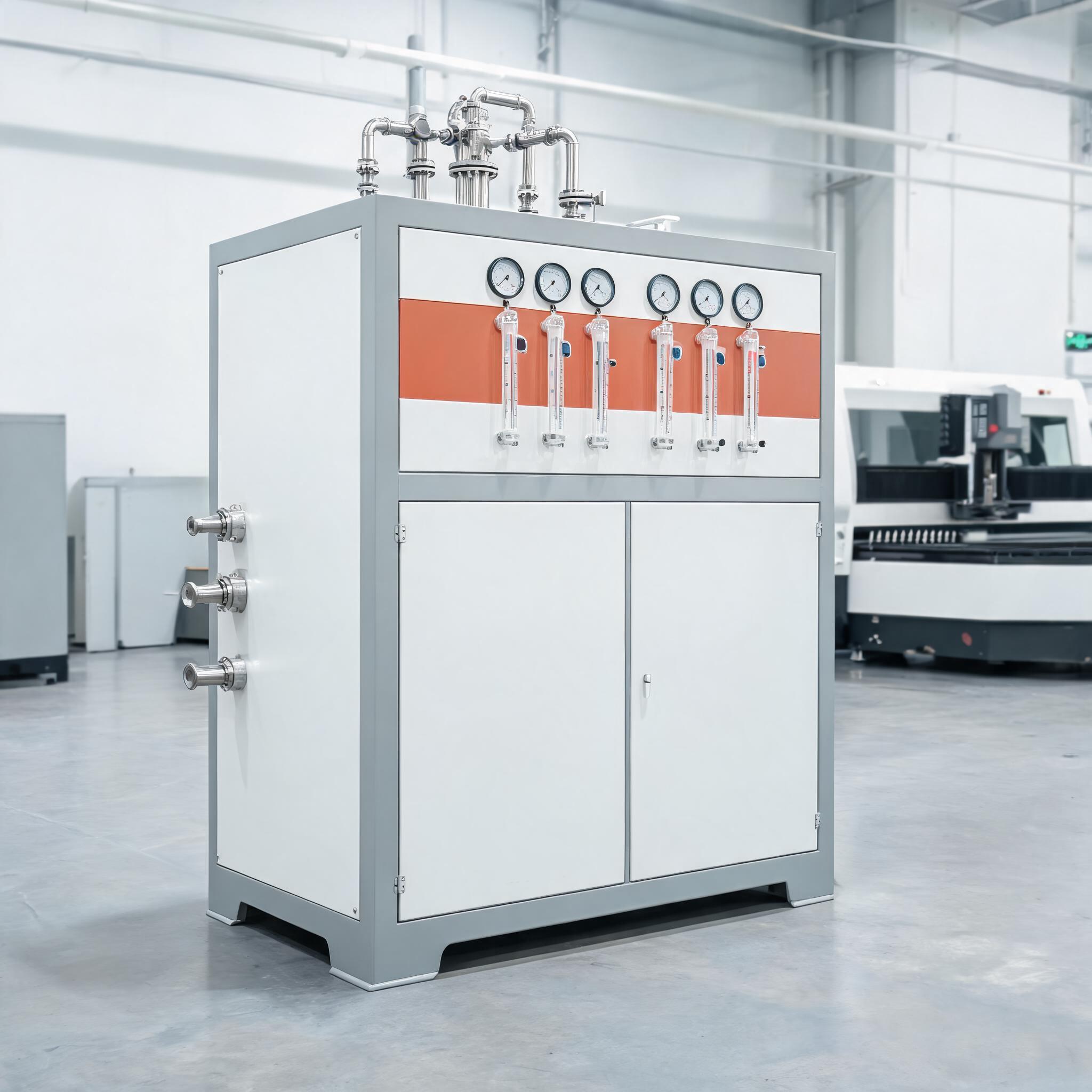
- On-site PSA generation: produces nitrogen from compressed air on demand-no deliveries, no cylinders, no supplier dependency. A PSA nitrogen generator for laser cutting at 99.9% purity with 10–80 m³/h adjustable flow covers the assist-gas demand of fiber laser machines from 1000W to 12000W.
The detailed trade-offs are in our nitrogen cylinders vs. nitrogen generator cost comparison, and the operational transition is covered in replacing cylinder and bulk supply with on-site generation. For mobile or multi-site work, portable generation versus cylinder delivery is a separate decision with its own economics.
How PSA Works-and What Purity You Actually Need
PSA (Pressure Swing Adsorption) passes compressed air through carbon molecular sieve beds that adsorb oxygen and let nitrogen pass. Two beds alternate between adsorption and regeneration, producing a continuous supply without consumable chemistry. What the sieve does, how it degrades, and when to replace it are covered in how carbon molecular sieves work.
On purity: 99.9% is the working standard for fiber laser cutting of stainless steel and aluminum, producing bright, oxide-free edges. Higher purities (99.99%, 99.999%) exist for specialized work, but they reduce generator output at the same compressor capacity-purity and flow trade against each other. Sizing that balance correctly is the core of choosing purity and flow.
Sizing a Generator to Your Cutting Machine
- Flow: Xinhong's PSA unit delivers 10–80 m³/h, adjustable in real time to match cutting demand-matching the demand of fiber lasers from 1000W to 12000W. Machines above 12kW need a larger configuration; size against peak assist-gas consumption at your thickest regular stainless job, not annual average.
- Pressure: the unit takes 0.6–0.8 MPa compressed air inlet; automatic pressure regulation with manual override holds flow steady during peak cutting cycles, preventing the pressure drops that degrade edge quality.
- Air quality: dual filtration stages plus membrane separation remove moisture and particulates before nitrogen reaches the cutting head-contaminated gas is what causes pitting and oxidation on cut edges.
- Compressor: the generator's demand depends on your flow setting; specify the air compressor against your nitrogen consumption, not the other way around.
Running Cost and Payback
Once a PSA generator is installed, the recurring costs are the electricity your existing air compressor uses and a monthly filter cartridge change-the PSA sieve beds themselves typically serve 5+ years under normal conditions. Against cylinder supply (rental, delivery, handling), typical payback lands at 6–12 months for multi-shift operations, after which gas cost per part collapses to compressed-air cost. Where exactly the money goes, and which line items decide the payback period, is broken down in the PSA generator cost breakdown.
Nitrogen Supply Checklist
- Consumption profile: log nitrogen use across a representative week, including peak stainless jobs
- Purity requirement: 99.9% for standard stainless/aluminum cutting; verify before overspecifying
- Peak flow: size for the thickest regular nitrogen-cut job, plus 20–30% headroom
- Compressor capacity: match inlet pressure (0.6–0.8 MPa class) and air delivery to generator demand
- Filtration: confirm dual-stage filtration and membrane separation for dry, particle-free nitrogen
- Noise and footprint: compact floor-side installation (Xinhong's unit runs below 75dB) rather than a dedicated mechanical room
- Service model: filter cartridge availability locally; sieve replacement support long-term
Related Deep-Dive Topics
- Onsite nitrogen generation: replacing cylinder and bulk supply
- High purity nitrogen: choosing purity and flow for laser cutting
- Carbon molecular sieve: how it works and when to replace it
- PSA nitrogen generator cost breakdown
- When a portable nitrogen generator beats cylinder delivery
Related Comparison
Gas Equipment
- PSA nitrogen generator for laser cutting – 99.9% purity, 10–80 m³/h, for 1000W–12000W machines
Still Buying Nitrogen by the Cylinder?
Send us your laser power, material mix, and weekly nitrogen consumption. We'll size a PSA generation system and show you the payback math for your actual usage.
Request a Nitrogen Supply Assessment