
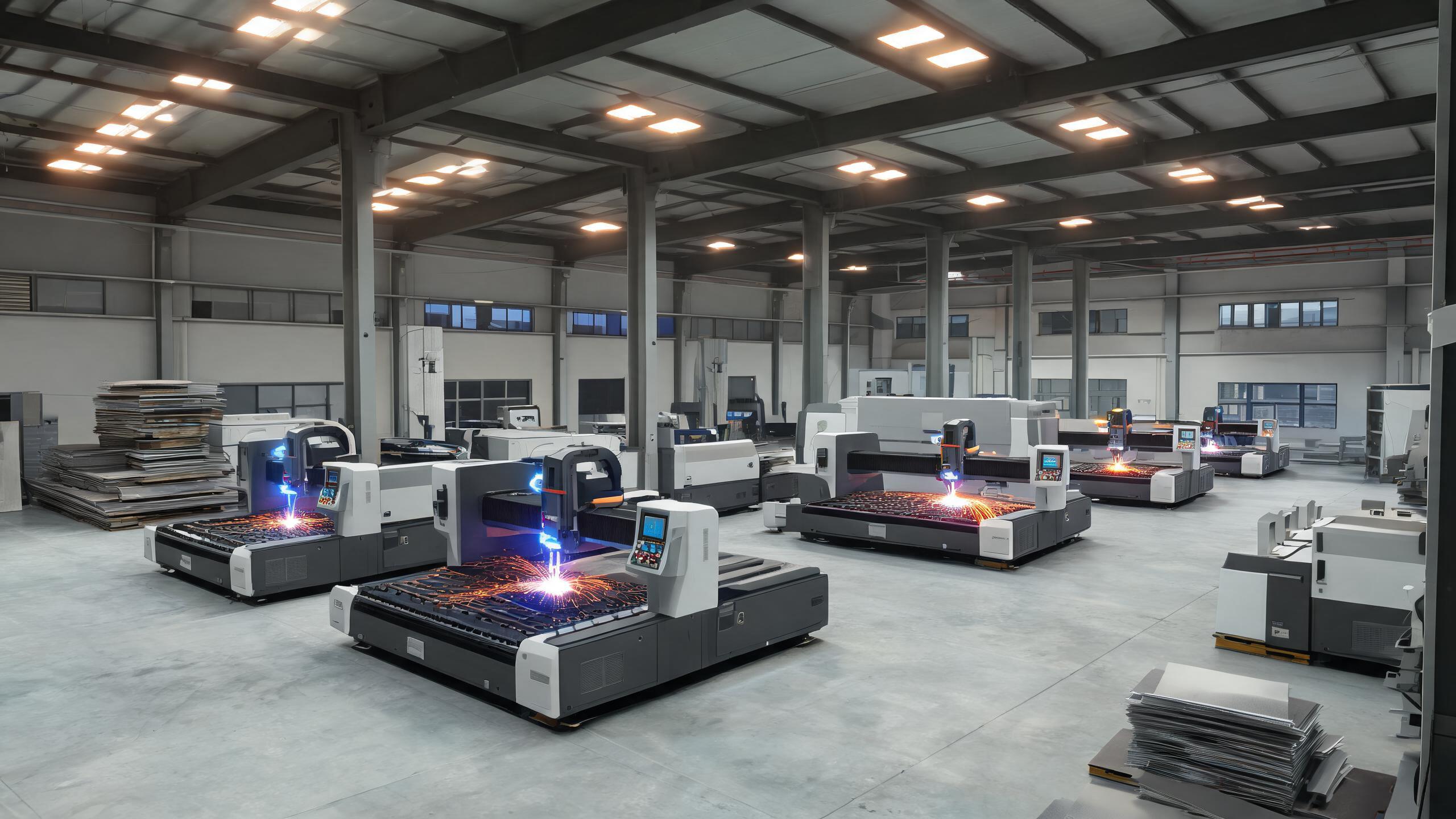
A practical walkthrough for setting up a fiber laser cutting machine—covering site preparation, machine placement, electrical and gas connections, commissioning, and first-cut calibration, with key points to confirm with your supplier.
Setting up a fiber laser cutting machine correctly is the difference between a smooth first week of production and a frustrating one. The good news: the process is systematic. You need to prepare the site, place the machine, connect power and gas, run commissioning, and calibrate the first cut. This guide walks through each stage and highlights what to confirm with your supplier before delivery.
Key takeaways
- Site preparation: floor flatness, clearance, ventilation, and ambient temperature all matter before the machine arrives.
- Electrical: a 1000W fiber laser typically requires 380V/50Hz or 380V/60Hz; verify your local supply matches the machine's specification.
- Gas connections: nitrogen and oxygen lines must be clean, dry, and rated for the required pressure.
- Commissioning: always have the supplier's technician present—they should run the official acceptance test.
- First-cut calibration: check focus, nozzle, assist gas pressure, and cutting speed before full production.
Site Preparation
Start before the machine arrives. The floor where the laser will sit must be level and able to bear the machine's weight plus the workpiece. A typical 1000W machine with a 3000x1500mm or 4000x2000mm bed is heavy—confirm the floor loading with a structural engineer if the building is older.
Clear a perimeter around the machine for maintenance access. You'll need room to open the electrical cabinet, reach the laser source, and move sheets in and out. Also plan the exhaust and fume extraction path. Laser cutting produces smoke and fine dust, especially when cutting mild steel with oxygen. The extraction system should be connected before commissioning.
Ambient conditions matter too. Keep the area clean and dry. Temperature extremes affect the laser source and optics, so aim for a stable environment, ideally between 15°C and 30°C. If the workshop is dusty, consider a dedicated room or at least a partition.
Machine Placement and Leveling
Once the machine is on site, position it according to the layout plan. The bed should be accessible from at least two sides—one for loading sheets, one for unloading parts and scrap. If you plan to use a loading table or crane, leave enough overhead clearance.
Leveling is critical. The machine's frame must be level within the manufacturer's tolerance, or the cutting accuracy will suffer, especially across a 4000mm bed. Use precision leveling feet and a machinist's level. Check both the longitudinal and transverse axes. After leveling, tighten the anchor bolts and re-check the level, because tightening can shift the frame.
Also connect the grounding correctly. A proper earth ground is essential for both electrical safety and stable operation of the CNC and laser source. Confirm the grounding point is clean and has low resistance.
Electrical Connections
The electrical supply is the most common source of setup problems. A 1000W fiber laser cutting machine typically requires 380V/50Hz or 380V/60Hz three-phase power. Verify your local grid matches. If your voltage or frequency differs, you'll need a transformer or frequency converter—discuss this with the supplier before shipping.
Check the machine's total power consumption and the main breaker size. The electrical cabinet should be connected by a licensed electrician. Ensure the phase sequence is correct; a wrong phase can damage the motor-driven components. Most modern machines have phase protection, but it's still worth verifying.
Also confirm that the power supply is stable. Voltage fluctuations can cause unexpected shutdowns or even damage the laser source. If your area has unstable power, install a voltage stabilizer or an uninterruptible power supply (UPS) for the control system.
Gas Connections
Fiber lasers use assist gases—typically nitrogen for stainless steel and aluminum, and oxygen for mild steel. The gas supply must be clean and dry. Moisture or oil in the gas line can contaminate the optics and affect cut quality.
Connect the gas lines from the cylinders or central supply to the machine's gas inlet. Use the correct fittings and ensure they are tight. Set the pressure regulators according to the cutting parameters—your supplier will provide a chart. Typically, nitrogen pressure ranges from 10 to 20 bar, depending on material and thickness, while oxygen is usually lower.
Before commissioning, purge the lines to remove any air or moisture. This is a simple step that prevents many early problems.
Commissioning and Supplier Support
Commissioning should be done by the supplier's technician. For example, Shandong Xinhong includes on-site commissioning support with its fiber laser cutting machines. Do not attempt to start production without the technician present—they will check all parameters, run test cuts, and train your operators.
During commissioning, the technician will:
- Verify the alignment of the laser beam.
- Check the cooling system (chiller) and set the correct temperature.
- Test the axis movements and homing.
- Run a series of test cuts on different materials and thicknesses.
- Adjust the cutting parameters for your typical applications.
Have your operators present during commissioning. They should learn how to load programs, change nozzles, set focus, and handle common alarms. Ask the technician to walk through basic maintenance, such as cleaning the lens and replacing consumables.
First-Cut Calibration
After commissioning, the first cuts are your calibration opportunity. Start with a simple test piece, such as a square or circle, on a material you cut regularly. Check the following:
| Parameter | What to check | Adjustment if needed |
|---|---|---|
| Focus position | Cut edge perpendicularity, kerf width | Adjust focus height (manual or auto) |
| Nozzle condition and size | Spatter on the workpiece, rough edge | Replace or clean nozzle, select correct diameter |
| Assist gas pressure | Dross on the bottom edge, discoloration | Increase or decrease pressure per material chart |
| Cutting speed | Edge quality, burr, or overheating | Adjust speed in the CNC program |
| Lens cleanliness | Reduced cutting power, uneven cut | Clean or replace the protective lens |
Document the parameters that work well for each material and thickness. This becomes your reference for future jobs. Most machines, including those from Shandong Xinhong, allow you to store parameter sets in the control system.
What to Confirm with Your Supplier
Before and during setup, clarify these points with your supplier:
- Power requirements: Does the machine run on 380V/50Hz or 380V/60Hz? What is the total connected load?
- Gas requirements: What purity and pressure are needed for your typical materials?
- Commissioning schedule: When will the technician arrive, and how long does commissioning take?
- Operator training: Is training included, and how many operators can attend?
- Spare parts: Which consumables are included in the initial kit, and what is the lead time for replacements?
- Warranty terms: What is covered, and what is the response time for service?
Having these answers in writing before the machine ships prevents surprises later.
Common Setup Mistakes to Avoid
Even with a good plan, mistakes happen. Here are the most common ones:
- Ignoring the floor level: An uneven floor leads to inaccuracy and premature wear on the linear guides.
- Using the wrong gas purity: Inert gas that is not pure enough can cause oxidation and poor cut edges.
- Skipping the purge: Air in the gas lines can cause inconsistent cuts.
- Not grounding properly: This can cause electrical noise and erratic behavior.
- Operating before commissioning: Always wait for the supplier's technician.
Frequently Asked Questions
How long does it take to set up a laser cutting machine?
Site preparation can take a few days, depending on your facility. The physical installation and leveling usually take one to two days. Commissioning with the supplier's technician typically takes one to two days, including test cuts and operator training.
Can I install the machine myself?
You can prepare the site and do the physical placement, but commissioning should be done by the supplier's technician. They have the experience to catch issues that are not obvious to a first-time user.
What power supply do I need for a 1000W fiber laser?
A 1000W machine typically requires 380V/50Hz or 380V/60Hz three-phase power. Check the machine's nameplate and your local supply. If there is a mismatch, you will need a transformer or frequency converter.
How accurate is a fiber laser cutting machine?
Modern fiber lasers like those from Shandong Xinhong offer positioning accuracy of ±0.05mm/m. Actual cutting accuracy depends on material, thickness, and machine condition.
Ready to Get Started?
Setting up a laser cutting machine is a manageable process when you follow a structured plan. If you are evaluating suppliers, look for one that provides clear technical specifications and on-site commissioning support. Shandong Xinhong offers fiber laser cutting machines from 1000W to 30000W, with beds up to 4000x2000mm, and includes commissioning with every purchase. For a closer look at a starter model, see the 1000W fiber laser cutting machine. If you need higher power for thicker materials, explore the 6000W fiber laser cutting machine. Contact us to discuss your application and get a detailed setup plan.