
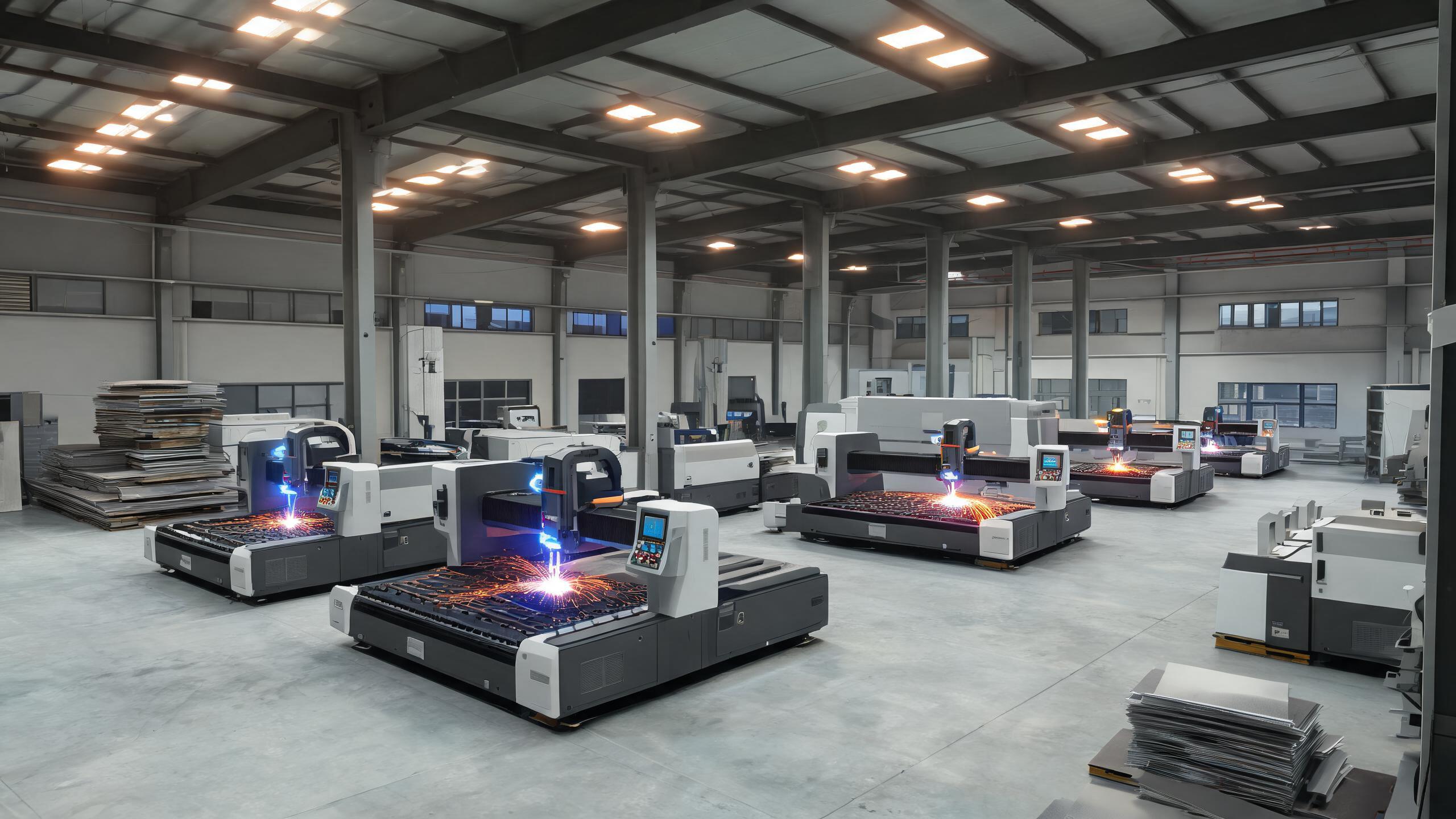
Learn what a fiber laser cutting machine is, how it differs from CO2 lasers, and which technology suits your metal fabrication needs. Includes a clear comparison table and product specs.
A fiber laser cutting machine uses a solid-state laser source to generate a beam that is delivered through an optical fiber to the cutting head. It is designed primarily for cutting metal, and it has become the standard choice in many sheet metal fabrication shops. If you are comparing cutting technologies, the most relevant question is how fiber compares with CO2 laser cutting. This article explains how a fiber laser works, why it is efficient for metal, and gives a side-by-side comparison to help you choose.
On this page
What Is a Fiber Laser Cutting Machine?
A fiber laser cutting machine is a CNC machine that uses a fiber laser as its cutting tool. The laser beam is generated by a solid-state source and then guided through a flexible optical fiber to the cutting head. The concentrated beam melts, burns, or vaporizes the material, and a high-pressure gas jet removes the molten metal, leaving a clean cut edge.
Fiber lasers are especially effective on reflective metals like aluminum, brass, and copper—materials that are difficult to cut with CO2 lasers. Because the laser is delivered through a fiber, the machine has fewer moving parts in the optical path, which reduces maintenance and improves beam stability.
How Fiber Laser Technology Works
Unlike CO2 lasers, which use a gas mixture and mirrors to direct the beam, fiber lasers generate the beam in a solid-state medium—typically a fiber doped with rare-earth elements. The beam is amplified within the fiber and then delivered directly to the cutting head. This design eliminates the need for external mirrors and alignment, which are common failure points in CO2 systems.
The wavelength of a fiber laser is about ten times shorter than that of a CO2 laser. This shorter wavelength is absorbed more readily by metals, which is why fiber lasers can cut metal faster and with less energy input. It also means the beam can be focused to a smaller spot, allowing finer detail and tighter tolerances.
Why Fiber Is Efficient for Metal Cutting
Fiber lasers are efficient for several reasons:
- Higher metal absorption: The shorter wavelength is absorbed more efficiently by metals, so more of the laser energy goes into cutting.
- Faster cutting speeds: For the same power, a fiber laser can often cut thin to medium sheet metal faster than a CO2 laser.
- Lower running cost: Fiber lasers consume less electricity and require no laser gas (a CO2 laser needs a gas mixture that must be regularly refilled).
- Minimal maintenance: With no mirrors to align and no gas to replace, fiber systems have lower maintenance requirements.
These factors make fiber lasers particularly cost-effective for operations that cut metal daily.
Fiber vs CO2: Key Differences
The table below summarizes the main differences you should consider when choosing between the two technologies.
| Characteristic | Fiber Laser | CO2 Laser |
|---|---|---|
| Laser medium | Solid-state (optical fiber) | Gas mixture (CO2, N2, He) |
| Wavelength | Shorter (approx. 1 µm) | Longer (approx. 10.6 µm) |
| Metal absorption | High – good for reflective metals | Lower – struggles with reflective metals |
| Cutting speed (thin metal) | Faster for thin to medium sheet | Slower for same thickness |
| Maintenance | Low – no mirrors or gas to replace | Higher – mirrors need alignment, gas must be refilled |
| Running cost | Lower electricity and no laser gas | Higher gas and electricity consumption |
For cutting metal, fiber lasers generally outperform CO2 in speed and operating cost. However, CO2 lasers are still used for cutting non-metal materials like wood, acrylic, and plastics, where the longer wavelength is absorbed better.
How to Choose Between Fiber and CO2
Consider your primary materials and production volume:
- If you cut metal (steel, stainless, aluminum, brass, copper) on a regular basis, a fiber laser is almost always the better investment. It will cut faster, use less energy, and require less maintenance.
- If you cut mainly non-metal materials such as wood, acrylic, or plastics, a CO2 laser may still be a reasonable choice. But if your work is mixed, many shops choose fiber for metal and keep a separate CO2 machine for non-metals.
- If you need fine detail and high precision, fiber lasers offer a smaller spot size, which helps achieve tighter tolerances.
For most sheet metal fabricators, fiber is the modern standard. It offers a lower total cost of ownership and higher throughput.
Frequently Asked Questions
Can a fiber laser cut reflective metals like aluminum and copper?
Yes. The shorter wavelength is absorbed well by reflective metals, so fiber lasers can cut these materials reliably, whereas CO2 lasers often struggle.
What thickness can a fiber laser cut?
The maximum thickness depends on the laser power. For example, a 1000W fiber laser machine can cut 1–12 mm metal, while a 6000W machine can handle thicker material. Always check the machine's specifications for your required thickness.
Is a fiber laser cheaper to run than CO2?
Generally, yes. Fiber lasers consume less electricity and do not require laser gas, which reduces both energy and consumable costs.
Next Steps
If you are ready to evaluate a fiber laser cutting machine, consider these machines from Shandong Xinhong CNC Technology Co., Ltd. (founded in 2005, ISO 9001:2015 and CE certified, with IPG/RAYCUS/GW laser sources and Schneider Electric controls):
- 1000W Fiber Laser Cutting Machine – Available with a 3000x1500mm or 4000x2000mm work bed, cuts 1–12mm metal, positioning accuracy ±0.05mm/m, rapid speed 120m/min. Ideal for small to medium sheet metal work.
- 6000W Fiber Laser Cutting Machine – Higher power for thicker materials and faster cutting of medium plate.
Contact us with your material types, thickness range, and production volume to get a recommendation and a quotation.