
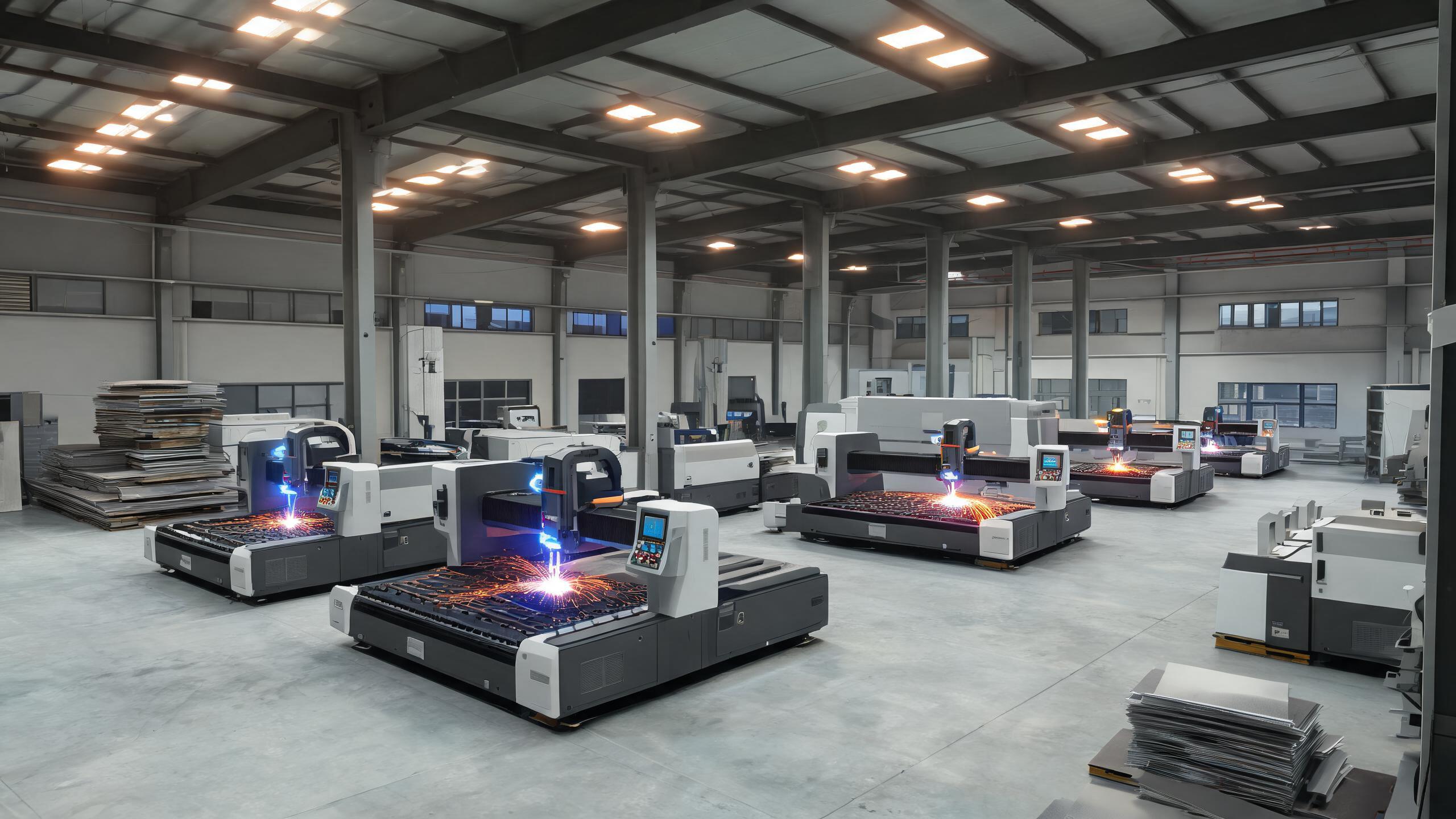
A clear, buyer-focused explanation of laser welding machines: the working principle, the two main types (handheld and fixed), weldable materials, and typical applications in kitchen equipment, elevator manufacturing, and automotive components.
What Is a Laser Welding Machine?
A laser welding machine is a piece of industrial equipment that uses a focused, high-energy laser beam to melt and join metal parts. The beam heats the material at the joint until it melts, forming a weld pool that solidifies into a strong, permanent bond as it cools. Unlike traditional arc or MIG welding, laser welding does not rely on an electrical arc or filler rod as the primary heat source. Instead, the laser delivers precise, concentrated energy to a small area, producing deep, narrow welds with minimal distortion.
For a metal fabrication shop, a laser welder offers a different balance of speed, precision, and heat input compared to conventional methods. Because the beam is so focused, the heat-affected zone is smaller, which helps reduce warping on thin sheets and improves weld appearance. This makes laser welding especially useful for parts where aesthetics matter, such as visible seams on kitchen equipment or elevator panels.
How Laser Welding Works
The working principle of laser welding is straightforward, but the equipment behind it is precise. Here is the step-by-step process:
- Beam generation: A laser source (typically fiber laser) produces a high-energy beam. In industrial machines, common sources include IPG, RAYCUS, and GW units, each with different power ratings.
- Beam delivery: The beam travels through fiber optics to the welding head. In handheld machines, the beam is delivered through a flexible cable to a handheld gun. In fixed systems, the beam is routed to a robotic arm or CNC gantry.
- Focusing: The welding head contains lenses that focus the beam to a small spot, often less than a few millimeters wide. The focused spot concentrates energy density at the joint.
- Melting and joining: The focused beam hits the metal surface, raising its temperature above the melting point. The molten material from both parts flows together and forms a weld pool. As the beam moves along the joint, the pool solidifies behind it, creating a continuous weld.
- Shielding (optional): Some processes use an inert gas (like argon) to protect the molten metal from oxidation, but not all laser welding requires it.
Because the beam is computer-controlled (in fixed systems) or manually guided (in handheld units), the operator controls weld speed, power, and focus to suit the material and joint configuration.
Two Main Types of Laser Welding Machines
When evaluating equipment for your shop, you will encounter two basic configurations. Each serves a different production need.
Handheld Laser Welding Machines
A handheld laser welder integrates the laser source, cooling unit, and control system into a single cabinet, with a flexible cable leading to a handheld welding gun. The operator guides the gun along the joint manually. This type is ideal for:
- Small-batch or custom fabrication
- Parts that are difficult to position under a fixed head
- On-site repairs or maintenance work
- Jobs requiring frequent changeover between different parts
Handheld units are popular because they are relatively easy to learn and offer the precision of laser welding without the cost of a fully automated cell. For example, the 2000W 2-in-1 handheld welding and cleaning machine can weld stainless steel up to 5 mm thick and also switch to a cleaning mode to remove rust and paint. This dual function reduces the number of tools needed on the floor.
Fixed / Automated Laser Welding Machines
Fixed or automated systems mount the welding head on a CNC gantry, robotic arm, or other motion system. The workpiece is moved under the stationary head, or the head moves over a clamped part. These systems are designed for high-volume, repeatable production. They offer:
- Consistent weld quality with minimal operator intervention
- Higher throughput for identical parts
- Integration with other automation (e.g., part feeding, clamping)
- Better accessibility for complex joint geometries when using a robot
Fixed systems are typically specified when a shop needs to weld hundreds or thousands of identical joints per shift. They are common in automotive component manufacturing and appliance production.
Both types use the same core technology; the difference is in how the beam is guided and controlled. A shop may start with a handheld unit for flexibility and later add a fixed system as volumes grow.
What Materials Can a Laser Welding Machine Weld?
Laser welding works with most common metals and some alloys. The most frequently welded materials include:
- Stainless steel – used in kitchen equipment, food processing, and architectural metalwork
- Carbon steel – structural parts, frames, and general fabrication
- Aluminum – lightweight components, often in automotive and aerospace
- Copper and brass – electrical components and decorative items (requires higher power)
- Titanium – specialty applications, such as medical and aerospace
Material thickness and reflectivity affect the required laser power. For example, a 1500W handheld fiber laser welder is a common entry-level choice for thin to medium gauge stainless steel. A 2000W machine, such as the 2000W industrial fiber laser welder, provides more penetration for thicker sections or faster welding speeds. The 2-in-1 unit mentioned earlier is rated for 5 mm stainless steel welding, making it suitable for many sheet metal fabrications.
Typical Applications of Laser Welding
Laser welding is used across industries where clean, strong, and precise welds are required. Here are three common application areas:
Kitchen Equipment
Commercial kitchens use stainless steel for counters, sinks, exhaust hoods, and food preparation tables. Laser welding produces smooth, corrosion-resistant seams that are easy to clean and meet hygiene standards. The low heat input also reduces discoloration on the back side of the sheet, which is important for visible surfaces.
Elevator Manufacturing
Elevator cabins and doors are often made from stainless steel panels. Laser welding provides the clean, continuous joints needed for a polished appearance. It also minimizes distortion, ensuring that panels fit together precisely, which is critical for moving parts like doors and guide rails.
Automotive Components
The automotive industry uses laser welding for parts such as exhaust systems, brackets, and battery housings. The high speed and repeatability of automated laser welding make it suitable for mass production. In electric vehicles, laser welding is often used to join aluminum battery enclosures and copper busbars, where precise heat control prevents damage to sensitive components.
Key Considerations When Choosing a Laser Welding Machine
If you are evaluating a laser welder for your shop, focus on these factors:
- Power output: Higher power (e.g., 2000W vs. 1500W) allows deeper penetration and faster welding, but also increases cost. Match power to your typical material thickness.
- Handheld vs. fixed: Choose handheld for flexibility and low-volume work; choose fixed for high-volume, repetitive tasks.
- Laser source brand: Reputable sources like IPG, RAYCUS, and GW are known for reliability and efficiency. Check which source a machine uses.
- Control system: Machines with programmable controls (e.g., from Schneider Electric) offer better parameter management and integration.
- Certifications: Look for ISO 9001:2015 quality management and CE marking for safety and compliance, especially if you export to Europe.
- After-sales support: Consider the supplier’s experience and global reach. For example, Shandong Xinhong CNC Technology Co., Ltd, founded in 2005, offers both handheld and fixed systems and serves European and global markets.
When comparing quotes, ask for weld samples on your actual material. This is the most direct way to verify that the machine can produce the joint quality and penetration you need.
FAQ
Is laser welding stronger than traditional welding?
Laser welding can produce welds with strength comparable to or exceeding conventional methods, but the actual strength depends on joint design, material, and process parameters. The narrow heat-affected zone often results in less distortion and better mechanical properties in the weld area.
Can laser welding be used outdoors?
Handheld laser welders are sometimes used on-site for repairs, but they require a stable power supply and proper eye protection. For outdoor work, ensure the unit is rated for the environment and that you have a shielded work area.
What safety equipment is required?
Operators must wear laser safety glasses rated for the specific wavelength of the laser. The machine should have a protective enclosure or shielding to prevent accidental exposure to the beam.
How much maintenance does a laser welding machine need?
Regular maintenance includes cleaning the optics, checking the cooling system, and replacing consumable parts like protective windows. Fiber lasers generally require less maintenance than CO2 lasers because they have fewer moving parts.
Next Steps
Choosing the right laser welding machine starts with understanding your production needs. If you are welding stainless steel up to 5 mm and want the flexibility of a handheld unit, the 2000W 2-in-1 handheld welding and cleaning machine offers both welding and surface cleaning in one tool. For higher-volume work, the 2000W industrial fiber laser welder provides a fixed, automated solution. The 1500W handheld fiber laser welder is a cost-effective entry point for lighter applications.
Contact Shandong Xinhong CNC Technology Co., Ltd for detailed specifications and a quote tailored to your materials and production volume.