
Aluminum reflects and conducts heat, which makes it harder to cut than mild steel — but a fiber laser with the right cutting head and nitrogen assist handles it cleanly. This guide explains the physics, matches verified thickness ranges to laser power levels from 2000W to 30000W, and gives buyers a practical selection checklist.
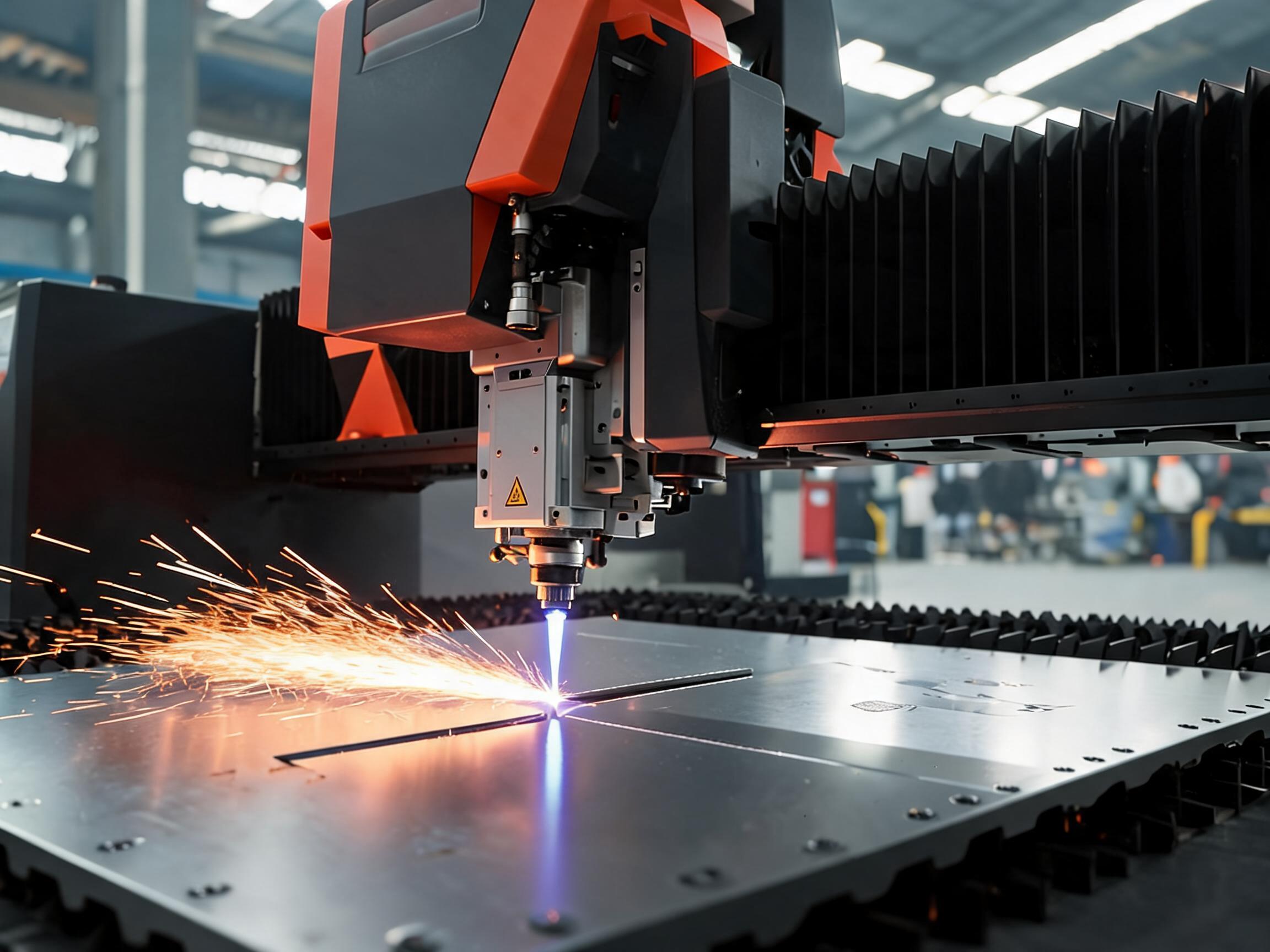
Aluminum sheet is one of the most common materials fabrication shops ask about after mild steel and stainless — and one of the most misunderstood. A fiber laser absolutely can cut it, and cut it well, but aluminum behaves differently in the beam than steel. Buyers who understand why it behaves differently make better machine choices: the right power class, the right assist gas, and a cutting head designed for reflective alloys. This article walks through the physics, the role of nitrogen, realistic thickness ranges by power level, and a short checklist before you buy.
Why Aluminum Is Harder to Cut Than Steel
Two material properties drive the difficulty:
- High reflectivity. Aluminum's reflective surface bounces a portion of the fiber laser's ~1 µm wavelength back into the optics. Reflected energy can destabilize the cutting process and, in the worst case, damage unprotected optical components. This is why cutting heads intended for steel are not automatically suitable for aluminum and copper.
- High thermal conductivity. Aluminum carries heat away from the kerf roughly several times faster than steel. Energy that would normally concentrate in a narrow cut zone spreads into the surrounding sheet, which can cause partially molten dross, ragged bottom edges, or failure to pierce cleanly at the limit of a machine's capability.
Neither property makes aluminum uncuttable. They simply mean the machine needs enough power density to overwhelm conduction, and the optics need protection against back-reflection. We cover this topic in depth on our dedicated page about cutting aluminum and copper with a fiber laser, including reflectivity and thickness limits, which also discusses cutting parameter selection.
Nitrogen Assist: The Key to Oxide-Free Edges
Assist gas choice determines edge quality more than almost any other setting when cutting aluminum. With oxygen assist, aluminum edges form a dark oxide layer that often requires secondary cleaning before welding or anodizing. With nitrogen assist, the gas blows molten material out of the kerf while shielding the hot edge from oxygen. The result is a bright, silvery, oxide-free edge that is ready for downstream welding, anodizing, or powder coating without rework.
The tradeoff is operating cost: nitrogen is consumed at high flow rates, and cutting with nitrogen generally requires more power than oxygen-assisted cutting of the same thickness because the gas also cools the cut zone. For production work on aluminum, nitrogen assist is the standard choice — which is why it is built into machines intended for aluminum, such as Xinhong's high-power aviation aluminum model described below. For general guidance on selecting assist gas pressure and nozzle size by material, see the aluminum and copper fiber laser cutting topic page.
How Thick Can You Cut? Power Level vs. Aluminum Thickness
Because aluminum conducts heat so aggressively, thickness capability climbs steeply with laser power. If you are still deciding which power class fits your shop overall, our high-power fiber laser cutting machine buying guide explains how power maps to plate thickness and core machine configurations. The verified thickness ranges for Xinhong CNC fiber laser cutting machines on aluminum are:
| Laser power | Max aluminum thickness | Typical fit |
| 2000W | 4mm | Light sheet work, signage, enclosures |
| 3000W | 6mm | General fabrication, sheet-metal shops |
| 10000W | 20mm | Thick plate, aerospace alloys, structural parts |
| 20000W | 25mm | Heavy plate production |
| 30000W | 30mm | Maximum-thickness aluminum plate |
Two practical notes on this table:
- Buy headroom, not just today's thickness. Cutting at the very top of a machine's range means slower speeds and the most demanding parameters. If your recurring work is 5mm aluminum, a 3000W machine handles it; if you occasionally see 10–12mm, the 3000W class is not the right tool.
- These are maximums, not universal cutting speeds. Actual feed rate at a given thickness depends on alloy, surface condition, and required edge quality. Thin aluminum cuts quickly and cleanly; near the maximum thickness, expect conservative speeds and careful parameter work.
Machine Features That Matter for Aluminum
Anti-Reflection Cutting Head
On reflective alloys, the single most important machine feature is an anti-reflection cutting head. It protects the optics from energy reflected off the aluminum surface, which is what makes sustained, reliable cutting of aerospace alloys and other reflective aluminum possible rather than a gamble on every pierce. Xinhong's High-Power Aviation Aluminum Fiber Laser Cutting Machine is built specifically around this requirement: a 10000W source, anti-reflection cutting head, nitrogen assist, and a 2000x6000mm bed for full-size aerospace and industrial plate. It cuts aluminum to 20mm with oxide-free edges and carries CE certification.
Sufficient Power Density
As the table shows, thickness capability is a function of power. A compact machine like the 3000W Compact Fiber Laser Cutting Machine cuts aluminum to 6mm — the right envelope for most general sheet-metal work. Stepping up to 20000W or 30000W systems extends aluminum capability to 25mm and 30mm respectively for heavy-plate producers.
Nitrogen Supply Infrastructure
Oxide-free aluminum cutting consumes nitrogen in significant volume. Before commissioning, plan for a reliable supply — bulk liquid nitrogen, a nitrogen generator, or an adequate cylinder manifold — sized for your duty cycle. Under-delivering gas pressure shows up immediately as dross on the bottom edge.
Bed Size and Material Handling
Thick aluminum plate is heavy per square meter. If your work includes full sheets of 4x8 or larger, confirm the bed dimensions and loading approach. The 2000x6000mm bed on the high-power aviation aluminum machine, for example, accommodates large aerospace-format plate without pre-cutting.
Buyer Checklist Before You Order
- Thickest recurring aluminum job? Match it to the power table above, then buy one step of headroom if budget allows.
- Alloy family? Aerospace and other high-strength alloys demand an anti-reflection head; general 5052/6061 sheet is less demanding but still benefits from one.
- Edge quality requirement? If parts go straight to welding, anodizing, or finishing, nitrogen assist with oxide-free edges is the specification to insist on.
- Nitrogen supply? Confirm your plant can deliver required flow and pressure at sustained duty.
- Sheet sizes? Verify bed dimensions against your material format, including any oversized plate work.
- Downstream operations? If aluminum is only part of your mix, check the same machine's mild steel and stainless capability so one purchase covers the shop.
Frequently Asked Questions
Can a fiber laser cut aluminum sheet?
Yes. Modern fiber lasers cut aluminum cleanly when the machine has sufficient power for the thickness and an anti-reflection cutting head to handle the material's reflectivity. Xinhong machines cut aluminum from 4mm at 2000W up to 30mm at 30000W.
Why is aluminum more difficult to laser cut than steel?
Two reasons: aluminum reflects a significant portion of the fiber laser wavelength back toward the optics, and it conducts heat away from the kerf much faster than steel. Both effects are overcome with higher power density, a reflective-capable cutting head, and correct assist gas parameters.
Why use nitrogen instead of oxygen when cutting aluminum?
Oxygen assist produces a dark oxide layer on the cut edge; nitrogen shields the edge from oxygen and ejects the melt, producing a bright, oxide-free edge ready for welding or finishing without secondary cleaning. Nitrogen is the standard assist gas for quality-critical aluminum work.
What power do I need for 10mm aluminum?
Based on verified machine specifications, 3000W cuts aluminum to 6mm, so 10mm requires a higher class — the 10000W High-Power Aviation Aluminum machine covers aluminum to 20mm, with 20000W and 30000W systems extending capability to 25mm and 30mm respectively.
Choosing Your Machine with Xinhong CNC
The right aluminum cutting machine comes down to your thickest recurring job, your alloy mix, and your edge-quality requirements. Send us your material, thickness range, and typical application — whether that's 2mm 5052 enclosure panels or 15mm aerospace plate — and the Xinhong CNC team will recommend the power class, bed size, and assist-gas setup that fits your production. You can also review the detailed parameters on our aluminum and copper fiber laser cutting resource page before you inquire.