
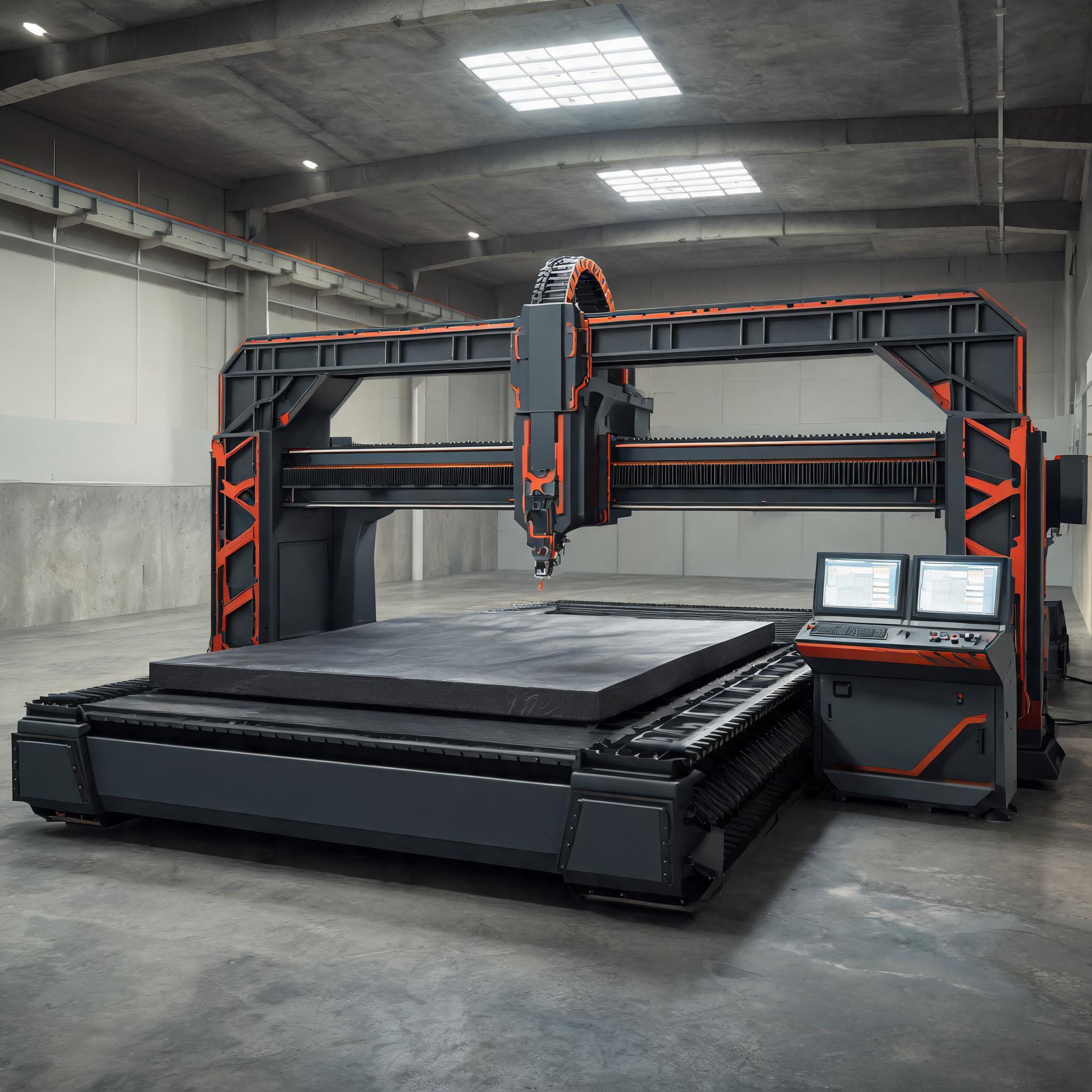
A practical buyer's guide to high power fiber laser cutting machines from 2,000W to 30,000W: matching power to plate thickness, evaluating laser sources, controllers and assist gas strategy, with real machine specifications across the range.
Buying Guide · High Power Fiber Laser Cutting
Why Power Selection Makes or Breaks Your Investment
A high power laser cutter is a significant capital investment-often the single largest equipment purchase a fabrication shop makes in a year. The power rating you choose directly determines what materials you can cut, how thick you can cut them, and how fast each part comes off the bed. Buy too little power and you lose jobs to competitors who can handle thicker plate. Buy too much and you're paying for capacity that sits idle while your per-part costs climb.
This guide walks through the three decisions that matter most when choosing a high power fiber laser cutting machine: matching laser power to your typical material thickness, understanding which core components differentiate a production-ready machine from a budget build, and evaluating the auxiliary systems that keep a high-power laser running profitably shift after shift.
Key Takeaways:
• Power should match your thickest regular job-not the occasional one-off
• Laser source brand, CNC controller, and cutting head quality matter more than spec sheet numbers
• Assist gas strategy (nitrogen vs. oxygen) affects both cut quality and operating cost
• Bed size, exchange table, and cooling capacity determine real-world throughput
• CE certification and after-sales support are non-negotiable for European buyers
Matching Laser Power to Material Thickness
The first question any buyer should answer is simple: What material, at what thickness, will you cut most often? Not occasionally, not "someday"-but on a typical production day. Fiber laser cutting machines from 2,000W to 30,000W cover an enormous range, and the right choice depends entirely on your workload. For a full material-by-material breakdown, see our fiber laser cutting thickness charts by power.
Here's a practical reference for carbon steel and stainless steel-the two most commonly cut materials in fabrication shops:
| Laser Power | Carbon Steel (Practical Range) | Stainless Steel (Practical Range) | Typical Application |
|---|---|---|---|
| 2,000W – 3,000W | Up to 12–14mm | Up to 6–8mm | Sheet metal fabrication, signs, enclosures |
| 6,000W – 8,000W | Up to 20–25mm | Up to 12–16mm | Structural steel, thicker plate processing |
| 12,000W | Up to 30–35mm | Up to 20mm | Heavy fabrication, construction components |
| 20,000W | Up to 40–45mm | Up to 25–30mm | Shipbuilding, pressure vessels, thick plate |
| 30,000W | Up to 50–60mm | Up to 35–40mm | Extreme thickness, specialized heavy industry |
These are practical cutting ranges-the thicknesses where you get clean edges at reasonable speeds. Manufacturers often quote "maximum cutting thickness" figures that are 20–30% higher, but at those limits, cut speed drops dramatically and edge quality degrades. Always evaluate machines at your typical working thickness, not the theoretical maximum. If your work centers on 20–50mm carbon steel, our dedicated guide to how thick a fiber laser can cut steel covers the machine requirements in detail.
Don't Overbuy Power
A common mistake is sizing the laser for the thickest material a shop might cut once a quarter. A 20,000W machine costs significantly more than a 12,000W machine-in purchase price, electrical consumption, and maintenance. If 80% of your work is 10–20mm carbon steel, an 8,000W or 12,000W fiber laser cutting machine will deliver faster payback. The premium you pay for 20,000W only makes sense if thick plate (30mm+) is a regular part of your production mix.
Core Components That Determine Real Performance
Two machines with identical wattage ratings can deliver very different results in production. The difference comes down to four core components:
1. Laser Source
The laser source is the heart of the machine. Leading brands include IPG (USA), RAYCUS, and GW-each with different beam quality characteristics, maintenance intervals, and price points. A high-quality source delivers consistent beam quality over tens of thousands of hours, which translates directly to cut edge quality and speed stability. Budget sources may quote the same wattage but degrade faster and require more frequent recalibration.
Key questions to ask: What is the guaranteed beam quality (BPP)? What is the expected source lifespan? Is the source serviceable locally, or does it need to ship back to the manufacturer?
2. CNC Controller and Motion System
The controller determines how accurately the machine follows complex paths at high speed. A capable CNC system with adaptive speed control-automatically reducing speed at corners and curves-produces cleaner parts and less dross. Look for controllers that support:
- Batch job scheduling for unattended operation
- Common-line cutting to reduce material waste
- Automatic nozzle cleaning and focus calibration
- Remote monitoring via Ethernet for production tracking
The drive system (rack-and-pinion vs. linear motor) and the linear guides also affect positioning accuracy. A positioning accuracy of ±0.05mm is standard for quality machines in this category-for example, the 20,000W fiber laser cutting machine maintains ±0.05mm positioning on a 2000×6000mm bed.
3. Cutting Head
The cutting head focuses the laser beam and manages the assist gas flow. Auto-focusing heads with capacitive height sensing maintain the correct focal distance even on warped plate-a critical feature for thick material cutting. Look for:
- Automatic focus adjustment (not manual)
- Capacitive height sensing for uneven sheets
- Anti-collision protection to protect the nozzle and head
- Quick-change nozzle system for switching between gas types
4. Machine Bed and Frame Rigidity
The bed absorbs cutting forces and vibration. A thermally stress-relieved, welded steel frame maintains accuracy over years of heavy cutting. Exchange tables (twin pallet) allow loading and unloading while the machine cuts on the other pallet-this can increase throughput by 30–50% on longer jobs. Bed sizes commonly range from 1,500 × 3,000mm to 2,000 × 6,000mm for high-power machines.
Assist Gas: Nitrogen vs. Oxygen
The choice of assist gas affects cut quality, speed, and operating cost more than most buyers realize:
| Gas | Best For | Edge Quality | Speed | Cost Impact |
|---|---|---|---|---|
| Oxygen (O₂) | Carbon steel, thick plate | Slight oxidation, may need cleanup | Slower (exothermic reaction helps on thick plate) | Lower gas cost |
| Nitrogen (N₂) | Stainless steel, aluminum, carbon steel (clean edge) | Bright, oxide-free edge | Faster on thin-to-medium plate | Higher gas cost, especially at high pressure |
For high-power machines (12,000W and above), nitrogen consumption increases significantly because thicker materials require higher gas pressures. Many shops install on-site PSA nitrogen generators to reduce gas costs-producing nitrogen at 99.9% purity on demand rather than relying on delivered cylinders or liquid nitrogen. Our comparison of nitrogen cylinders vs. a nitrogen generator breaks down when on-site generation pays back.
Don't Forget the Safety Layer
A 12,000W+ fiber laser is a Class 4 laser source. In an open frame, scattered and reflected radiation creates eye and skin hazards well beyond the cutting point. For shared workshops and EU deployment, plan for a Class 1 laser safety enclosure with interlocked access doors and EN 12254-rated viewing windows. Our guide to Class 1 vs. Class 4 enclosures explains what the ratings mean for your compliance obligations.
Checklist: What to Verify Before You Buy
- Material thickness range: Does the machine's practical cutting range cover your top 3 most-cut materials?
- Laser source brand and warranty: Who makes the source, what's the warranty period, and is service available in your region?
- Positioning accuracy: Is ±0.05mm or better confirmed, and was it measured on a full-size part or just a small test coupon?
- Bed size and exchange table: Will your typical sheet size fit, and do you need twin pallets for your production volume?
- Cooling system: Is the chiller rated for continuous operation at your ambient temperature? High-power lasers generate significant heat.
- CE compliance: Does the machine carry CE marking for European markets? This is mandatory for legal operation in the EU.
- After-sales support: What's the response time for service calls? Are spare parts stocked regionally?
- Training and installation: Is on-site installation and operator training included?
Common Buying Mistakes to Avoid
- Chasing maximum wattage without considering whether your production mix justifies it
- Ignoring gas operating costs-a 20,000W machine running nitrogen at high pressure can consume far more in gas per year than the electricity savings from fiber vs. CO2
- Underestimating cooling requirements-high-power lasers need industrial-grade chillers, not shop air
- Skipping the demo cut-always request sample cuts on your materials at your thicknesses before committing
- Not planning for future capacity-consider whether the machine can be upgraded with a more powerful source later
Related Deep-Dive Topics
- What can a fiber laser cut? Materials and thickness charts by power
- How thick can a fiber laser cut steel? 20mm–50mm requirements
- 2000W fiber laser cutting parameters for steel, stainless and aluminum
- Onsite nitrogen generation for laser cutting: replacing cylinder supply
- Class 1 vs. Class 4 laser safety enclosures for fiber laser machines
Related Comparisons
- Plasma cutting vs. laser cutting: which is right for your sheet metal shop
- Aluminum sheet laser cutting: reflectivity, nitrogen assist, and power selection
- Copper laser cutting: reflectivity and thickness limits
Machines Across the High-Power Range
- 12,000W fiber laser cutting machine – 2000×6000mm bed, up to 35mm carbon steel / 20mm stainless
- 20,000W fiber laser cutting machine – up to 50mm carbon steel / 30mm stainless
- 30,000W fiber laser cutting machine – up to 70mm carbon steel / 40mm stainless / 30mm aluminum
Need Help Choosing the Right Power Level?
Tell us your typical materials, thicknesses, and production volume. We'll recommend the right configuration-no upselling.
Request a Custom Recommendation