
This comparison explains where plasma cutting and fiber laser cutting each make sense for sheet metal fabrication. It covers edge quality, kerf, thickness windows, consumable costs and secondary operations so buyers can match the process to their actual work.
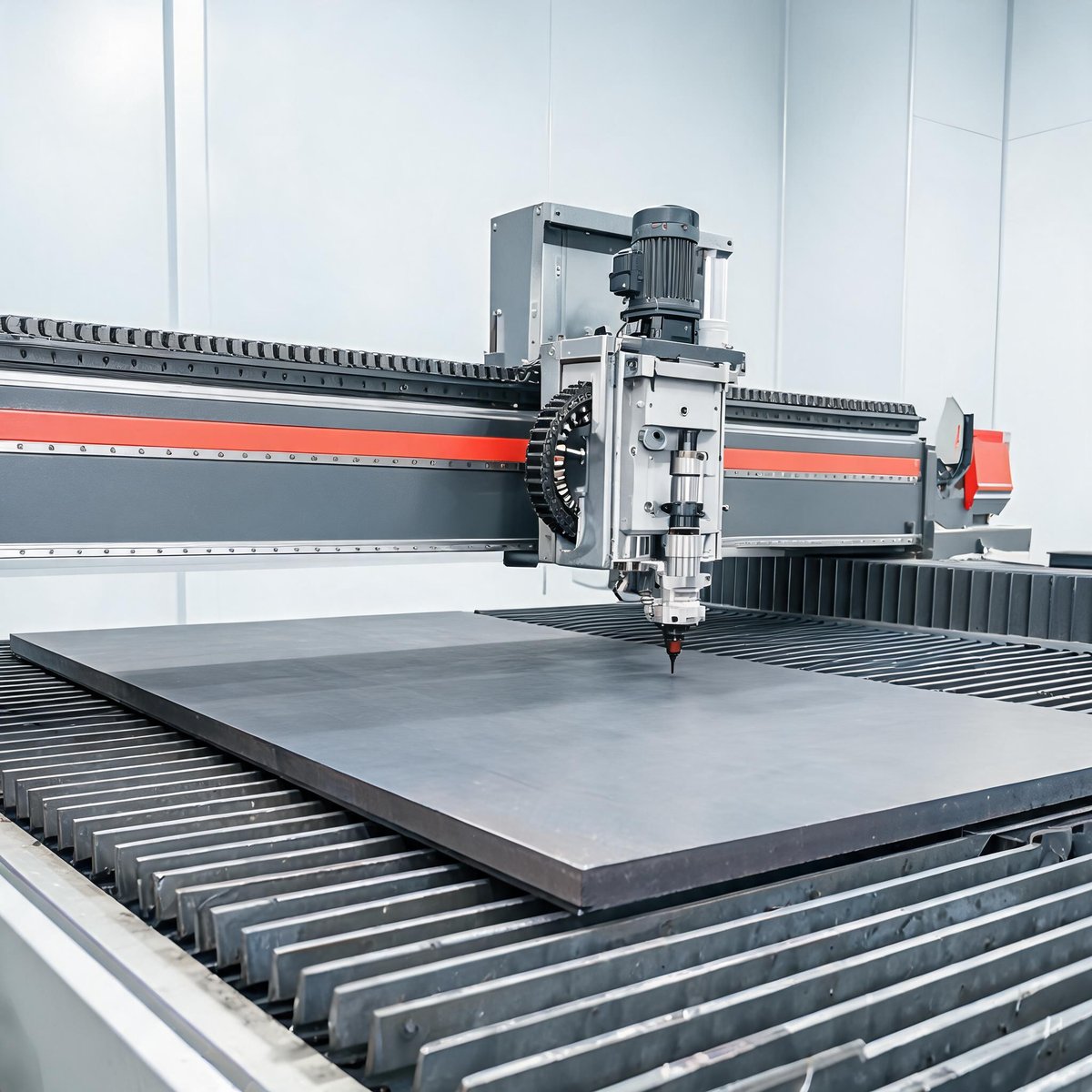
If you are outfitting a fabrication shop or replacing an older cutting table, the plasma-versus-laser decision usually comes down to three questions: what thicknesses do you cut daily, what edge quality do your customers accept, and what can you spend on consumables over the life of the machine. Both processes cut conductive metals, but they behave very differently in practice. This guide walks through the differences that actually affect a purchase decision.
How Each Process Works
Plasma cutting forms an electrically conductive plasma arc between an electrode and the workpiece. The superheated gas melts the metal and the gas jet blows the molten material through the cut. Because it depends on electrical conductivity, plasma only works on metals that conduct electricity — carbon steel, stainless steel, aluminum, copper and brass — and arc stability degrades on highly reflective surfaces.
Fiber laser cutting focuses a solid-state laser beam (typically 1064–1080 nm wavelength) through fiber optics onto a small spot, vaporizing and melting metal assisted by a coaxial assist gas (nitrogen, oxygen or air). The beam is delivered without physical contact, so there is no electrode to erode and the kerf is dramatically narrower.
Edge Quality and Dross
This is where the two processes diverge most visibly. A fiber laser produces a clean, narrow kerf with a smooth, nearly vertical edge and a thin, easily removed heat-affected zone. Nitrogen-cut stainless and aluminum often need no post-processing at all before welding or painting.
Plasma-cut edges show a bevel (typically angled one to three degrees per side), more dross along the bottom edge, and a wider heat-affected zone. Modern high-definition plasma tables reduce these effects considerably, but dross removal — grinding or chiseling the bottom edge — remains a routine secondary operation on plasma parts, especially on stainless steel and aluminum where dross adheres more stubbornly. If your customers inspect edge finish or you feed parts directly into welding or powder coating, that extra labor adds up fast.
Kerf Width and Precision
A plasma arc has a physical minimum width set by the nozzle and arc characteristics; kerfs of roughly 1.5–2 mm are common, and fine-feature cutting below the nozzle's capability is not practical. Laser kerf is typically 0.1–0.5 mm depending on material and thickness, which allows tight inside corners, small holes, and closer part nesting.
For a shop quoting precision parts, the practical impact is material yield. Narrower kerf and tighter nesting mean more parts per sheet. Plasma's wider kerf and larger minimum feature size limit how closely parts can be packed.
Thickness Windows: Where Each Process Wins
Neither process is universally better — the thickness bands favor different tools.
| Thickness band | Better fit | Why |
| Thin sheet, up to ~6 mm | Fiber laser | Very high traverse speeds, clean dross-free edges, minimal distortion |
| Medium plate, ~6–12 mm | Fiber laser (with adequate power) | Still faster than plasma with far better edge quality on carbon steel |
| Heavy plate, ~15 mm and above | Plasma | Plasma remains an economical way to cut thick carbon steel; laser needs high power and slows down significantly |
As a reference point, a 2000W fiber laser handles carbon steel to 8 mm, stainless to 5 mm and aluminum to 4 mm; a 3000W unit extends that to 12 mm carbon steel, 8 mm stainless and 6 mm aluminum. For detailed thickness charts across power levels, see fiber laser material and thickness charts by power level. For a full comparison of high-power machine configurations, see our high-power fiber laser cutting machine buying guide, and for what fiber lasers actually achieve on 12–70 mm carbon steel, read our guide to laser cutting steel plate. If your production mix sits above those ranges, plasma deserves a serious look; if most of your work is 12 mm and below, laser usually wins on both speed and finish.
Materials: Conductivity vs Reflectivity
Plasma requires an electrically conductive workpiece, which covers most structural and sheet metals but excludes non-conductors entirely. It also struggles on highly reflective metals: the arc can wander, and edge quality on aluminum and copper is noticeably worse than on carbon steel.
A fiber laser cuts all conductive metals and, because it works by light absorption rather than conduction, it can process reflective materials like aluminum, brass and copper when the machine power and processing parameters are appropriate. Fiber lasers also cut non-metals in some configurations, though that is not typical for fabrication work.
Operating Cost: Consumables Comparison
Consumable structure is one of the biggest long-term differences.
- Plasma consumables: electrodes and nozzles erode with every arc start and hour of cutting. Consumable kits, shields and swirl rings are recurring costs, and cutting hours directly shorten electrode life. Budget for ongoing consumable spend proportional to production volume.
- Fiber laser consumables: the optics path is largely maintenance-free — the beam is delivered through fiber, so there are no mirrors to align and no electrode to burn. The recurring costs are protective lenses, cover glasses and the assist gases. Nitrogen for oxide-free stainless cutting is the largest gas cost; oxygen for carbon steel and compressed air are cheaper alternatives depending on edge requirements.
In day-to-day thin-sheet production, laser consumable cost per part is generally lower because protective optics last far longer than plasma electrodes and the faster cutting time spreads fixed costs over more parts. On thick carbon steel where plasma runs economically and laser slows, the math shifts back toward plasma.
Speed by Thickness Band
On thin material, fiber laser is dramatically faster — the focused beam removes material in a narrow line, so traverse speeds on sheet up to a few millimeters are far higher than any plasma system can achieve, and the gap widens further with nitrogen-assisted cutting. On 3–6 mm sheet, a fiber laser commonly outpaces plasma by a wide margin while producing a finished edge.
The crossover happens at heavier plate. Plasma power levels scale cheaply into thick carbon steel territory where laser speed drops and required laser power (and machine cost) climbs. A shop cutting 20 mm+ carbon steel plate predominantly will find plasma the more economical process.
Secondary Operations
Factor in what happens after the cut:
- Plasma parts typically need dross removal, edge grinding to remove the bevel if a square edge matters, and more cleanup before welding or finishing. The wider heat-affected zone may require more weld prep attention.
- Laser parts often go straight from the table to welding, bending or coating. Nitrogen-cut stainless edges are frequently considered finished as-cut.
Laser's nesting efficiency also reduces scrap, and many fiber laser systems include material handling features that reduce labor — for example, our 3000W compact fiber laser cutting machine pairs an exchange table with integrated fume extraction and an enclosed safety canopy, so loading and unloading overlap with cutting rather than interrupting it.
Capital Cost: The Honest Trade-Off
Plasma remains the lower-cost entry point. A basic plasma table costs substantially less than a fiber laser system of comparable table size, and for a startup shop or one focused on thick structural steel, that difference matters. Fiber laser systems carry a higher initial investment, but the total cost picture improves with volume: faster thin-sheet production, lower consumable spend, less rework and better material utilization all compound over shifts.
For shops that cut mixed-gauge sheet metal daily, a mid-power fiber laser usually reaches payback faster than the raw machine prices suggest. Our 2000W fiber laser cutting machine covers 8 mm carbon steel, 5 mm stainless and 4 mm aluminum on a 1500×3000 mm bed with an IPG or RAYCUS source and Schneider Electric control — a common configuration for general sheet metal job shops.
Frequently Asked Questions
Is laser cutting always better than plasma cutting?
No. Plasma is cheaper to buy, cuts thick carbon steel affordably, and handles very heavy plate that would require expensive high-power lasers. Laser wins on precision, edge quality and thin-to-medium sheet productivity. The right answer depends on your thickness mix and quality requirements.
How much dross does plasma cutting leave?
Expect some dross on most plasma cuts, with more on stainless steel and aluminum. High-definition plasma on properly set parameters minimizes it on carbon steel, but dross removal is a routine secondary step on plasma parts, whereas nitrogen-assisted laser cuts are typically dross-free.
Can a fiber laser cut aluminum?
Yes, with sufficient power. Aluminum's reflectivity and thermal conductivity demand more power than carbon steel of the same thickness — for example, a 2000W fiber laser cuts aluminum to 4 mm and a 3000W unit to 6 mm. Check the thickness charts by power level before committing to a power class.
Which process has lower consumable costs?
Fiber laser, in most production scenarios. Laser consumables are limited to protective optics and assist gas, while plasma electrodes and nozzles erode with every cut and arc start. On heavy plate where plasma runs efficiently, however, plasma consumables per part can be competitive because the process itself is fast and cheap at that thickness.
Choosing Your Machine with Xinhong CNC
The plasma-versus-laser decision comes down to your specific work: dominant thickness range, material mix, edge quality requirements and production volume. Send us your typical materials, thicknesses and applications, and the Xinhong CNC team will help you evaluate whether a fiber laser fits your shop — or whether plasma remains the better investment for your mix. Submit your inquiry through our website and tell us what you cut.