
Copper is the most demanding common metal for laser cutting because it reflects infrared light and carries heat away from the cut zone quickly. This article explains the physics behind those challenges, what thicknesses are realistic on mid-power fiber lasers using verified Xinhong machine data, how assist gas choice affects the cut, and when waterjet, plasma, or shearing make more sense.
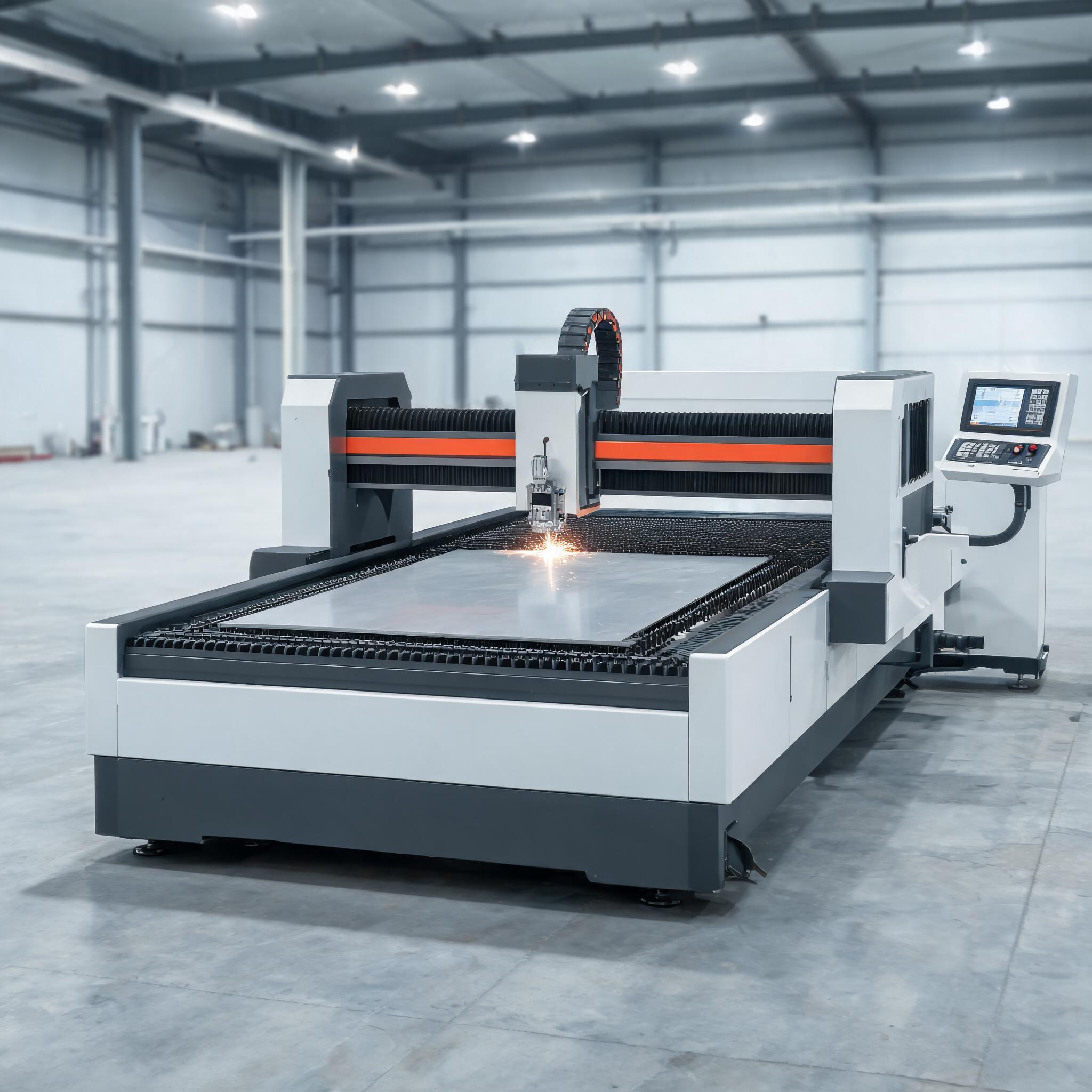
Copper shows up on quotation requests constantly — busbars, electrical contacts, heat exchanger parts, grounding components — and it is also the material that trips up more laser buyers than any other. The same properties that make copper valuable in electrical work make it difficult to cut with light. This article explains why, what thicknesses are realistic on mid-power fiber lasers, how assist gas selection changes the result, and when a different cutting process is the better call.
Why Copper Is the Hardest Common Metal to Laser Cut
Two physical properties work against the laser at the same time.
High reflectivity at the laser wavelength
Fiber lasers emit light at a wavelength of roughly 1 micrometer (near-infrared). Copper is one of the most reflective metals at this wavelength — a large share of the incoming beam bounces off the surface instead of being absorbed. Until the surface heats up and begins to melt, the beam transfers little energy into the material. Once melting starts, absorption improves, but getting to that point requires much higher power density than it does for steel.
Reflected light is not just an efficiency problem. On poorly configured machines, back-reflected energy can travel back down the fiber into the source. Modern fiber laser sources include back-reflection protection, but process setup still matters: correct focus position, clean surface condition, and adequate power density all reduce the amount of energy the sheet sends back at the optics.
High thermal conductivity
Copper conducts heat several times faster than carbon steel. Whatever energy the beam does deposit spreads away from the cut zone almost immediately, so the metal resists reaching melting temperature locally. In practice this means the cut zone needs sustained high energy density, and thin copper can behave unpredictably if parameters are marginal — the cut may start and then lose momentum as heat drains into the surrounding sheet.
The combination of low absorption and high heat loss is why a fiber laser that easily handles 6mm carbon steel will have a far lower copper capacity. This is a property of the material, not a flaw in the machine, and any supplier quoting aggressive copper thicknesses on modest power deserves scrutiny. For a deeper dive into the same mechanism on aluminum — the other highly reflective non-ferrous metal — see our article on cutting aluminum and copper with a fiber laser: reflectivity and thickness limits.
Realistic Copper Thickness by Machine Power
Because copper capacity does not scale the way steel capacity does, the honest way to evaluate a machine is to look at what the manufacturer actually specifies for copper — not at the headline wattage. If you want the broader picture of how laser power translates into plate thickness and machine configuration across the whole range, our high-power fiber laser cutting machine buying guide covers the full power ladder. Here is what our own machines are specified to do.
| Machine | Copper capability | Other stated specs |
| 1500W Fiber Laser Cutting Machine | Copper to 3mm | Carbon steel to 6mm, aluminum to 4mm, ±0.03mm accuracy, 1300×2500mm bed, water-cooled, CE/RoHS |
| 1000W Large Format Fiber Laser Cutting Machine | Copper listed among supported materials in the 1–12mm material band (stainless, carbon steel, copper, titanium) | 3000×1500mm or 4000×2000mm bed |
Two points worth reading carefully:
The 1500W fiber laser cutting machine has a defined copper limit of 3mm. That number already reflects copper's difficulty — the same machine cuts 6mm carbon steel, double its copper capacity. If your copper work is mostly 1–3mm sheet and plate, this class of machine covers it with margin.
The 1000W large format fiber laser cutting machine specification lists copper among the materials it supports within the 1–12mm band, alongside stainless, carbon steel, and titanium. For thicker copper sections, the practical approach is to confirm your specific thickness and alloy with the supplier before committing, because achievable copper thickness at a given power depends on alloy, surface finish, and parameter development — not on wattage alone.
Note what we are not claiming: our 20kW and 30kW class machines list aluminum in their specifications but do not publish copper cutting numbers. Never assume a high-power rating translates into thick-copper capability; ask for the copper-specific data.
Assist Gas Choice for Copper
The assist gas does three jobs: it blows molten material out of the kerf, it protects the optics, and — depending on the gas — it either adds or removes heat from the reaction.
Nitrogen (inert cutting)
Nitrogen does not react with copper, so cutting is a pure melt-and-blow process. The cut edge stays bright and free of oxide, which matters for electrical busbars and contact surfaces where oxide layers increase resistance at joints. The trade-offs: nitrogen requires higher pressure and higher power density to push the melt out, so it consumes more gas and, on a given machine, reduces maximum thickness compared to oxygen. For most electrical-grade copper work, nitrogen is the default choice.
Oxygen
Oxygen reacts exothermically with many metals and adds heat to the cut, which helps penetration. With copper, the benefit is smaller than with steel — copper oxidizes and the oxide layer changes absorption, but the reaction is less vigorous than the iron-oxygen burn in carbon steel. Oxygen-cut copper edges come off oxidized and typically need cleaning before electrical use. It can be a viable option where edge quality is secondary and speed matters, but verify the result on your alloy and thickness before standardizing on it.
Compressed air
Air is roughly 21% oxygen, so it behaves like a mild oxygen cut at a fraction of the gas cost. Edge oxidation is comparable to or worse than oxygen. For shops doing occasional copper work where edges will be machined or finished afterward, air keeps operating costs down; for finished electrical components, budget for nitrogen.
Where Laser-Cut Copper Is Used
The bulk of laser-cut copper demand comes from electrical and thermal applications:
Busbars and distribution links — flat copper bar and sheet cut to profile, usually with hole patterns for bolted connections. Nitrogen cutting keeps contact surfaces oxide-free.
Electrical contacts and terminals — small profiled parts where fiber laser precision (±0.03mm on the 1500W machine as specified) eliminates a secondary machining step.
Grounding and EMI shielding components — thin copper sheet cut in volume.
Heat exchanger and cold plate panels — where the cut edge quality and burr control matter for later brazing or bonding.
Thin-gauge copper is where fiber lasers earn their keep on this material: high nesting density, no tooling, and fast program changes between part revisions.
When an Alternative Process Makes More Sense
Laser cutting is not automatically the right answer for copper. Consider the alternatives in these situations:
Very thick copper sections. Above the range a mid-power fiber laser can handle reliably, waterjet cutting has no thickness limit imposed by reflectivity and produces no heat-affected zone — at the cost of slower cutting and a wider kerf.
Simple straight cuts in bar stock. A bandsaw or shear is cheaper per cut and the copper is often going to be machined anyway.
High-edge-quality thin parts in volume. For some copper profiles, chemical etching or stamping beats laser cutting on edge condition and per-part cost at volume — though both carry tooling or setup costs that lasers avoid.
Extreme reflectivity risk on very thin foil. Below certain thicknesses, copper's reflectivity becomes a genuine risk to laser optics if parameters drift; foils are often better handled by etching or die cutting.
The right test is straightforward: if your copper is roughly 1–3mm sheet and you need profiled parts without tooling, a fiber laser in the 1000–1500W class is a strong fit. If your work is thick bar or foil extremes, price the alternative processes alongside the laser.
Frequently Asked Questions
Can a fiber laser cut copper at all, given its reflectivity?
Yes. Modern fiber lasers cut copper routinely at thin and medium gauges. The reflectivity is highest on a cold, polished surface; once the beam melts the surface, absorption rises sharply. Machines need adequate power density, correct focus, and back-reflection protection — which is why copper capacity is much lower than steel capacity at the same wattage, not zero.
How thick can a 1500W fiber laser cut copper?
Our 1500W fiber laser cutting machine is specified to cut copper to 3mm, with carbon steel to 6mm and aluminum to 4mm, at ±0.03mm accuracy on a 1300×2500mm bed. The gap between the steel and copper numbers reflects copper's low absorption and high thermal conductivity.
Should I cut copper with nitrogen or air?
Use nitrogen when the cut edge must stay bright and oxide-free — busbars, contacts, and anything joined electrically. Air is far cheaper and works when edges will be cleaned or machined afterward, but it leaves oxidation similar to an oxygen cut. Oxygen adds some cutting energy but produces oxidized edges on copper.
Does higher laser power mean proportionally thicker copper?
No. Copper capacity grows more slowly than steel capacity with power because absorption, not raw wattage, is the bottleneck. Always evaluate machines on their published copper specifications rather than assuming steel numbers carry over — and ask the manufacturer to confirm your specific copper thickness and alloy before purchase.
Choosing Your Machine with Xinhong CNC
Copper is the material where honest specification matters most. If you tell us your copper thickness range, alloy (C1100, C10100, etc.), typical part size, and whether edges must be oxide-free, we will recommend whether a 1000W or 1500W class machine fits your work — or tell you frankly if another process serves you better. Submit your material and application details through the inquiry forms on our product pages to get a recommendation grounded in the machine specifications, not marketing numbers.